
Most basements in New Jersey start with the same problem. They feel dark, unfinished, and disconnected from the rest of the home. Even after installing epoxy flooring, the wrong color choice can make the space feel smaller, colder, or harder to maintain. On the other hand, the right color can completely transform the basement into a clean, bright, and usable area.
This guide will help you understand the best epoxy basement floor color ideas, how different options perform, and how to choose the right look based on your space and needs.
Key Takeaways
- Light colors help make basements feel larger and brighter
- Neutral tones offer long-term flexibility for different uses
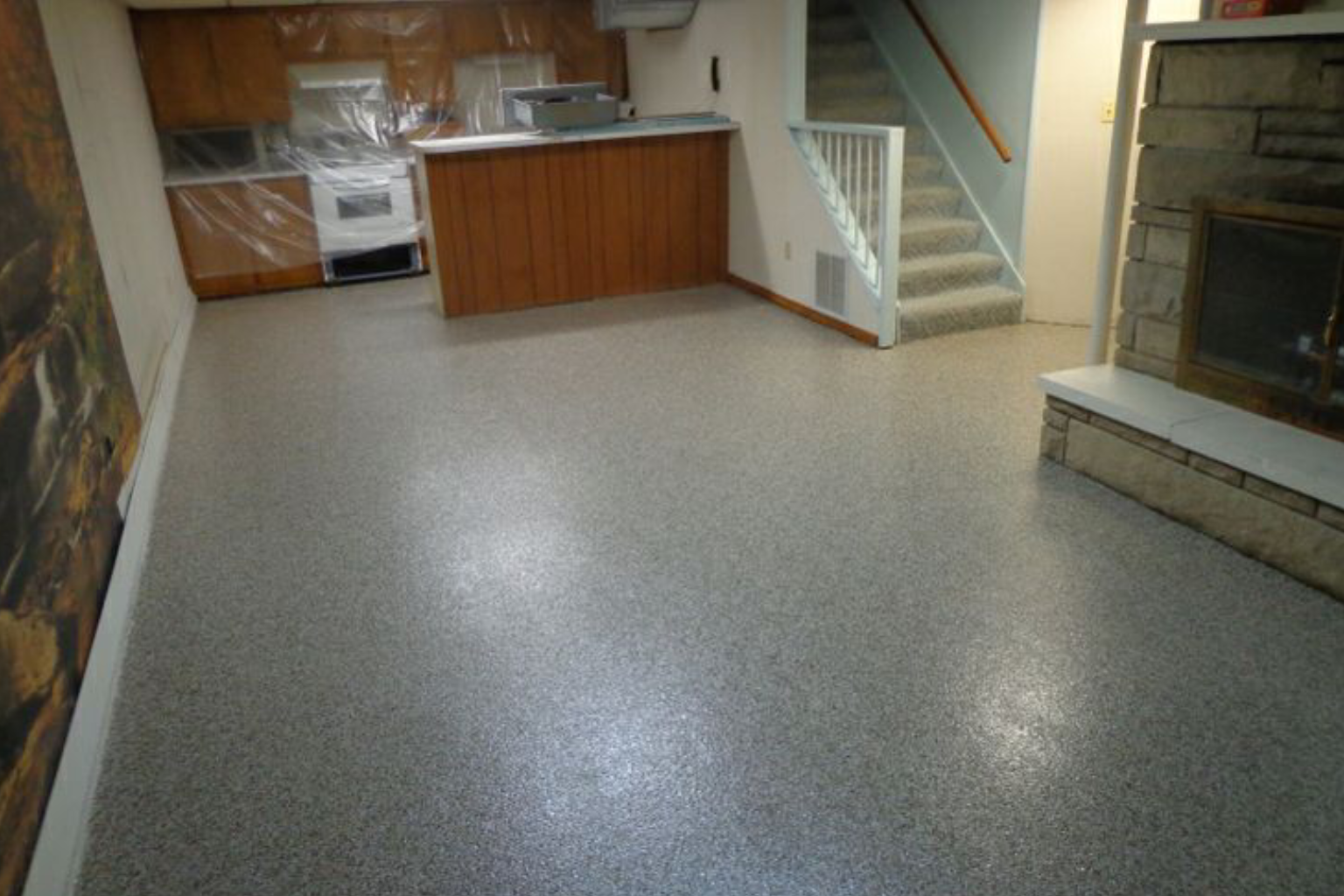
- Flake epoxy blends are practical and low-maintenance
- Dark colors work best with proper lighting and larger spaces
- Finish (gloss or matte) affects both look and safety
- Choosing the right color depends on how the basement is used
Why Color Choice Matters for Basement Epoxy Flooring
Color is not just a design decision in basements. It directly affects how the space feels, how easy it is to maintain, and how often it gets used.
How Color Affects Basement Lighting and Space Perception
Basements typically have limited natural light. Lighter epoxy colors reflect available light, making the space feel more open. Darker colors absorb light, which can make the basement feel more closed in if the lighting is not strong enough. This is why color choice plays a bigger role in basements than in other parts of the home.
Common Mistakes Homeowners Make with Basement Colors
One of the most common mistakes is choosing colors based only on appearance without considering lighting and usage. A color that looks good in a showroom may not work well in a basement with low light. Another mistake is going too dark in smaller spaces, which reduces visibility and makes the area feel tighter.
Balancing Style with Practical Use
The best epoxy floor color is one that looks good but also works for everyday use. It should handle dirt visibility, match the purpose of the space, and stay visually consistent over time. This balance is what makes a basement both functional and appealing.
Most Popular Epoxy Basement Floor Colors
Certain epoxy colors consistently perform well in basement environments because they combine appearance with practicality.
Light Gray and Soft Neutral Tones
Light gray is one of the most popular choices for basement epoxy flooring. It reflects light well and gives the space a clean and modern look. Soft neutrals also work with different wall colors and furniture styles, making them a safe long-term option for homeowners who may update the space later.
Beige and Warm Earth Tones
Beige tones bring warmth into the basement, which helps reduce the cold feel that concrete floors often have. These colors work well in basements that are used as living spaces, creating a more comfortable and inviting environment.
White and Off-White Finishes
White or off-white epoxy floors provide maximum brightness. They are often used in smaller basements where increasing light reflection is important. However, they may require more frequent cleaning since dirt and marks are more visible.
Charcoal and Dark Gray Options
Dark gray or charcoal colors are chosen for their ability to hide stains and imperfections. They work best in larger basements or spaces with strong lighting. When used correctly, they create a bold and modern appearance.
Flake Epoxy Color Blends for Basements
Flake systems are one of the most practical and widely used options for basement epoxy flooring.
Why Flake Systems Are Popular in New Jersey Homes
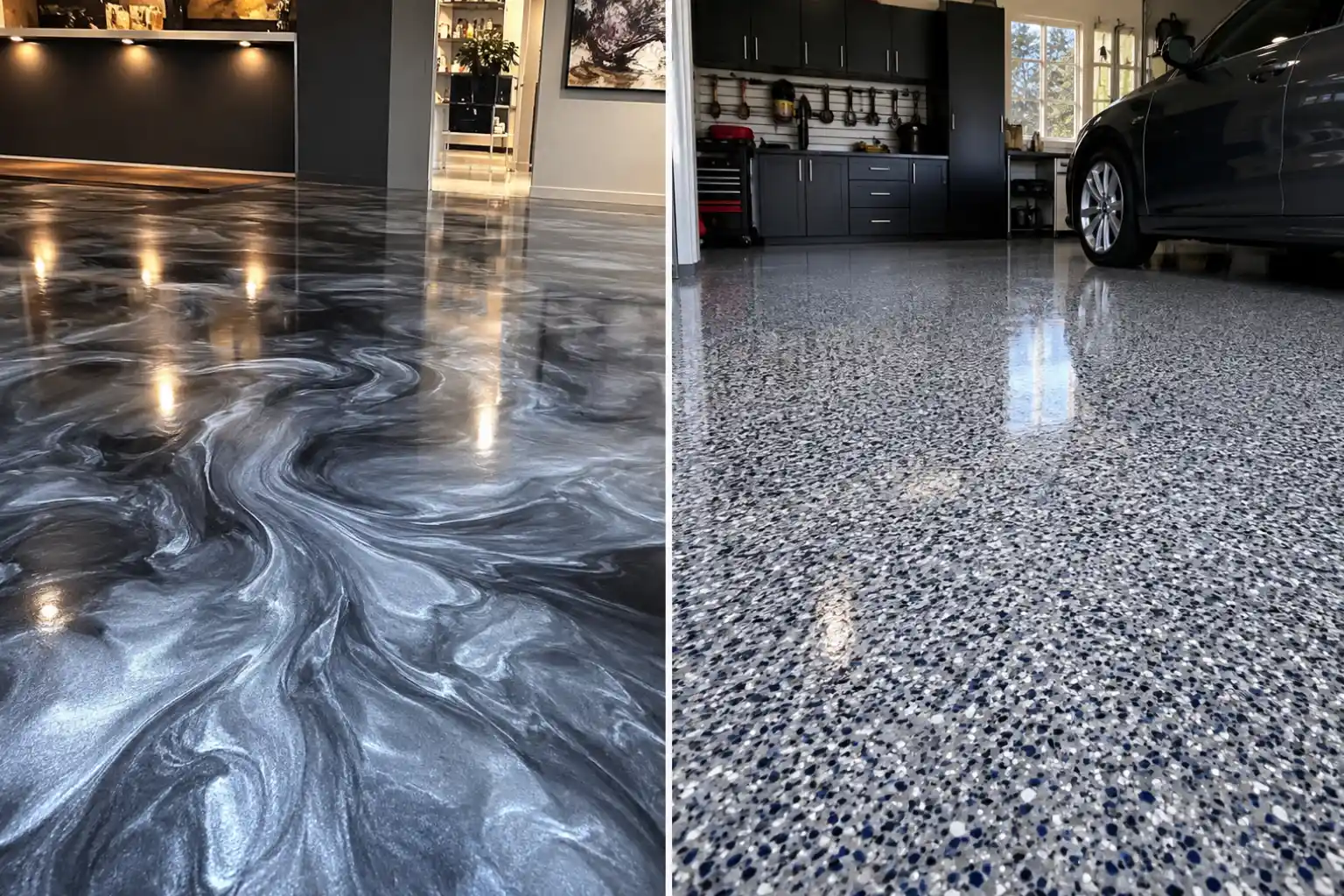
In New Jersey, basements often deal with dust, minor imperfections, and regular use. Flake epoxy helps address these issues by creating a textured and multi-tone surface. This makes the floor more forgiving and easier to maintain over time.
Multi-Tone Blends That Hide Dirt and Imperfections
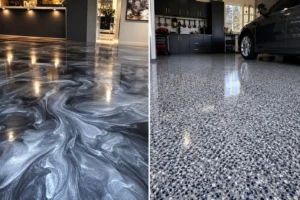
Flake blends combine different colors, which helps hide dust, small debris, and minor surface flaws. This is especially useful in basements used for storage or daily activity, where keeping the floor perfectly clean is not always possible.
Choosing Flake Size and Density for Basement Use
The size and density of flakes affect both appearance and performance. A balanced flake system provides enough texture for grip while still maintaining a clean and consistent look. This makes it a reliable choice for most basement applications.
Metallic Epoxy Color Ideas for High-End Basements
For homeowners looking to create a more unique or upscale basement, metallic epoxy offers a different approach.
When Metallic Finishes Make Sense
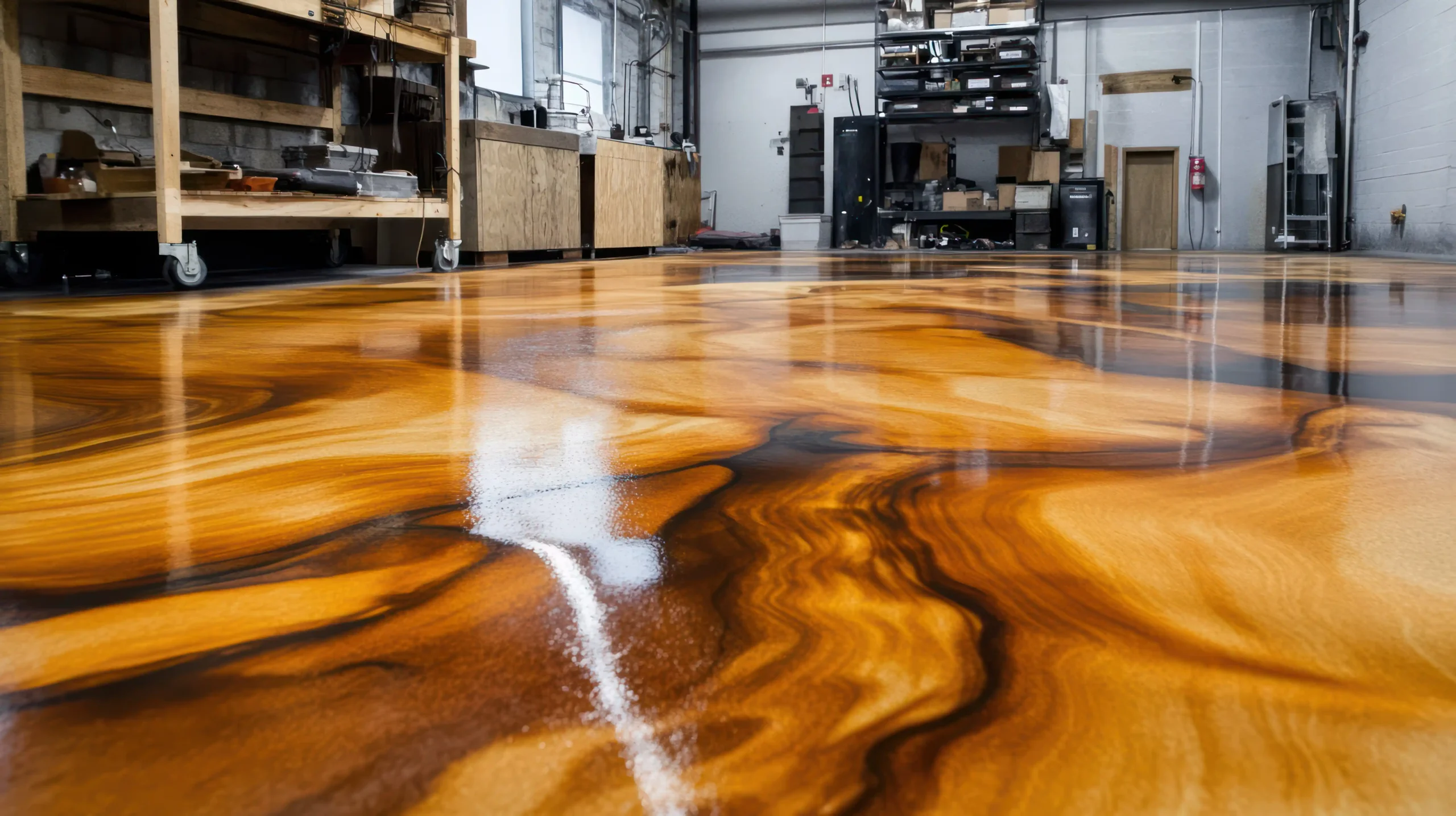
Metallic epoxy works best in finished basements where design and appearance are a priority. It creates a decorative surface that stands out and gives the space a more customized look.
Popular Metallic Color Styles
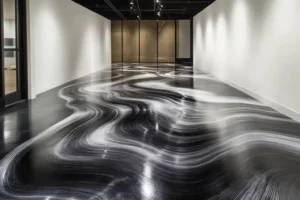
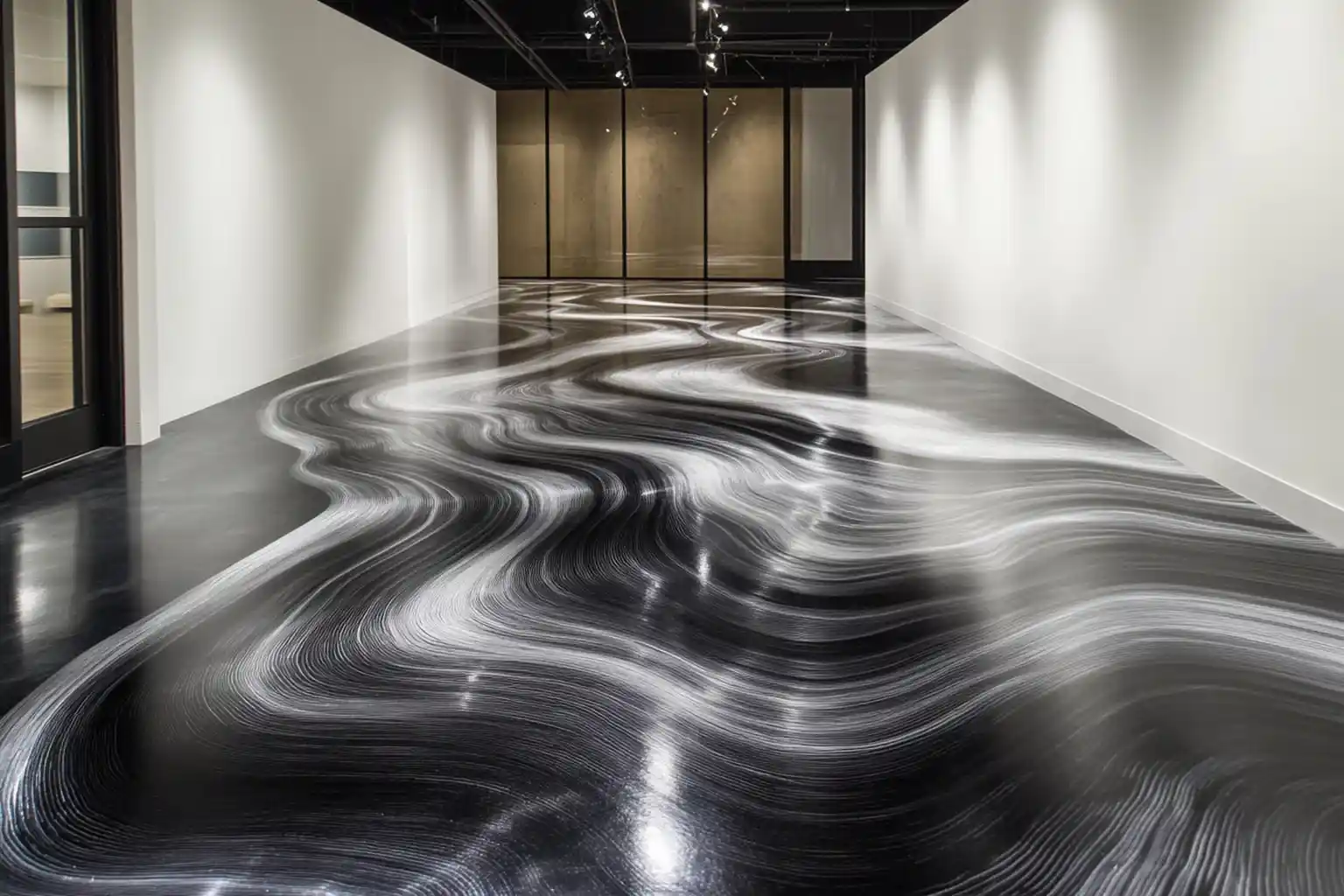
Common styles include marble-like patterns, flowing designs, and reflective finishes. These effects can turn a basement into a feature space rather than just a functional area.
Pros and Limitations of Metallic Epoxy
While metallic epoxy looks impressive, it requires precise installation and works best in controlled environments. It may not be the best option for basements used for heavy storage or high traffic, where practicality is the main focus.
Light vs Dark Epoxy Basement Floors
Choosing between light and dark colors depends on the size, lighting, and use of the basement.
When to Choose Light Colors
Light colors are ideal for smaller basements or spaces with limited lighting. They help open up the space and improve visibility, making the basement feel more comfortable.
When Dark Colors Work Better
Dark colors are better suited for larger basements or areas with strong artificial lighting. They help hide stains and provide a more grounded, modern look.
Finding the Right Balance for Your Space
Many homeowners choose a middle-ground color that offers both brightness and practicality. This approach helps avoid extremes and creates a balanced look that works in most conditions.
Best Epoxy Colors Based on Basement Use
The purpose of the basement should guide the color choice.
Storage and Utility Basements
For storage areas, practical colors like gray or flake blends work best. They hide dust and wear while maintaining a clean appearance.
Finished Living Spaces
In finished basements, lighter or warmer tones create a more inviting environment. These colors help the space feel like part of the home rather than a separate area.
Rental or Multi-Use Basements
For rental or mixed-use spaces, neutral colors provide flexibility. They appeal to a wider range of preferences and maintain a professional look.
Choosing the Right Finish (Glossy vs Matte vs Satin)
Color is only part of the decision. The finish also plays an important role in how the floor looks and performs.
How Finish Affects Light Reflection
Glossy finishes reflect more light and enhance brightness, while matte finishes reduce glare and provide a softer look. Satin finishes offer a balance between the two.
Safety and Slip Resistance Considerations
Higher gloss levels can feel more slippery, especially when wet. This is often addressed by adding slip-resistant materials during installation.
Maintenance Differences Between Finishes
Glossy floors show dust and scratches more easily, while matte finishes hide them better. Choosing the right finish depends on both appearance and maintenance preference.
Common Basement Color Mistakes to Avoid
Even with the right material, poor color decisions can affect the final result.
Going Too Dark Without Proper Lighting
Dark floors without enough lighting can make the basement feel smaller and harder to use.
Choosing Style Over Practicality
Some designs look good initially but become difficult to maintain over time. Balancing style with function is important for long-term satisfaction.
Ignoring Maintenance and Visibility
Colors that show every mark or stain can become frustrating to maintain. Choosing a practical option helps keep the space looking clean with less effort.
How to Choose the Right Epoxy Color for Your Basement
Choosing the right epoxy color involves understanding your space and how it will be used.
Evaluating Basement Lighting and Size
Lighting and size should guide the overall color direction. Smaller or darker spaces benefit from lighter tones, while larger spaces can handle darker options.
Matching Color with Wall and Ceiling Design
The floor should complement the walls and ceiling to create a consistent look. A well-matched design makes the basement feel more complete.
Getting Professional Recommendations
A professional evaluation helps avoid guesswork. Experienced installers can recommend colors that match both the condition of the basement and the homeowner’s goals.
Why Homeowners in New Jersey Choose Epoxy Shine for Design Guidance
Choosing the right color is not always straightforward. It requires understanding how different options will perform in real basement conditions.
Epoxy Shine works with homeowners across New Jersey to recommend color and finish combinations that match both style and function. By considering lighting, usage, and maintenance, the goal is to deliver results that look good and perform well over time.
Final Thoughts
The right epoxy basement floor color does more than improve appearance. It affects how the space feels, how easy it is to maintain, and how often it gets used. By choosing a color that fits your basement conditions and purpose, you can create a space that is both functional and visually appealing. Epoxy Shine helps homeowners across New Jersey select and install epoxy floors that match both design goals and practical needs.
Schedule your consultation today and bring your basement to life with the right flooring solution.
FAQs
What is the best color for epoxy basement floors?
Light gray and neutral tones are the most practical and widely used options.
Are light or dark epoxy floors better for basements?
Light colors work better in smaller or darker spaces, while dark colors suit larger, well-lit basements.
Do epoxy floor colors fade over time?
High-quality epoxy systems maintain their color when properly installed and protected.
Which epoxy color hides dirt the best?
Flake blends and mid-tone grays are effective at hiding dust and minor imperfections.
Is metallic epoxy good for basements?
It works well in finished basements where design is a priority, but may not suit heavy-use areas.
What finish is best for basement epoxy flooring?
Satin finishes are often preferred because they balance appearance, maintenance, and safety.