

Introduction
Basements in New Jersey homes often come with hidden challenges. Moisture, cracks, peeling coatings, and cold concrete floors are common issues that make the space feel unfinished and difficult to use.
Many homeowners try quick fixes, but most solutions fail over time because they are not designed for below-grade conditions.
This is where epoxy flooring has become a reliable option. It is not just a surface upgrade. It is a system that protects the concrete, improves durability, and turns the basement into a clean, usable space.
In this guide, you will learn how basement epoxy flooring works, what options are available, what it costs in New Jersey, and how to avoid common mistakes. If you are planning to upgrade your basement, this will help you make the right decision based on your space and needs.
Why Basement Flooring Matters More Than You Think
In many New Jersey homes, the basement is often treated as a secondary space. It becomes a storage area, a laundry room, or an unfinished part of the house that gets ignored until problems start appearing.
But the truth is, the basement floor plays a critical role in the overall condition of your home.
Because basements sit below ground level, they are constantly exposed to moisture, pressure from surrounding soil, and seasonal temperature changes. If the flooring is not properly protected, these conditions slowly damage the surface and create ongoing issues that become expensive to fix later.
Common Basement Flooring Problems in New Jersey Homes
Homes across New Jersey deal with humidity, heavy rainfall, and older concrete foundations. These factors make basements more vulnerable compared to other parts of the house.
It’s common to see floors with damp spots, peeling coatings, or visible cracks. In some cases, moisture rises through the concrete and creates a musty smell that spreads throughout the home. Over time, this can lead to mold growth and unhealthy indoor air.
These are not surface-level issues. There are signs that the flooring system is failing to protect the space.
Why Traditional Flooring Fails in Basements
Many homeowners try to improve their basements using materials like carpet, vinyl planks, or simple concrete paint. While these options may look good initially, they are not designed for below-grade conditions.
Carpet absorbs moisture and quickly develops odors. Vinyl flooring can lift or shift when moisture builds underneath. Concrete paint, which is often seen as a quick solution, tends to peel and flake because it does not properly bond with the surface.
The core problem is that these materials sit on top of the concrete rather than becoming part of it. When moisture pressure builds from below, they lose their grip and start to fail.
What Homeowners Actually Need from a Basement Floor
A basement floor needs to handle conditions that other floors in the home never face. It must be able to resist moisture, stay bonded to the concrete, and maintain its structure over time.
At the same time, homeowners want a space that feels clean, usable, and visually finished. Whether the basement is used for storage, living, or rental purposes, the flooring needs to support both function and appearance.
This is where epoxy flooring becomes a strong and practical solution.
What Is Basement Epoxy Flooring?
Basement epoxy flooring is a protective coating system that is applied directly to concrete. Unlike basic coatings or paints, epoxy forms a strong bond with the surface and creates a sealed layer that protects the floor from moisture, wear, and damage.
It is widely used in residential and commercial spaces because of its durability and long-term performance.
How Epoxy Flooring Works on Concrete Surfaces
Epoxy is created by combining a resin and a hardener. When these two components are mixed, they react chemically and form a rigid surface that adheres tightly to the concrete.
This process allows the epoxy to penetrate and lock into the surface instead of simply sitting on top. Once cured, the floor becomes solid, sealed, and resistant to many of the issues that affect untreated concrete.
The result is a surface that can handle daily use while maintaining its structure and appearance over time.
Key Components of a Professional Epoxy System
A properly installed epoxy floor is built through a step-by-step system rather than a single application.
It starts with preparing the concrete surface through grinding or mechanical abrasion. This step is essential because it opens the pores of the concrete and allows the epoxy to bond effectively.
After preparation, any cracks or imperfections are repaired to create a smooth base. A primer is then applied to strengthen adhesion, followed by a base coat that forms the main layer of the system.
Depending on the design, a decorative layer such as flakes or metallic pigments may be added. Finally, a protective topcoat seals the system and adds durability.
Each layer has a purpose, and skipping any part of the process can affect the performance of the floor.
Why Epoxy Performs Well in Below-Grade Spaces
Basements are constantly exposed to moisture and temperature variations. Epoxy performs well in these conditions because it creates a sealed, non-porous surface that limits water penetration.
Instead of allowing moisture to move freely through the concrete, the epoxy system helps control it and protects the surface from damage.
For homeowners in New Jersey, where weather conditions can change throughout the year, this type of protection makes a noticeable difference in how the basement holds up over time.
Benefits of Basement Epoxy Flooring
When installed correctly, epoxy flooring changes how a basement looks, feels, and functions. It is not just about appearance. It is about creating a surface that works with the environment instead of against it.
Moisture Resistance and Protection Against Dampness
One of the biggest advantages of epoxy flooring is its ability to resist moisture. The sealed surface prevents water from entering the concrete, which helps reduce dampness and eliminates the conditions that lead to mold and odors.
In areas like New Jersey, where humidity levels can remain high, this added protection is especially important.
Long-Term Durability Under Heavy Use
Basements are often used for multiple purposes, from storage to living spaces. The floor needs to handle weight, movement, and occasional impact.
Epoxy flooring is designed to handle these conditions without wearing down quickly. It maintains its structure even when exposed to heavy use, making it a reliable long-term option.
Easy Cleaning and Maintenance
Unlike unfinished concrete or other flooring materials, epoxy creates a smooth surface that does not absorb dust or spills.
Cleaning becomes straightforward. Most of the time, regular sweeping and occasional mopping are enough to maintain the floor. This reduces the time and effort needed to keep the space clean.
Improved Lighting and Space Appearance
Basements are often darker than the rest of the home. Epoxy flooring, especially in lighter tones or reflective finishes, helps improve brightness by reflecting available light.
This simple change can make the space feel more open and more usable without requiring major renovations.
Ideal for Storage, Living, and Multi-Use Basements
Whether the basement is used as a storage area, a home office, or a finished living space, epoxy adapts well to different needs.
It provides a clean, finished look while still offering the strength required for everyday use. This flexibility is one of the reasons many homeowners choose epoxy when upgrading their basement.
Potential Drawbacks and How Professionals Solve Them
Some concerns around epoxy flooring come from cases where the installation was not done correctly.
Issues like peeling, bubbling, or uneven surfaces are usually the result of poor preparation or ignoring moisture conditions. These are not material problems, but process problems.
Professional installers address these risks by testing moisture levels, preparing the surface properly, and applying the system in controlled conditions.
When done correctly, these common issues can be avoided.
Is Epoxy the Right Choice for Every Basement?
Epoxy works well in most basements, but it is not a solution for every situation.
If a basement has ongoing water intrusion or structural damage, those issues need to be fixed before any coating is applied. Epoxy is designed to protect and enhance a stable surface, not to correct major underlying problems.
A proper inspection helps determine whether epoxy is the right option or if additional work is needed before installation.
Best Epoxy Types for Basement Floors
Not all epoxy systems perform the same way. Choosing the right type depends on how the basement will be used and the condition of the existing concrete.
Water-Based vs. Solvent-Based vs. 100% Solid Epoxy
Different types of epoxy offer different levels of performance.
Water-based systems are thinner and often used for light-duty applications. Solvent-based options provide more strength but come with stronger fumes during installation. 100% solid epoxy systems are thicker, more durable, and typically preferred for long-term residential use.
For most basement applications, solid epoxy systems provide the most reliable results.
Metallic Epoxy, Flake Systems, and Quartz Options
Beyond the base system, homeowners can choose different finishes based on their style and functional needs.
Flake systems add texture and improve slip resistance. Metallic epoxy creates a more decorative, high-end look. Quartz systems are often used when extra durability and grip are needed.
Each option changes both the appearance and the performance of the floor.
Choosing the Right System Based on Basement Use
The way the basement is used plays a big role in selecting the right epoxy system.
A storage space may require a simple and durable finish, while a finished basement or living area may benefit from a more decorative approach. High-traffic areas may need additional strength and protection.
Matching the system to the purpose of the space ensures better results and longer performance.
Basement Epoxy Flooring Color and Design Ideas
Once homeowners understand the performance side of epoxy flooring, the next question is usually about how it will look. A basement should not feel like a dark, unfinished space. The epoxy basement floor color ideas can completely change how the area feels and how often it gets used.
Popular Color Choices for Modern Basements
In New Jersey homes, neutral tones remain the most practical choice for basements. Shades like light gray, soft beige, and warm taupe help create a clean and open look without overwhelming the space.
These colors also work well with different uses. Whether the basement is used for storage, a home office, or a living area, neutral tones provide flexibility and keep the space visually balanced.
Darker shades are sometimes used for contrast, but they tend to absorb light, which can make basements feel smaller if not paired with proper lighting.
Light vs. Dark Floors for Basement Spaces
The choice between light and dark flooring depends on the condition and purpose of the basement.
Lighter floors help reflect available light and make the space feel larger. This is especially useful in basements with limited natural light. On the other hand, darker floors can help hide minor imperfections or stains, making them a practical choice for high-use areas.
In many cases, homeowners choose a balanced tone that offers both brightness and durability without making the space feel too plain or too heavy.
Decorative Flake and Metallic Finishes
For homeowners who want more than a simple finish, decorative options can add depth and character to the floor.
Flake systems are one of the most common choices. They create a textured look while also improving slip resistance, making them ideal for basements that see regular use.
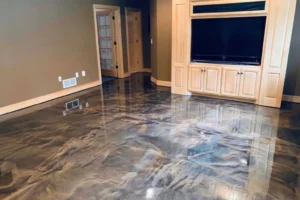
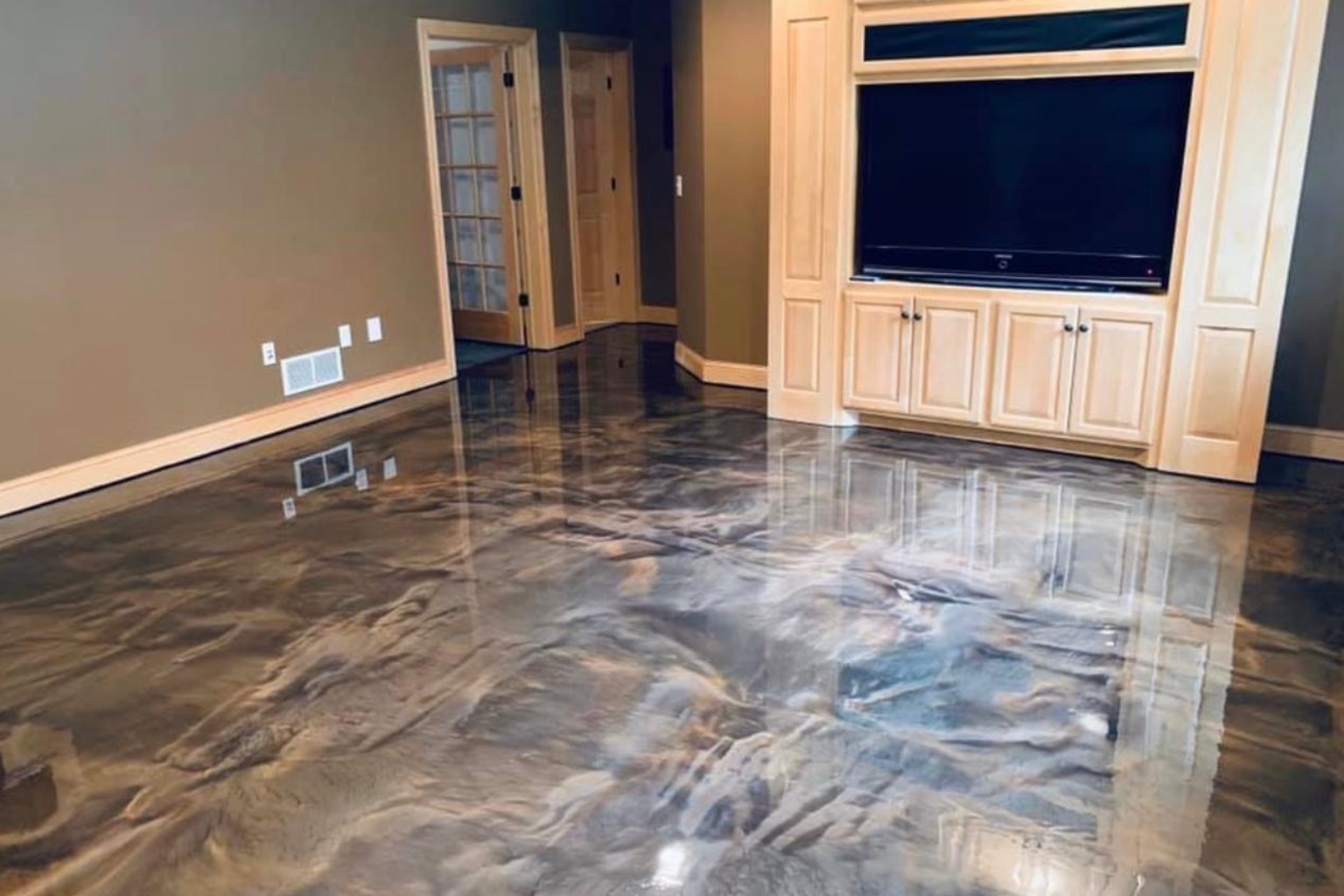
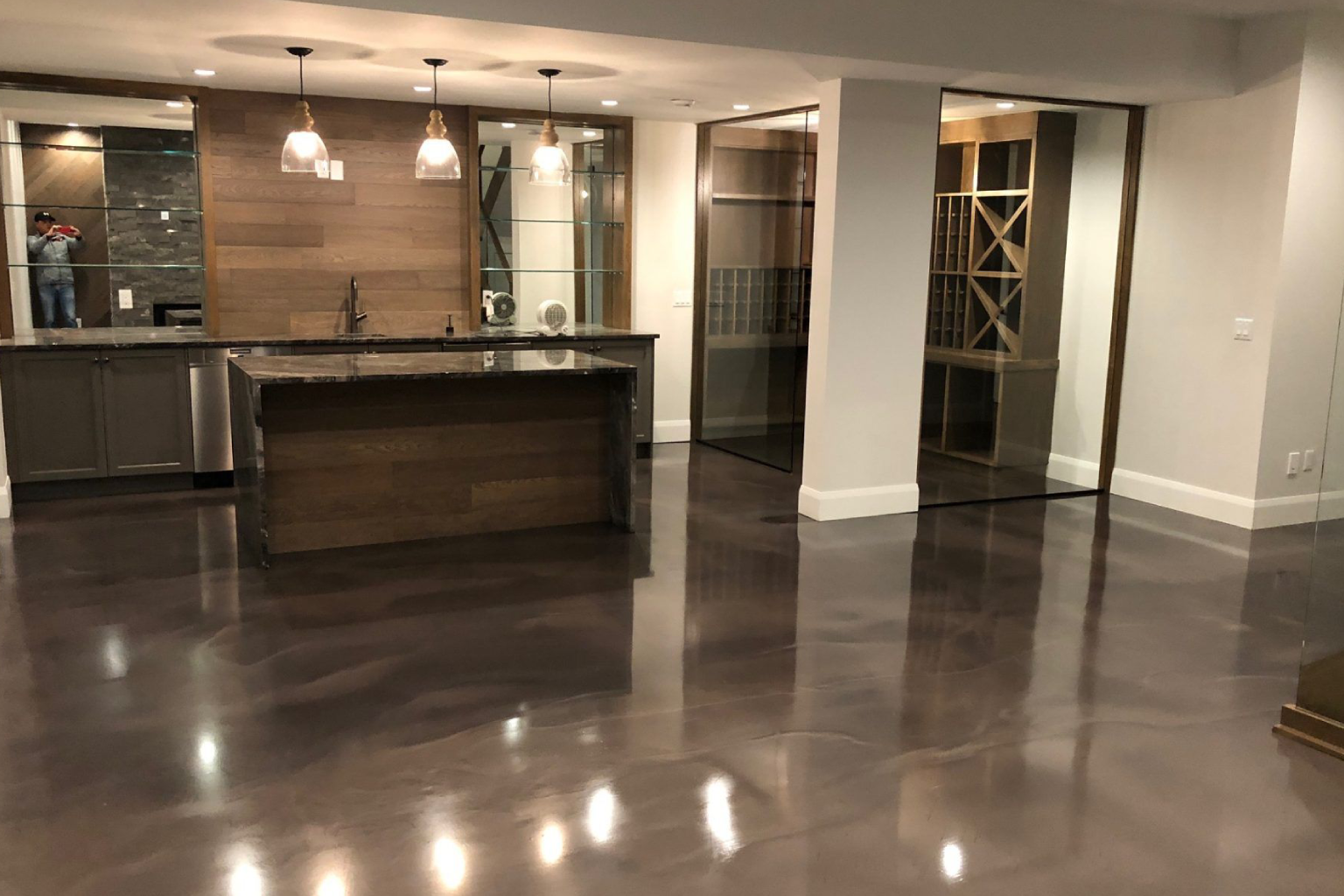
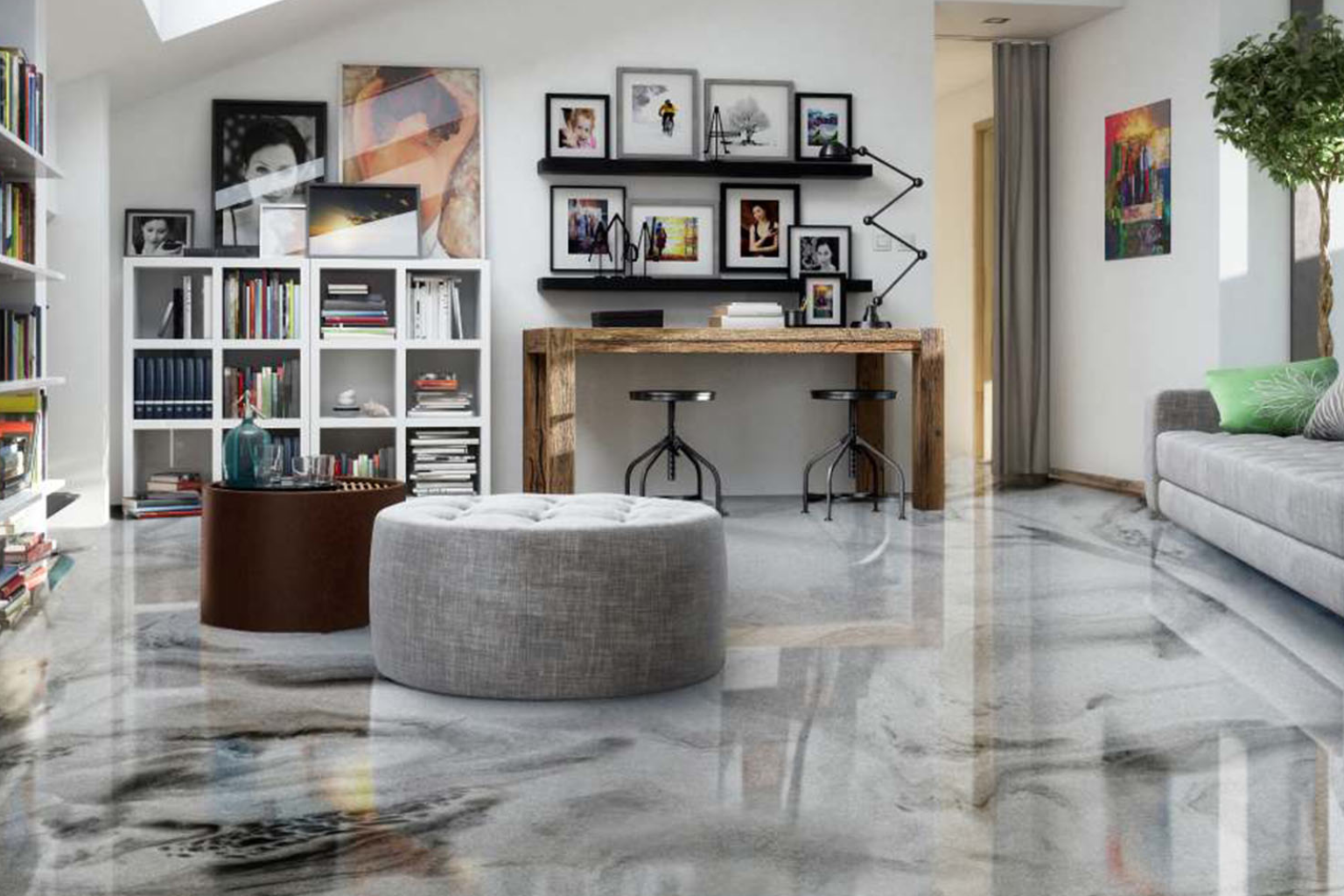
Metallic epoxy offers a more unique and high-end appearance. It creates a flowing, reflective effect that can turn a basement into a standout part of the home.
The right design depends on how the space will be used and the overall style of the home.
Moisture Testing and Waterproofing Before Installation
Before any epoxy is applied, one step matters more than anything else, moisture evaluation.
Skipping this step is one of the main reasons epoxy floors fail. In New Jersey, where basements are often exposed to seasonal moisture changes, proper testing is not optional.
Why Moisture Testing Is Critical in New Jersey Basements
Concrete may look dry on the surface, but moisture can still be present inside the slab. Over time, this moisture moves upward and creates pressure beneath the coating.
If epoxy is applied without testing, that pressure can cause bubbling, peeling, or complete failure of the floor.
Professional installers use specific methods to measure moisture levels and determine whether the concrete is ready for coating. This step ensures that the system will bond correctly and last longer.
Common Moisture Issues in Older and New Homes
Moisture problems are not limited to older homes. Even newer properties can experience issues due to soil conditions, drainage, or construction methods.
Older homes may have cracks or outdated waterproofing, while newer homes may still be settling. In both cases, moisture can find its way into the basement.
Signs such as damp patches, white residue on concrete, or a persistent musty smell often indicate underlying moisture problems that need to be addressed.
Professional Solutions for Moisture Control
When moisture is detected, professionals take steps to control it before moving forward.
This may include sealing cracks, improving drainage, or applying moisture-mitigating primers designed to handle vapor transmission. In some cases, additional waterproofing solutions may be recommended depending on the severity of the issue.
Addressing moisture before installation is what separates a long-lasting epoxy floor from one that fails within a short period.
Basement Epoxy Flooring Installation Process (Step-by-Step)
A successful epoxy floor is built through a structured process. Each stage plays a role in ensuring the final result is strong, smooth, and long-lasting.
Surface Preparation and Concrete Grinding
The process begins with preparing the concrete surface. This step involves grinding the floor to remove any existing coatings, dirt, or weak layers.
Grinding also opens the pores of the concrete, allowing the epoxy to bond properly. Without this step, the coating may not adhere correctly, which can lead to early failure.
Crack Repair and Surface Leveling
Once the surface is prepared, any cracks or imperfections are repaired.
This step ensures that the floor is smooth and stable before the coating is applied. Ignoring cracks can lead to visible defects in the final finish and may weaken the system over time.
Primer and Base Coat Application
A primer is applied to strengthen the bond between the concrete and the epoxy system. This layer helps the coating adhere evenly and reduces the risk of issues later.
After the primer, the base coat is applied. This forms the main body of the epoxy system and provides the strength and durability the floor needs.
Decorative Layer (Flakes or Metallic)
If the homeowner chooses a decorative finish, it is added during this stage.
Flakes are broadcast across the surface to create texture and visual depth, while metallic pigments are used to create a flowing, reflective appearance. This step defines the overall look of the floor.
Topcoat and Sealing
The final step is applying a protective topcoat.
This layer seals the system, adds durability, and protects against wear, stains, and daily use. It also determines the final finish, whether matte, satin, or glossy.
A properly applied topcoat is what helps the floor maintain its appearance over time.
Common Mistakes to Avoid in Basement Epoxy Flooring
Many epoxy flooring issues are not caused by the material itself, but by mistakes during preparation or installation. Avoiding these mistakes is key to getting long-term results.
Skipping Moisture Testing
Applying epoxy without checking moisture levels is one of the most common problems.
Even if the surface looks dry, hidden moisture can cause the coating to fail. This step should always be completed before installation begins.
Poor Surface Preparation
Epoxy needs a properly prepared surface to bond effectively.
If the concrete is not cleaned, ground, or repaired correctly, the coating may not adhere as expected. This can lead to peeling or uneven finishes.
Using Low-Quality Materials
Not all epoxy products offer the same level of performance.
Lower-quality materials may be easier to apply, but they often lack durability and resistance. Over time, this can result in a floor that wears down faster than expected.
DIY Installation Risks
Some homeowners consider applying epoxy themselves to save money.
However, without the right tools and experience, it is easy to make mistakes that affect the final result. Uneven application, poor bonding, and missed preparation steps can lead to costly repairs later.
Professional installation ensures that each step is handled correctly, reducing the risk of failure.
How Much Does Basement Epoxy Flooring Cost in New Jersey?
One of the most common questions homeowners ask is about the cost of basement epoxy flooring. The price of basement epoxy flooring can vary depending on several factors, but understanding the range helps set realistic expectations.
Average Cost Per Square Foot
In New Jersey, basement epoxy flooring typically ranges between $5 to $12 per square foot, depending on the system and level of preparation required.
Basic coatings fall on the lower end, while decorative systems such as flake or metallic finishes increase the cost due to additional materials and labor.
Factors That Affect Pricing
No two basements are the same, which is why pricing can vary from one project to another.
The condition of the concrete is one of the biggest factors. Floors with cracks, uneven surfaces, or previous coatings require more preparation. The size of the basement also plays a role, as larger spaces may require more materials and time.
Design choices can also impact the final price. Decorative finishes, custom colors, and additional protective layers increase the overall cost but also improve durability and appearance.
Why Professional Installation Saves Money Long-Term
While lower-cost options or DIY kits may seem appealing, they often lead to issues that require repair or replacement.
Professional installation focuses on proper preparation, moisture control, and high-quality materials. This reduces the risk of failure and extends the life of the floor.
Over time, investing in a professionally installed epoxy system often costs less than repeatedly fixing or replacing lower-quality solutions.
Is Basement Epoxy Flooring Worth It?
For many homeowners, the decision comes down to long-term value. A basement floor should not only look better but also perform reliably over time.
Comparing Epoxy vs. Tile, Vinyl, and Concrete Paint
Each flooring option has its place, but basements require materials that can handle moisture and pressure.
Tile can crack if the foundation shifts and often requires grout maintenance. Vinyl may look good initially but can lift when moisture builds underneath. Concrete paint is usually the least durable option and tends to peel over time.
Epoxy stands out because it bonds directly to the concrete and creates a sealed surface. This makes it more resistant to moisture and wear compared to other options.
Long-Term Value for Homeowners and Property Managers
Epoxy flooring is not just a cosmetic upgrade. It improves the usability of the basement and reduces ongoing maintenance.
For property managers, it provides a durable surface that can handle frequent use without constant repairs. For homeowners, it creates a cleaner and more functional space that can be used in different ways.
It also adds a finished look to the basement, which can be a valuable feature when selling or renting a property.
When Epoxy Makes the Most Sense
Epoxy is a strong choice when the goal is to create a long-lasting, low-maintenance floor.
It works well in basements that are used regularly, as well as in spaces that need better protection from moisture. When installed correctly, it provides both durability and visual improvement without requiring frequent upkeep.
Why Homeowners in New Jersey Choose Epoxy Shine
Choosing the right contractor is just as important as choosing the right material. The performance of an epoxy floor depends heavily on how it is installed.
Local Experience with Basement Conditions
Epoxy Shine understands the specific challenges that come with New Jersey basements. From moisture issues to seasonal changes, each project is approached with local conditions in mind.
This experience helps ensure that the right system is selected and applied correctly for long-term performance.
Quality Materials and Proven Installation Process
Every project follows a structured process that focuses on preparation, precision, and durability.
High-quality materials are used to ensure strong bonding and resistance to wear. The installation process is handled carefully, with attention to each stage, from surface preparation to final sealing.
This approach reduces the risk of common problems and delivers consistent results.
Results That Last for Years
A well-installed epoxy floor should not need constant repairs or touch-ups.
Epoxy Shine focuses on delivering results that hold up over time, even in demanding basement conditions. This gives homeowners confidence that their investment is protected.
How to Get Started with Basement Epoxy Flooring
Starting a basement flooring project does not have to be complicated. The process becomes much easier when you know what to expect.
What to Expect During a Consultation
The first step is evaluating the condition of the basement floor.
This includes checking for cracks, moisture levels, and overall surface condition. Based on this evaluation, the right epoxy system and design options are recommended.
Timeline from Inspection to Completion
Once the plan is finalized, the project moves into preparation and installation.
Most basement epoxy flooring projects can be completed within a few days, depending on the size and condition of the space. Proper curing time is also considered to ensure the best results.
Preparing Your Basement Before Installation
Before installation begins, the space should be cleared to allow full access to the floor.
This helps the process move smoothly and ensures that every part of the surface is properly treated and coated.
Final Thoughts
A basement floor should do more than just cover the concrete. It should protect the space, improve usability, and last over time. Epoxy flooring offers a combination of durability, moisture resistance, and visual improvement that makes it a strong option for many New Jersey homes. The key is proper preparation, the right materials, and professional installation.
Frequently Asked Questions
How long does epoxy flooring last in a basement?
When installed properly, epoxy flooring can last many years without major issues, even in high-use basements.
Can epoxy be applied over old basement concrete?
Yes, as long as the concrete is structurally sound and properly prepared before installation.
Is epoxy flooring slippery when wet?
It can be adjusted with slip-resistant additives, especially in areas where safety is a concern.
How long does installation take?
Most projects take a few days, including preparation, application, and curing time.
Does epoxy help with basement moisture issues?
It helps protect the surface from moisture, but major water problems should be addressed before installation.
Can epoxy flooring be used in finished basements?
Yes, it works well in both unfinished and finished spaces, depending on the design and use.
What maintenance does epoxy flooring require?
Maintenance is simple and usually involves regular cleaning to keep the surface looking fresh.