

Many homeowners thinking about upgrading their kitchens select epoxy flooring for its modern appearance, durability, and simple maintenance. This comprehensive guide analyzes everything you need to know about how much an epoxy kitchen floor costs. We’ll help you plan your budget confidently before deciding on a new floor.
The epoxy kitchen floor cost differs depending on the epoxy type, surface preparation, and design. On average, homeowners in Woodland Park, NJ can expect to pay between $3 and $12 per square foot, with a standard 150 sq. ft. kitchen ranging from $450 to $1,800. Considering professional installation, the total investment generally falls between $600 and $2,200, depending on personalization and labour.
Let’s find out the factors that impact the cost of epoxy kitchen floors, common mistakes to avoid, maintenance tips, and ways to get the best value for your investment.
What Is Epoxy Kitchen Flooring?
Epoxy kitchen flooring, a type of residential epoxy, is a durable, flexible floor covering. It is created from two components: resin and hardener. When mixed, they form a robust, smooth coating. This can be applied over concrete or existing floors. The surface is streamlined, long-lasting, and maintenance-friendly.
Choosing the right epoxy flooring for your home will help you get a type and finish that suits your kitchen’s style, level of use, and maintenance requirements. Epoxy kitchen flooring is available in various types. Every type offers a distinctive appearance and purpose for your kitchen. The following are the different types:
Solid Color Epoxy
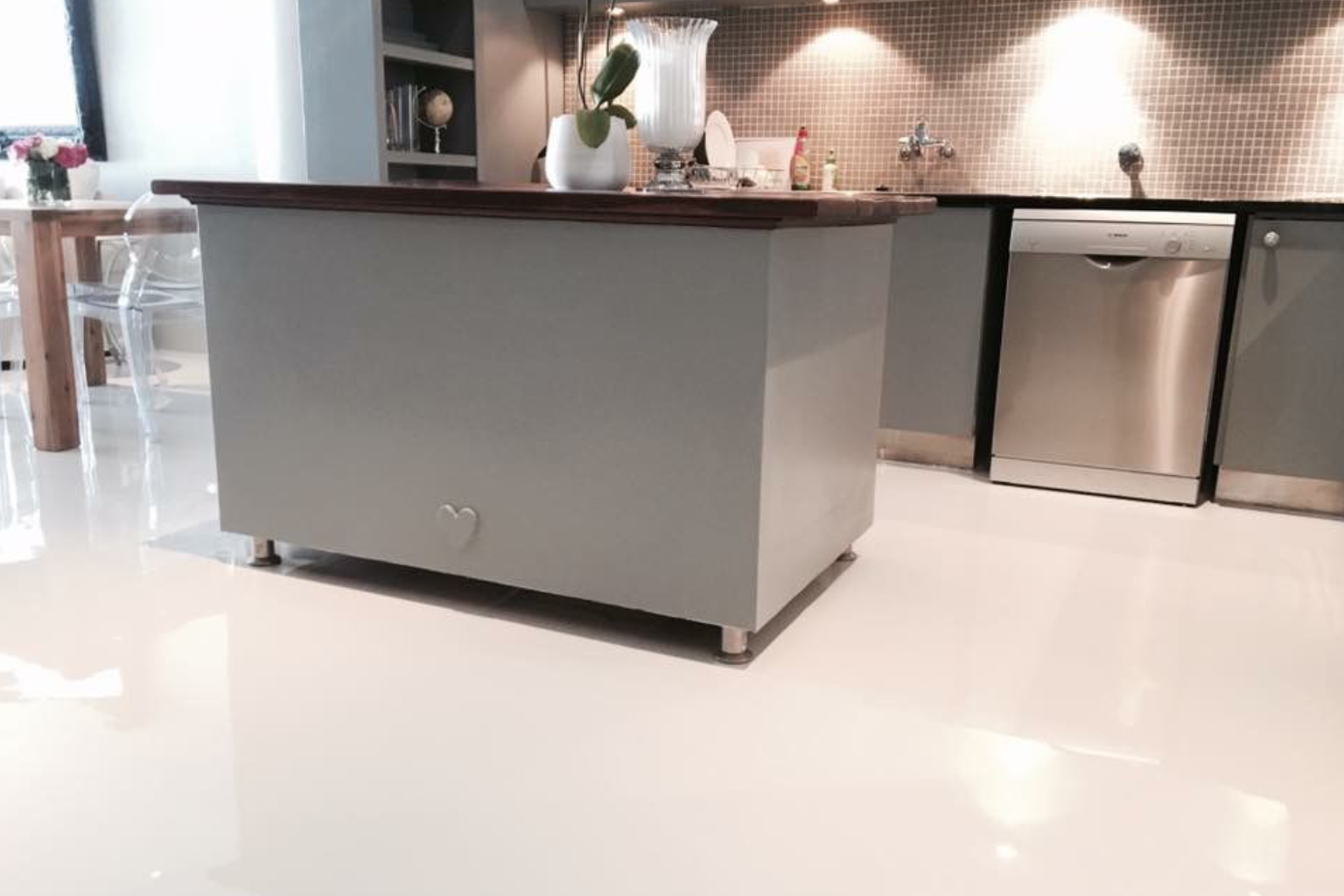
Solid color epoxy offers a uniform and coherent finish. It is available in a broad spectrum of colors. This type gives kitchens a tidy and classic look. It is perfect for homeowners who prefer a simple yet elegant appearance. Solid color epoxy is durable and withstands stains and scratches.
Metallic Epoxy
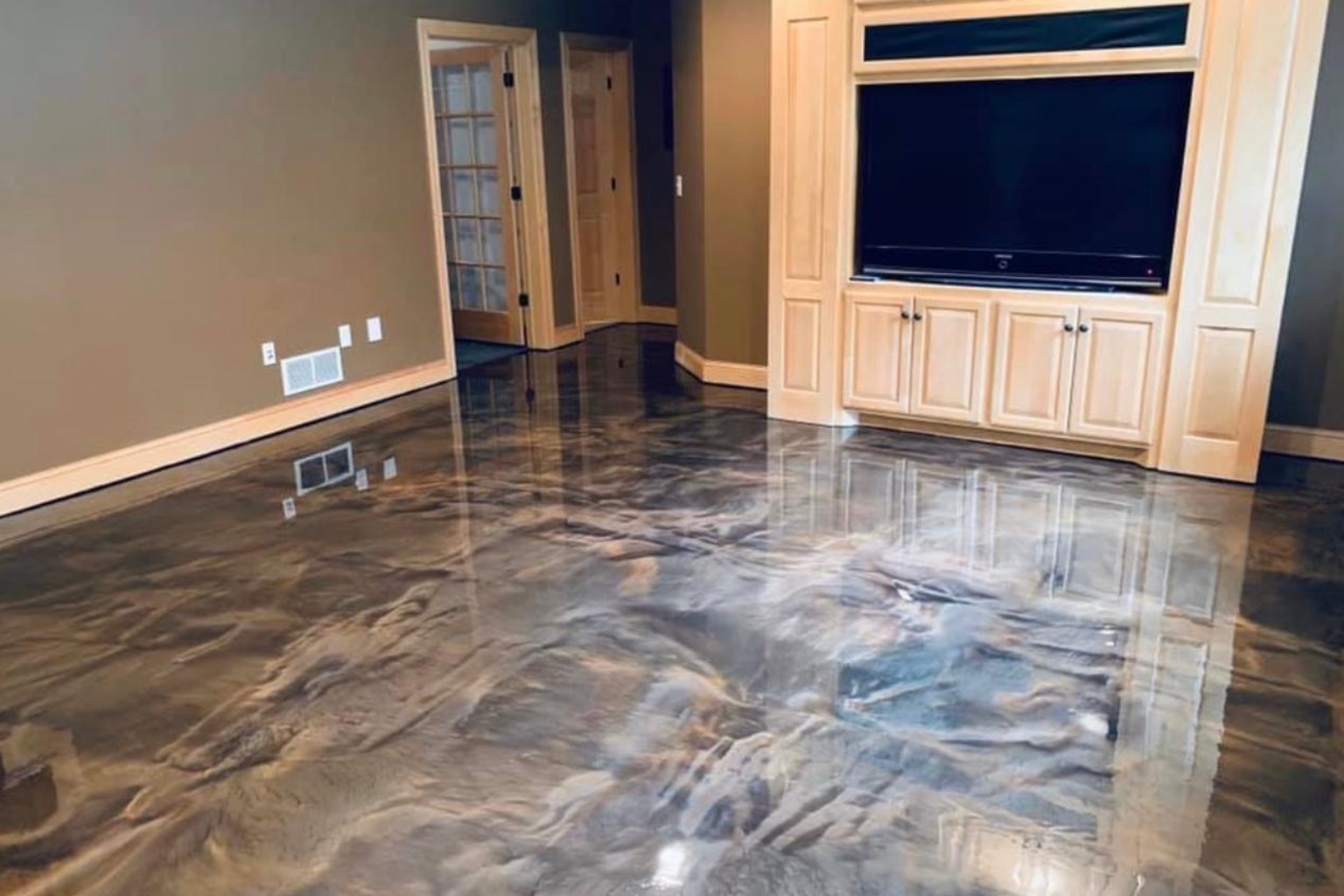
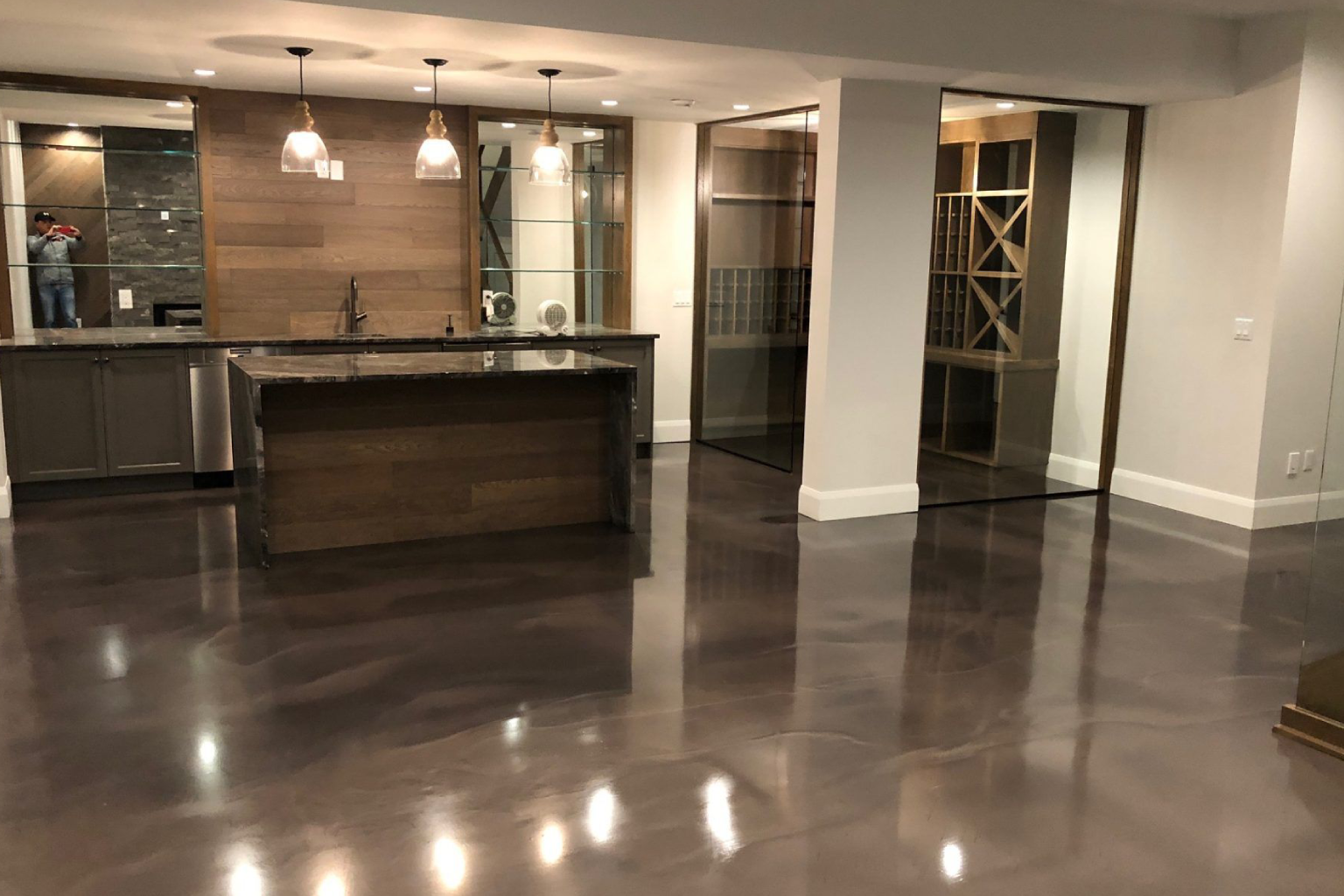
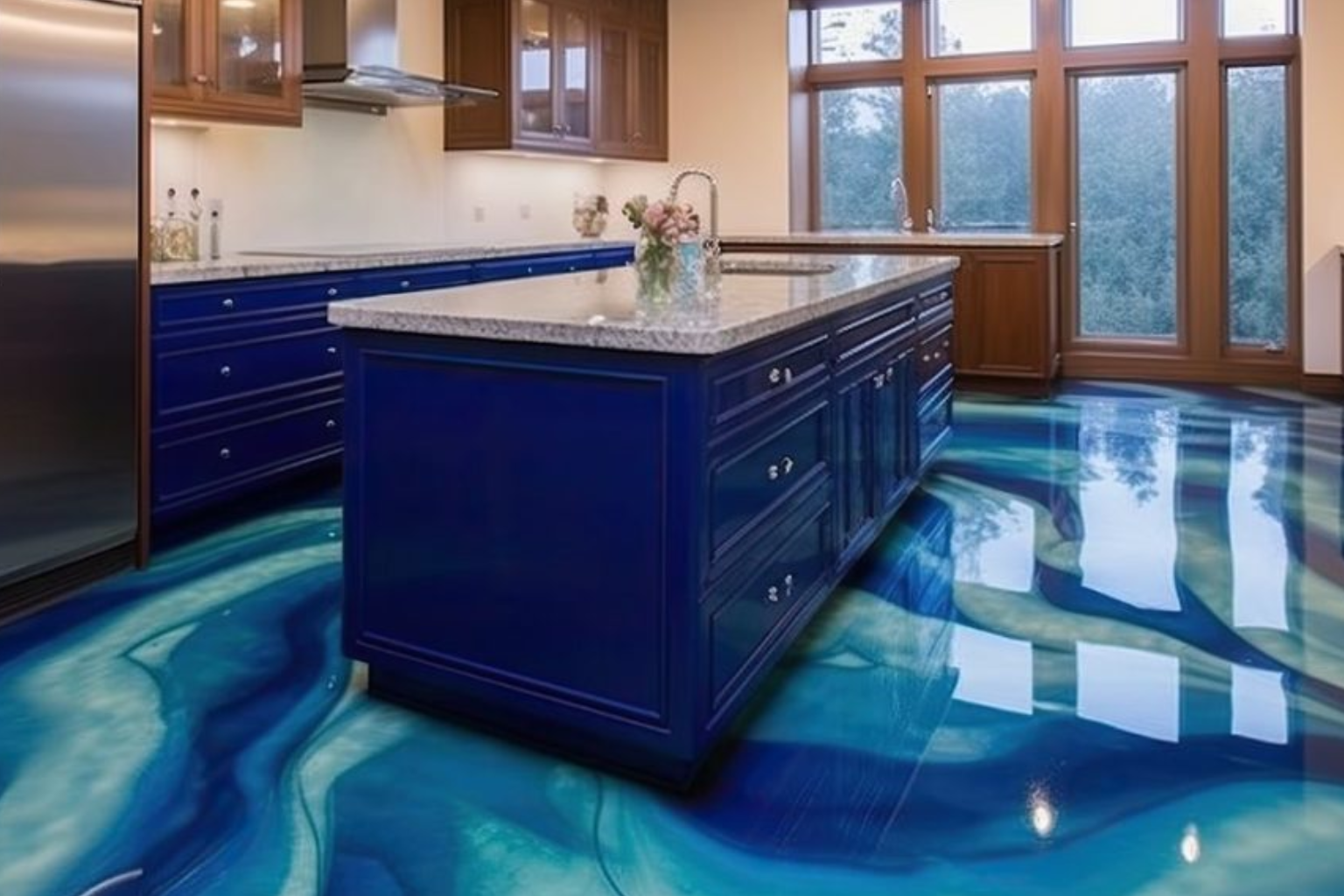
Metallic epoxy creates a reflective, shiny surface. It imitates the look of marble or flowing metal. This type functions well in contemporary or premium kitchen designs. Metallic epoxy flooring adds depth and a lavish feel to the space. The coating is also sturdy and simple to clean.
Flake Epoxy
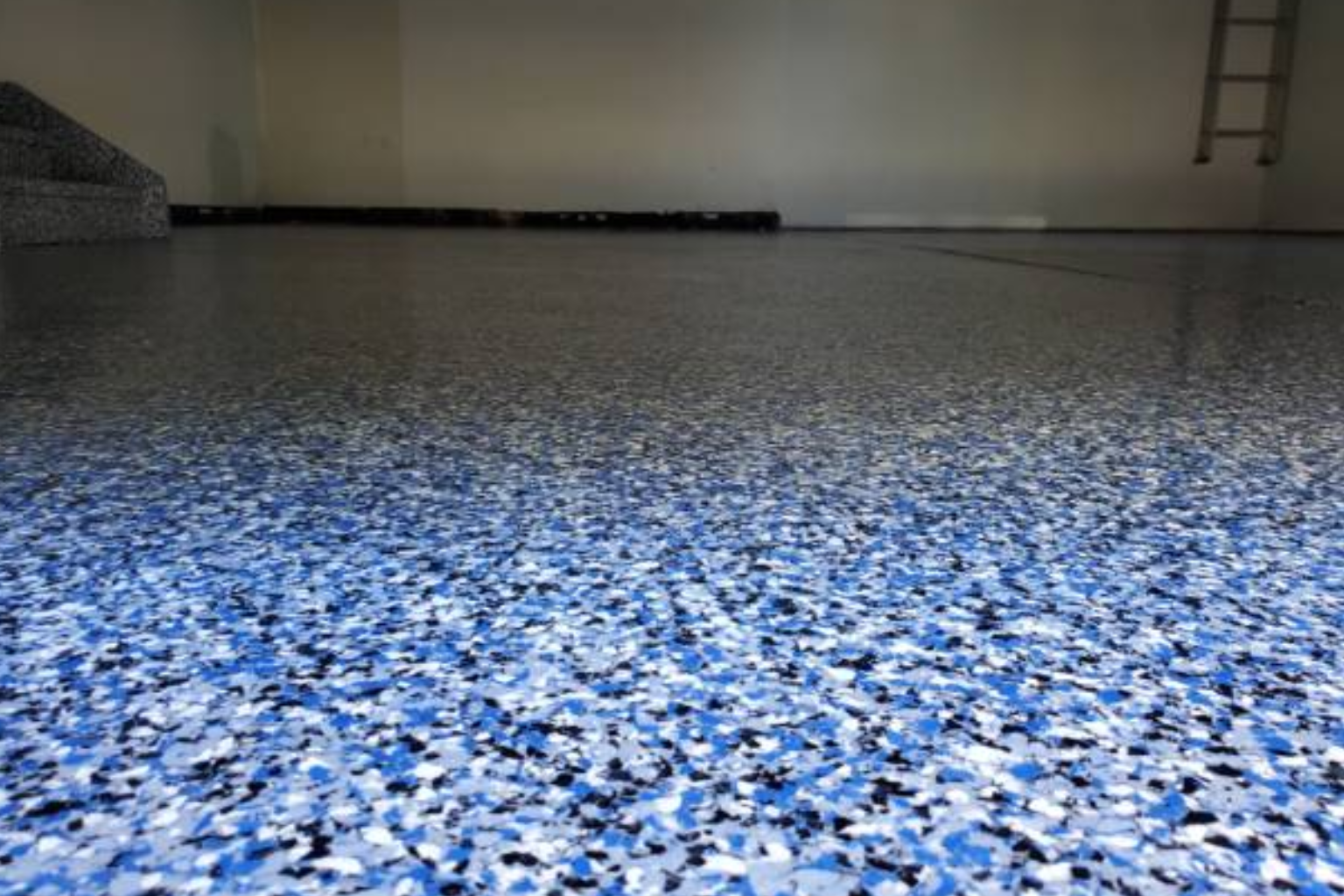
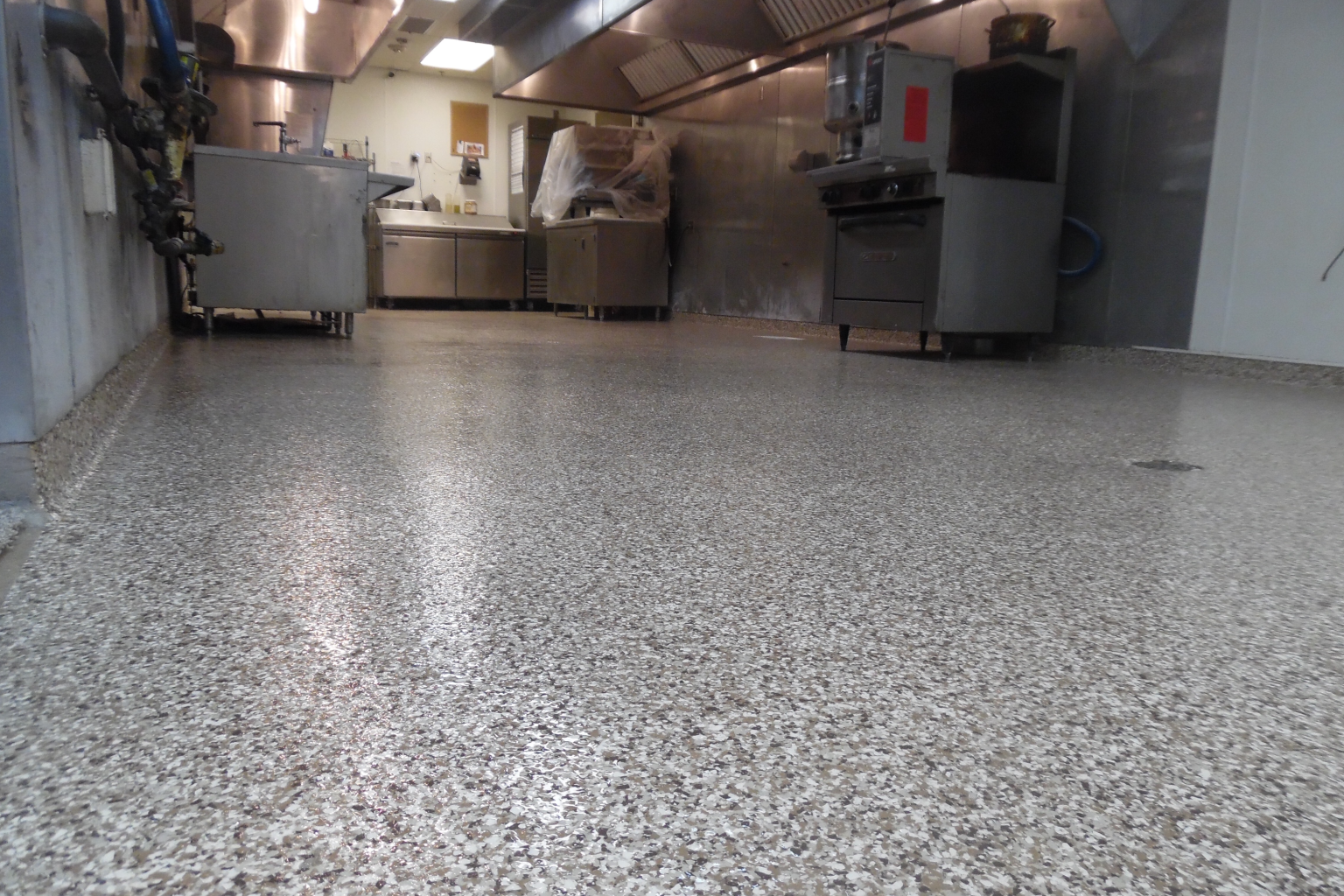
Flake epoxy integrates small decorative flakes in the coating. These flakes add texture and conceal slight imperfections. It offers both an elegant appearance and practical advantages. Flake epoxy flooring is slip-resistant and durable. It works fine in kitchens with heavy foot traffic.
Quartz Epoxy
Quartz epoxy mixes quartz granules into the resin. This creates an extremely durable, textured surface. The floor becomes slip-resistant and can resist heavy use. It is appropriate for bustling kitchens where safety and strength count. Quartz epoxy flooring also retains its look with the passage of time.
Chemical-Resistant Epoxy
Chemical-resistant epoxy is created to manage spills from oils, cleaning agents, and other harsh substances. It avoids damage and keeps the floor looking new. This type is useful for households with frequent cooking or commercial kitchens. Chemical-resistant epoxy blends durability with little maintenance.
Factors Impacting Epoxy Kitchen Floor Cost
Numerous factors affect the kitchen epoxy flooring cost. Having an idea of these factors helps you understand how much an epoxy kitchen floor costs, so you can plan your kitchen effectively.
1. Size of the Kitchen
The size of your kitchen plays a crucial role in pricing. Bigger kitchens require more epoxy material and more labor hours. Precise measurements are significant to get a realistic quote. A 100 sq. ft. kitchen costs considerably less than a 300 sq. ft. one because both materials and labor scale with the area. For example, a small kitchen usually needs two to three gallons of epoxy. Each gallon of good-quality epoxy costs $40 to $80, bringing the material cost to about $120 to $240 for a small kitchen.
2. Type of Epoxy
Various epoxy types offer unique appearances and durability, which impacts the cost. Let’s have a look:
- Metallic Epoxy: Superior and reflective, this type creates a top-quality, appealing finish. Costs range from $9 to $12 per square foot, including installation. Appropriate for homeowners in Woodland Park, NJ who want a remarkable kitchen floor.
- Quartz Epoxy: Mixed with quartz granules for additional texture and slip-resistance. Prices typically fall between $8 and $12 per square foot. It is best for busy kitchens.
- Solid Color Epoxy: Simple and classic, ideal for a tidy, smooth appearance. Prices begin from $4 and go up to $10 per square foot, depending on quality.
- Flake Epoxy: It comprises decorative flakes for depth and elegance. Costs generally range from $5 to $10 per square foot. This type is famous for kitchens that blend practicality and design.
- Chemical-Resistant Epoxy: Designed for heavy-duty kitchens where spills from oils, acids, or cleaning products are common. Costs can range from $4 to $15 per square foot and even more than that, but they offer lasting protection.
3. Surface Preparation and Timing
The condition of your concrete floor and the installation environment impact the final result. New floors mostly require just basic cleaning. Older or damaged floors need patching, grinding, or primer application, adding $1–$5 per square foot. Installing epoxy in the wrong temperature or humidity may create bubbles or soft spots. Fixing these problems might cost an additional $150–$400. Guaranteeing the surface is smooth and conditions are correct helps attain a durable, flawless floor.
4. Complexity of Design
Simple solid colors are the most economical. Adding decorative flakes, metallic finishes, or multi-color patterns enhances labor and material costs. Complicated designs can add $2 to $5 per square foot, depending on detail and color layering.
5. DIY vs Professional Installation
DIY kits are available for $1.50 to $2.50 per square foot. They can save money but need cautious preparation and expertise. Professional installation ensures a smooth, durable floor and ranges from $3 to $12 per square foot, depending on the epoxy type and finish.
Comparing the Cost of Epoxy Kitchen Flooring With Other Options
Selecting a kitchen floor means considering cost, durability, and how it handles everyday use. Let’s compare a few common floors with epoxy.
Tile Flooring vs Epoxy
Tile is celebrated for its numerous colors and patterns. It generally costs $5 to $15 per square foot. Grout lines get dirty easily and need regular scrubbing. Tiles can also crack if large items fall. Compared to tile, epoxy offers a smooth surface that withstands stains, scratches, and impacts. Cleaning is easier, and the floor remains fresh for a very long time.
Vinyl Flooring vs Epoxy
Vinyl flooring is soft underfoot and costs approximately $2 to $7 per square foot. It is available in numerous styles and is fast to install. Big pots or appliances can dent it, and water spills might cause warping. On the contrary, epoxy flooring is stronger. It withstands chemicals, moisture, and everyday wear. While vinyl might require replacement after a few years, epoxy can last 15 to 20 years with simple maintenance.
Concrete Staining vs Epoxy
Concrete staining offers a tidy, modern appearance and costs about $2 to $5 per square foot. It does not safeguard the floor. Scratches, stains, and wear appear swiftly, and resealing is often required. Epoxy adds a protective layer that conceals cracks and avoids damage. It can also be made slip-resistant for safety. With the passage of time, epoxy decreases the effort and cost of repairs and cleaning.
Epoxy flooring might cost more upfront, but it outshines tile, vinyl, and concrete in durability, maintenance, and longevity.
Advantages of Epoxy Kitchen Flooring
Epoxy kitchen flooring offers numerous benefits that make it a preferred option for busy cooking spaces. It is designed to manage everyday activity, spills, and consistent foot traffic.
Many homeowners in Woodland Park, NJ, ask: “Is epoxy good for a kitchen floor? Yes, it is as the U.S. epoxy flooring market reached $2.43 billion in 2024 and is expected to cross $3.7 billion by 2031, showing its growing popularity among homeowners.
The following are a few of the benefits of epoxy kitchen flooring:
Strong and Long-Lasting
Epoxy creates a hard surface that can endure heavy use in the kitchen. Pots, pans, and minor appliances generally move around, and epoxy tackles this pressure without cracking or peeling. A properly installed epoxy kitchen floor can last 15 to 20 years, which means you do not have to think about replacements anytime soon. This long service life also makes the investment completely worth it.
Easy to Clean
Kitchens experience spills each day. Oil, sauces, juices, and water mostly hit the floor. Epoxy makes cleaning straightforward because it is non-porous. Liquids sit on top rather than soaking in. An instant wipe or mop eliminates stains before they settle. Dust and crumbs do not stick to the surface either, so the kitchen remains cleaner with minimum effort.
Slip-Resistant and Safe
Kitchens are wet areas, particularly near sinks and cooking areas. Epoxy can be made slip-resistant by adding a grit additive. This provides the floor with a gentle texture and increases stability underfoot. Families with children or elderly members find this extremely useful, as it decreases the possibility of slipping accidents.
Personalizable for Stylish Kitchens
Epoxy offers numerous design options. You can select solid colours, marble-like metallic effects, or decorative flakes. This aids you in matching your kitchen theme without changing cabinets or walls. Shiny finishes also brighten darker kitchens by reflecting light.
Safeguards the Concrete Base
If your concrete has minor cracks or non-uniform areas, epoxy covers them and avoids new damage. It seals the surface and keeps dampness from entering the concrete. This protection enhances the general life of your kitchen floor.
The benefits of installing epoxy floors go beyond durability and elegance, as they make daily cleaning simpler. Moreover, it also safeguards your kitchen for years. Selecting the correct finish guarantees you enjoy both function and style.
Drawbacks of Epoxy Kitchen Flooring
Epoxy flooring works well in many kitchens, but it still has a few limitations. Comprehending these points aids you in planning better and selecting what suits your kitchen’s requirements.
Longer Installation and Curing Time
Epoxy takes time to install. The concrete should be cleaned and dried first. The floor then requires one to three days to cure. This slows down normal kitchen use. Planning the work during a quiet week or recruiting experienced installers makes the procedure smoother.
Sensitive to Sunlight
Intense sunlight can change the colour of epoxy as time goes by. Floors near big windows might turn slightly yellow. A UV-resistant topcoat reduces this issue and keeps the floor looking fresh.
Can Feel Slippery When Wet
Glossy epoxy may feel smooth under wet feet. This is common near sinks or cooking spots. A fine non-slip additive or a light texture gives superior grip and keeps the kitchen more secure.
Requires Skilled Application
Epoxy is not easy to apply. The surface must be prepared correctly. Mistakes may result in bubbles or peeling later. A professional installer handles the prep and gives you a tidy, durable finish.
Despite these advantages, epoxy remains a preferred option for kitchens. With adequate care and professional installation, many problems can be addressed, providing you with a durable and appealing floor.
Common Mistakes to Avoid With Epoxy Kitchen Flooring
Epoxy flooring can look stunning in a kitchen, but minor mistakes can make the project more costly. Avoiding the following errors keeps your floor robust and helps you save real money.
Skipping Proper Surface Prep
If the concrete is not cleaned or levelled, the epoxy will not bond properly. This results in peeling, bubbles, and uneven patches. Fixing this mistake later can cost you an additional $3 to $7 per square foot because the installer must eliminate the damaged layer and prepare the surface again. Proper prep at the start eradicates this risk.
Rushing the Cure Time
Epoxy requires the appropriate amount of time to dry. If you apply the next coat too early, the finish may turn soft or patchy. Repairing this mistake generally adds $150 to $400 to your entire cost. Following the suggested cure time saves that money and keeps the finish seamless.
Selecting Low-Quality Epoxy
Low-cost epoxy looks fine in the beginning, but breaks down quickly. It can yellow, chip, or fade in a kitchen setting. Recoating an inferior quality floor later may cost you $2 to $6 per square foot. Using a top-quality epoxy from the beginning prevents this additional spending.
Trying DIY Without Adequate Expertise
Epoxy work requires expertise. Inaccurate mixing, uneven spreading, or poor timing may damage the whole floor. Fixing DIY errors generally costs $300 to $900 because experts must correct the base and reapply the topcoat. Hiring trained installers or learning the correct steps can avoid this loss.
By preventing the above-mentioned mistakes, you safeguard your kitchen floor and save a considerable amount of money in the future.
How to Save Money on Epoxy Kitchen Flooring
Saving money on epoxy flooring is possible without sacrificing durability or appearance. The following are a few of the tips to consider
- Select standard epoxy: Standard epoxy costs $3–$7 per square foot, while metallic or decorative epoxy can go up to $15 per square foot. Using standard epoxy for the primary floor and adding decorative accents in smaller areas may decrease general costs.
- Limit decorative finishes: Rather than covering the whole kitchen with metallic or flake finishes, apply them only in high-visibility areas, like near the island or entry. This may save $200–$400 on a medium-sized kitchen.
- DIY minor prep tasks: Cleaning, sanding, or patching minor cracks yourself before professional installation can decrease labour costs by $100–$200.
- Purchase in bulk: Buying epoxy and additives in slightly larger quantities can minimize per-gallon costs. For a tiny kitchen, purchasing 3 gallons rather than 2 can save around $20–$50 while guaranteeing you have sufficient material.
- Avoid Needless Layers: Two coats are generally enough for durability. Additional coats add elegance, but also $100–$300 in material and labor without a major advantage.
- Select Colors Wisely: Lighter shades cover scratches and dust better, decreasing the requirement for regular touch-ups. Neutral colors conceal small stains, lowering cleaning and maintenance costs by approximately $50–$150 per year. Using one primary color for most of the floor and a darker or metallic accent only in visible spots can save $100–$300 on a medium-sized kitchen.
- Plan Cautiously: Measure your kitchen precisely to refrain from ordering excessive epoxy. Oversupply results in waste and additional expenditure. Correct planning can save $50–$100 on materials for a small to medium kitchen. Grouping areas for effective coverage guarantees you only purchase what is essential.
- Stick to Proven Brands: Premium epoxy might cost $40–$80 per gallon, slightly greater than low-cost alternatives at $20–$35 per gallon. Using a reputable brand avoids future recoating or repairs, saving $200–$400 over the floor’s lifetime.
By choosing materials cautiously, planning your layout, managing prep work effectively, and picking colors strategically, you can lower your total kitchen epoxy cost from $1,200–$2,000 to around $900–$1,400 for a medium-sized kitchen.
Why Colour Choice Matters in Kitchens
Selecting the correct colour for your kitchen epoxy floor can change how your space looks and feels while also impacting its functionality.
- Upgrades Kitchen Design: The appropriate colour can unify your kitchen. Lighter shades make small-sized kitchens feel open and bright. Darker shades add warmth and comfort to bigger kitchens.
- Reflects Personal Style: Your floor colour displays your taste. Neutral shades provide a vintage appearance. Bold or metallic colours add personality and make your kitchen unique.
- Highlights or Hides Flaws: Lighter colours conceal small scratches and dust. Dark or patterned floors can cover stains and minor cracks. This can save $100–$300 in repairs in the course of time.
- Creates Visual Impact: Glossy epoxy floors reflect light. Bright or vibrant colours make the kitchen feel vibrant. Muted colours create a calm and pleasant atmosphere.
- Enhances Functionality: Few colours hide spills and dirt superior, decreasing the need for regular cleaning. Certain epoxy pigments also enhance resistance to stains, chemicals, or UV exposure.
Selecting the correct colour guarantees your epoxy kitchen floor looks elegant and remains functional for a very long time.
Epoxy Kitchen Flooring Cost by Colours
Having epoxy floor colour ideas makes selecting the right shade easier. Your choice of colour influences the kitchen’s mood, look, and perceived cleanliness, while also upgrading the style and openness of the space.
The following are a few of the best kitchen epoxy colours:
White and Light Shades
White or off-white epoxy floors make the kitchen feel airy and expansive. They reflect light well, which brightens darker kitchens. White is eternal and works with almost any cabinet or wall colour. The issue is that it might show dirt more easily, but regular sweeping and mopping keep it looking fresh. Standard epoxy in white generally costs $3–$7 per square foot.
Gray and Neutral Tones
Gray is subtle, stylish, and functional. Lighter grays help make tiny kitchens feel bigger. Darker grays give a modern, sophisticated appearance. Gray conceals small spills and stains better than white, making maintenance simpler. Neutral tones such as taupe or beige also perform well for classic or country-style kitchens. Pricing for gray epoxy is similar to white, approximately $3–$7 per square foot for standard finishes.
Bold Colours: Blue, Green, and Red
Bright colours such as blue, green, or red add personality and elegance. Blue brings calmness and works fines with white or wood cabinets. Green gives a natural, refreshing feel. Red adds energy to the space and makes it lively, perfect for open kitchens or cooking spots. Bold colours cost a bit more if you select metallic or decorative finishes, ranging from $6–$12 per square foot.
Earthy Tones: Brown and Tan
Brown and tan shades provide a warm, cozy look. They match rustic or farmhouse-style kitchens. These colours hide small stains and scratches efficiently. Standard brown epoxy costs $3–$7 per square foot, while decorative textures can increase the price to $8–$10 per square foot.
Black and Dark Shades
Black epoxy floors are dramatic and contemporary, but can make a tiny kitchen feel darker. They need enough natural light or contrasting cabinet colours to prevent a gloomy appearance. Black is also outstanding at highlighting countertops or decorative features. Prices for black epoxy floors are generally $4–$9 per square foot, depending on the finish.
Metallic and Decorative Epoxy
Metallic finishes and decorative flakes create a lavish, distinctive effect. Gold, silver, or copper swirls catch the light and add depth. These finishes are famous for top-end kitchens and may cost $10–$15 per square foot. Using metallic accents in only heavy-traffic or visible areas can decrease costs without compromising style.
Is Epoxy Flooring Worth It for Your Kitchen?
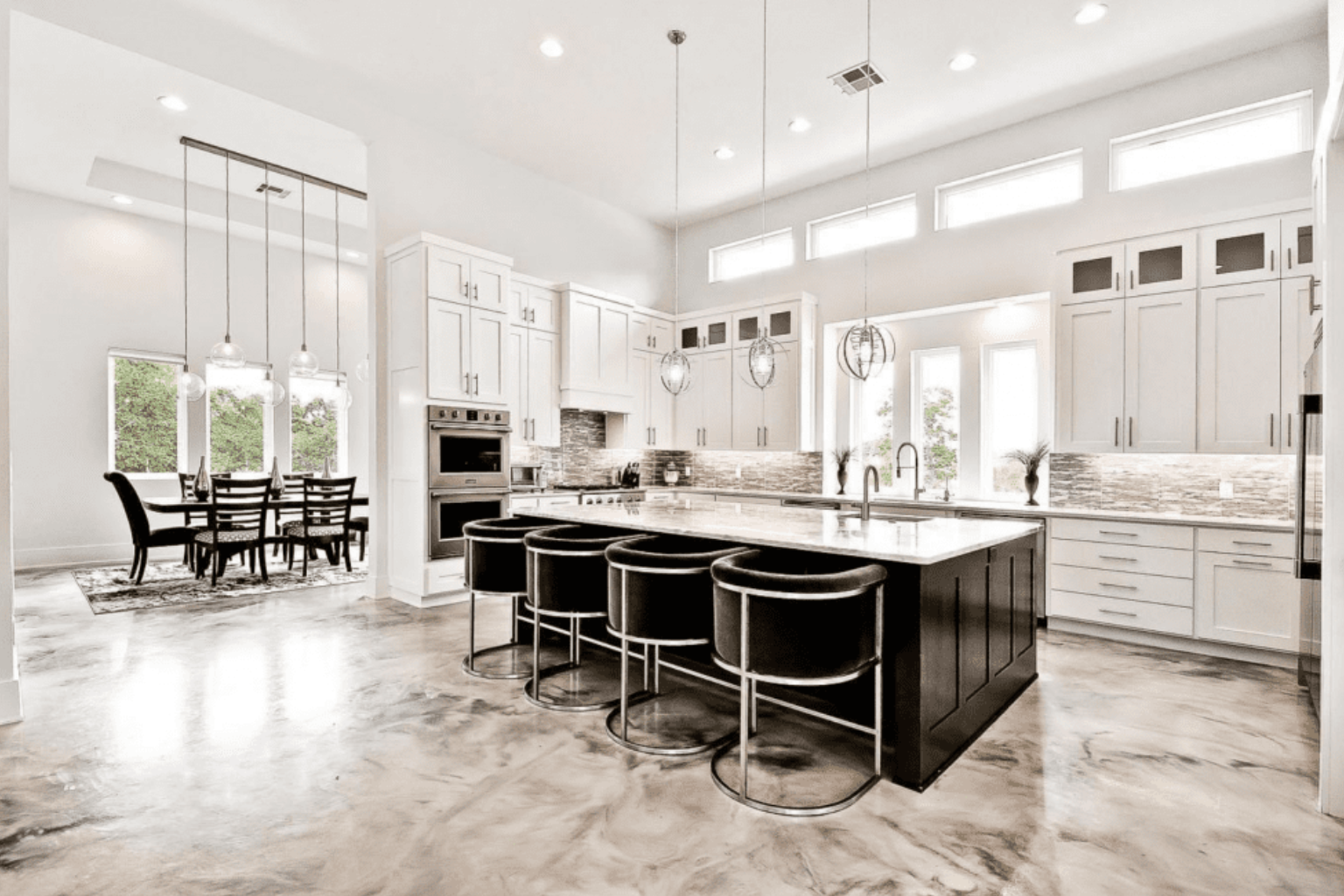
Selecting an epoxy floor upgrades your kitchen into a space that feels modern, refined, and functional. The smooth surface manages everyday wear and spills without difficulty. You will witness how easy it is to keep clean while still looking stylish, even in high-traffic areas. Learn more about how epoxy flooring increases property value to see why it is a wise investment.
In addition to looks, the strength and durability of epoxy make it a decision you will feel proud of for years. The floor can handle everything from big pots to bustling family life without losing its appeal. With the correct finish and colour, it adds personality and elegance to your kitchen, making it a choice that feels both wise and rewarding.
Conclusion
So, how much does an epoxy kitchen floor cost? On average, expect $3 to $12 per square foot, depending on your choices, with total costs for standard kitchens ranging from $400 to $1,500. Factors such as size, type of epoxy, design complexity, surface preparation & timing, and professional installation all play a significant role in final pricing.
Epoxy floors are durable, maintenance-friendly, and incredibly customizable, making them a functional and elegant investment. For homeowners in Woodland Park, NJ, looking for an immaculate kitchen floor, professional installation is suggested to guarantee longevity and beauty. Knowing the epoxy floor installation cost helps plan the budget precisely.
If you are ready to get started, Epoxy Shine offers knowledgeable guidance, quality materials, and professional installation to make your epoxy kitchen floor project smooth.
Frequently Asked Questions
Is epoxy flooring costly for kitchens?
Epoxy flooring remains affordable because it lasts long and requires extremely little maintenance. Most kitchens fit within a cost that feels easy for most homes to manage.
What impacts the cost of epoxy kitchen floors?
The size of your kitchen, the type of epoxy, and the floor’s condition impact the total price. Designs and colours can enhance costs, while simple styles help keep the budget steady.
Does epoxy flooring save money over time?
Yes, epoxy saves money because it withstands stains, spills, and scratches. It seldom requires repairs, so the long-term cost remains low and the floor stays robust for many years.
Is epoxy cheaper than tiles or hardwood?
Epoxy generally costs less because it requires fewer materials and reduced maintenance. Tiles can crack, and hardwood can mark easily, while epoxy remains durable and easy to maintain.
How long does epoxy kitchen flooring last?
Epoxy can last up to 20 years when installed well. It keeps its shine, handles everyday use, and remains smooth with basic cleaning. This makes it a reliable and durable kitchen flooring option.