
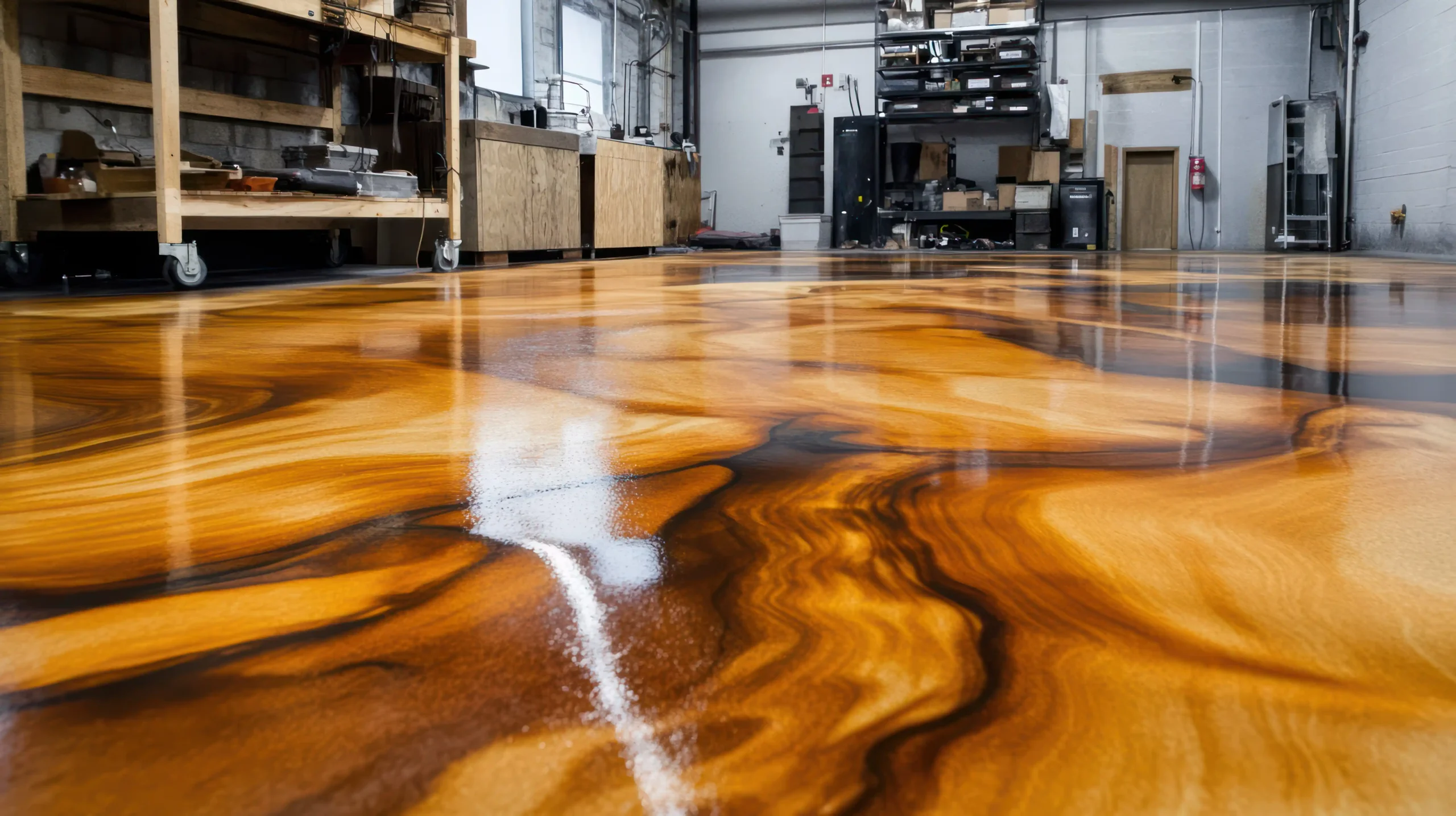
Metallic epoxy flooring can make plain concrete look polished, custom, and high-end. It is often chosen for garages, basements, showrooms, salons, offices, and retail spaces where the floor needs to do more than simply cover concrete. But it is not the right floor for every project.
A metallic floor can be beautiful, seamless, and easy to clean. It can also cost more than basic coatings, show scratches more clearly on glossy finishes, and feel slippery when wet if the wrong topcoat is used. The best decision depends on how the space will be used every day.
This guide explains the real pros and cons of metallic epoxy flooring so you can decide if it fits your garage, basement, commercial space, or decorative concrete project.
Key Takeaways
- Metallic epoxy is best when custom design and visual impact are top priorities.
- It creates a smooth, seamless surface that is easier to clean than bare concrete.
- The coating can be durable, but concrete prep, topcoat quality, and daily use matter more than the metallic look itself.
- Glossy metallic floors may show scratches, dust, footprints, and tire marks more than textured flake systems.
- Slip resistance should be discussed before installation, especially for garages, basements, and commercial spaces.
- This flooring usually costs more than basic epoxy, so it should be chosen for design value, not just surface protection.
What Is Metallic Epoxy Flooring
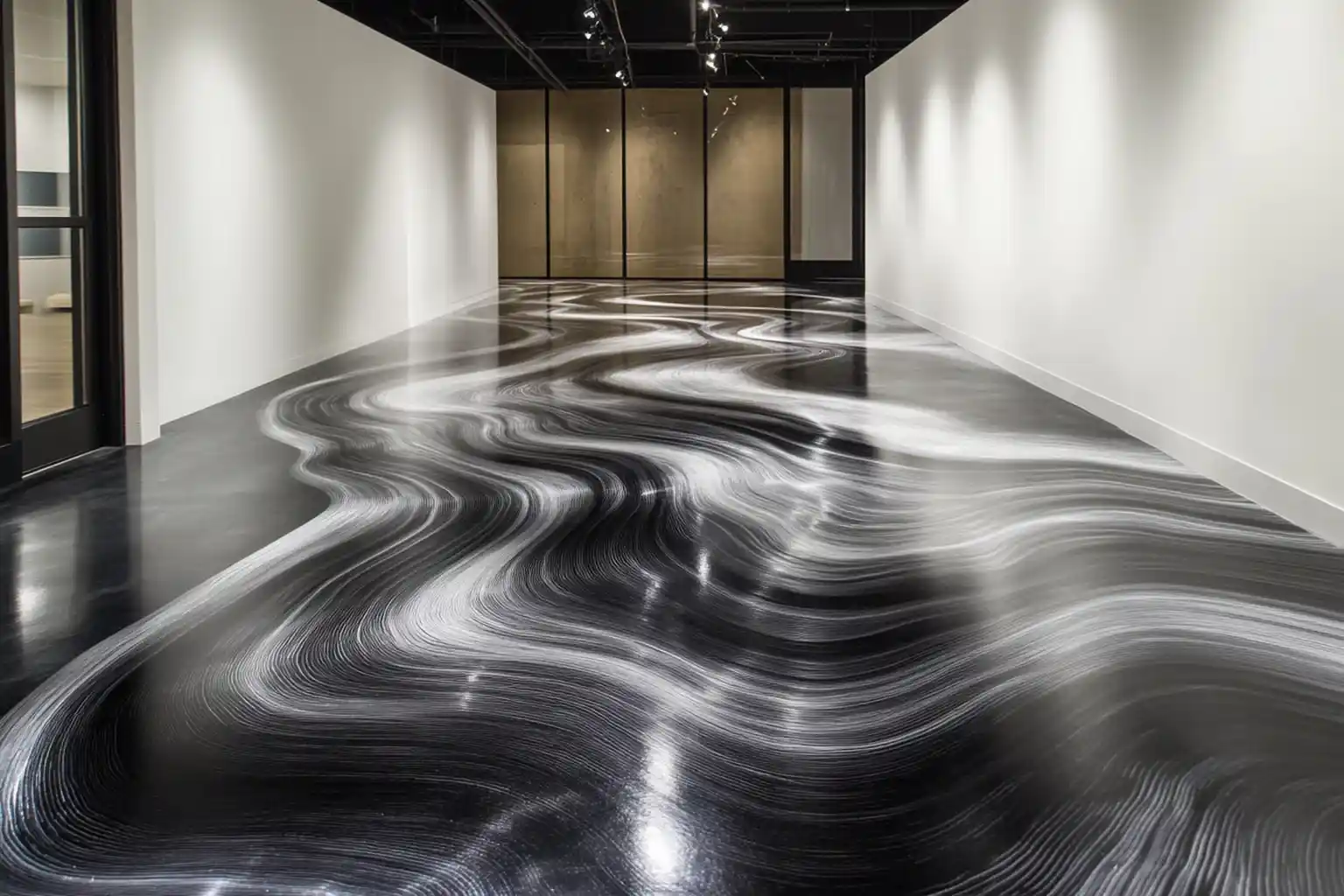
Metallic epoxy is a decorative concrete coating made with epoxy resin, hardener, and metallic or pearlescent pigments. These pigments move through the coating during installation and create flowing, cloudy, marble-like, or three-dimensional visual effects.
The system is installed over prepared concrete and finished with a clear protective topcoat. That topcoat helps protect the design layer from daily wear, stains, cleaning, and foot traffic.
Pros of Metallic Epoxy Flooring
The biggest reason people choose metallic epoxy is appearance. But the benefits are not only visual. When the system is installed correctly, it can also make concrete easier to clean, more finished, and better suited for homes and businesses.
The important point is that the full coating system matters. A metallic design alone does not make a floor strong. The prep work, primer, topcoat, and maintenance all play a role.
It Creates a Custom High-End Look
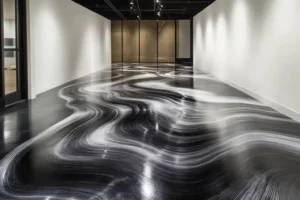
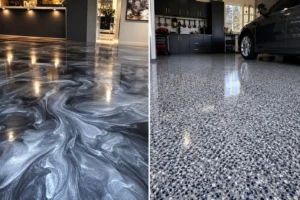
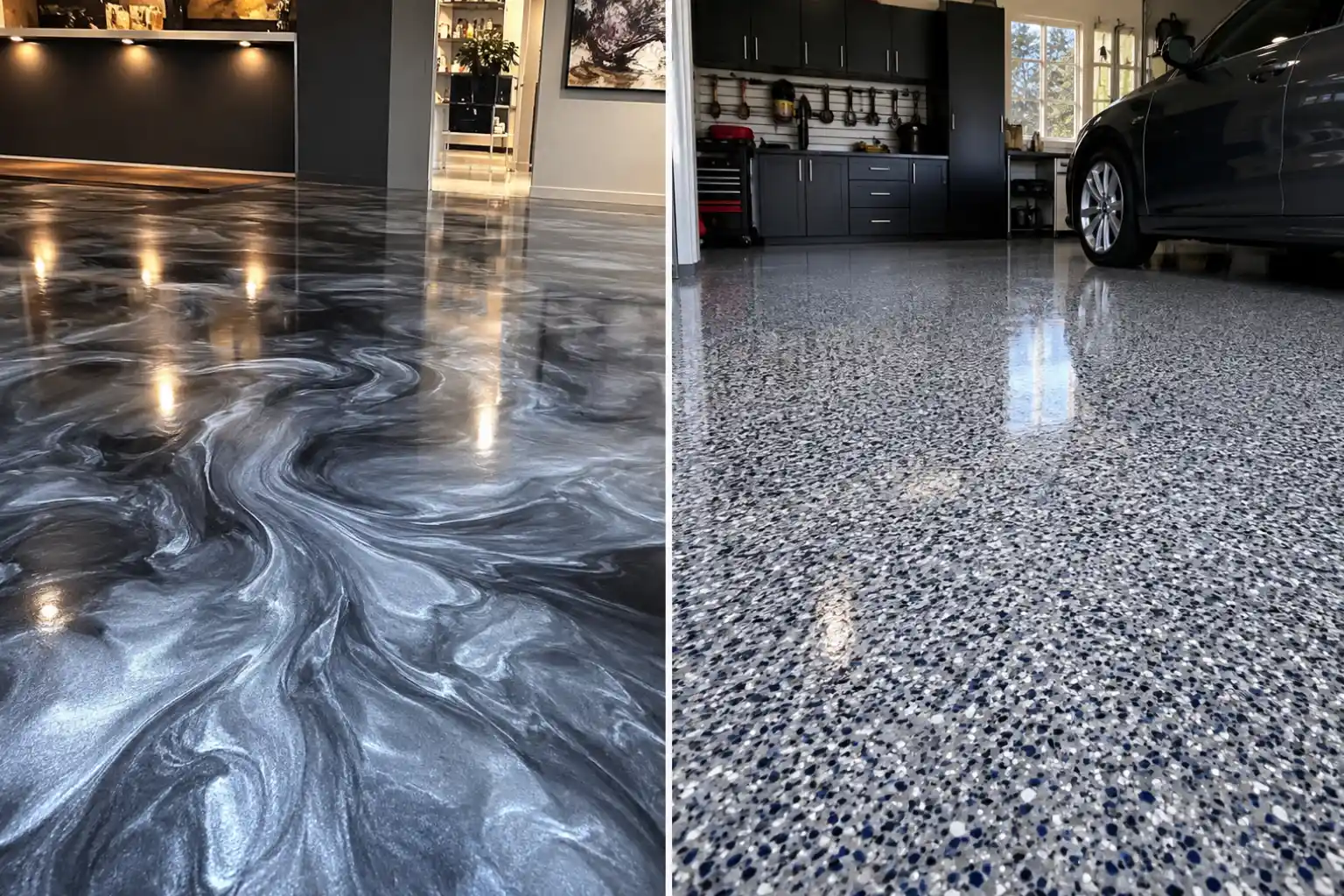
Metallic epoxy stands out because every floor looks different. The pigments create movement inside the coating, so the final surface may look like marble, smoke, flowing water, polished stone, or a custom abstract design.
This is one of its strongest advantages. It can make a basement feel finished, a showroom feel more polished, or a garage feel like a display space. The floor becomes part of the design instead of just a surface under your feet.
It is especially useful for:
- Showrooms
- Salons
- Retail stores
- Offices
- Finished basements
- Entertainment rooms
- Stylish garages
- Customer-facing commercial spaces
If the goal is to create a floor people notice, metallic epoxy is one of the strongest decorative coating options.
It Turns Plain Concrete Into a Finished Surface
Bare concrete can look dull, stained, dusty, or unfinished. Metallic epoxy can turn that same slab into a cleaner, brighter, more complete surface.
This is helpful in basements and garages where concrete often makes the room feel unfinished. A properly installed coating can cover old surface stains, improve the appearance of the space, and make the room feel more usable.
However, the coating does not fix structural concrete problems by itself. Cracks, weak areas, moisture issues, and damaged surfaces should be repaired or evaluated before installation. The better the slab is prepared, the better the final floor will look.
The Seamless Surface Is Easier to Clean
One major benefit of metallic epoxy is that it creates a seamless surface. There are no grout lines like tile and no open pores like bare concrete. Dust, dirt, and spills stay on top of the coating instead of soaking into the slab.
This makes cleaning easier in garages, basements, showrooms, salons, offices, and retail spaces. Regular sweeping and light mopping are usually enough for normal care.
A seamless floor is also helpful in spaces where a clean appearance matters. It can make a room look more organized because there are fewer lines, gaps, and rough areas where dirt can collect.
It Offers Many Color and Design Options
Metallic epoxy gives you more design flexibility than basic solid-color coatings. Popular colors include silver, black, gray, pearl, bronze, copper, white, charcoal, blue, gold, and deep earth tones.
The design can be bold or subtle. Some people want dramatic contrast with dark and bright pigments. Others prefer soft gray, pearl, or neutral tones that look more modern and calm.
This flexibility makes it useful for both residential and commercial spaces. A salon may want a rich, glossy design that matches the brand. A basement may need a softer finish that blends with furniture and lighting. A garage may need a darker design that feels clean and premium.
The only caution is not to overdo it. Too many colors can make the floor look busy. A controlled design usually looks better and ages better.
It Can Be Durable When Properly Installed
Metallic epoxy can be durable, but the strength comes from the whole system, not just the metallic pigments. The floor needs proper concrete grinding, crack repair, primer, coating thickness, cure time, and a protective topcoat.
The clear topcoat is especially important. It protects the decorative layer from stains, surface wear, cleaning products, light abrasion, and daily use. Without the right topcoat, the floor may lose its finish faster.
A properly installed system can work well in homes, finished basements, showrooms, salons, offices, retail spaces, and clean garages. The floor should still be matched to the expected traffic. A decorative floor in a showroom does not face the same abuse as a workshop or warehouse.
It Can Improve Light Reflection
Metallic epoxy often has a glossy or polished finish that reflects light. This can make some spaces feel brighter, cleaner, and more open.
This is helpful in basements, garages, showrooms, and retail spaces where lighting affects the feel of the room. A reflective floor can make a space look more finished and professional.
Still, high gloss is not for everyone. Some people prefer a satin or lower-sheen finish because it feels softer and shows fewer marks. The finish should match the design goal and daily use of the space.
Cons of Metallic Epoxy Flooring
Metallic epoxy has strong benefits, but it also has real limitations. Understanding those limitations before installation helps avoid disappointment.
Most problems happen when the floor is chosen for looks alone. The better question is not only, “Do I like this design?” It is also, “Will this coating fit how I use the space?”
It Usually Costs More Than Basic Epoxy
Metallic epoxy costs usually run higher than basic solid-color epoxy or some flake systems. The reason is simple: it requires more skill, more design control, and more careful installation.
The installer must manage color movement, blend the pigments correctly, control timing, and create a balanced design across the whole floor. Concrete repairs, grinding, moisture treatment, and premium topcoats can also increase the price.
Common cost factors include:
- Square footage
- Concrete condition
- Crack repair
- Surface grinding
- Moisture concerns
- Number of colors
- Design complexity
- Topcoat type
- Slip-resistant finish
- Residential or commercial use
If the main goal is the lowest upfront cost, metallic epoxy may not be the best option. It makes more sense when the custom appearance adds real value to the space.
Smooth Glossy Floors Can Show Scratches More
Metallic epoxy can be durable, but smooth glossy finishes may show surface marks more clearly than textured coatings. This is especially true with dark colors or high-shine finishes.
Small scratches, footprints, dust, drag marks, and tire marks can stand out more because the surface reflects light. The floor may still be performing well, but visible marks can bother people who expect it to look perfect all the time.
This matters most in:
- Busy garages
- Workshops
- Storage areas
- Spaces with rolling chairs
- Areas with heavy furniture
- Floors where tools or sharp objects may be dragged
It May Be Slippery Without the Right Finish
A smooth metallic epoxy floor can feel slippery when wet. This is important for garages, basements, commercial spaces, and any area where water, snow, cleaning solution, or moisture may reach the floor.
The good news is that slip resistance can often be improved with the right topcoat or additive. The trade-off is that more texture may slightly change the final appearance. A heavy grip finish may reduce the smooth glass-like look that many people want from metallic epoxy.
This should be discussed before installation, not after. A garage may need more traction than a showroom. A salon may need a balance between style and safety. A basement may need enough grip for normal family use.
The right finish depends on how the space will be used.
The Final Look Depends Heavily on Installer Skill
Metallic epoxy is more artistic than many other coating systems. The final pattern is created during installation, so experience matters.
Poor mixing, rushed application, uneven spreading, weak design control, or bad timing can create a floor that looks muddy, streaky, blotchy, or unbalanced. Once the coating cures, fixing the look is not simple.
This is why DIY metallic epoxy can be risky. Even if the product is good, the result depends on surface prep, mixing ratios, working time, color movement, and topcoat application.
Therefore, choose professional installers like Epoxy Shine that provide excellent and flawless installation that lasts a lifetime.
Con 6: Concrete Problems Must Be Fixed First
Metallic epoxy should not be installed over problem concrete without proper preparation. Cracks, moisture vapor, peeling coatings, oil contamination, soft concrete, and uneven areas can all affect the final result.
Moisture is especially important in basements. If vapor is coming through the slab, it can affect adhesion and cause coating failure. In garages, old coatings, road salt damage, oil stains, and cracks may need attention before the new floor is installed.
Good prep may include:
- Concrete inspection
- Moisture testing
- Crack repair
- Grinding
- Degreasing
- Removal of weak coatings
- Surface cleaning
- Primer application
Skipping preparation may lower the price at first, but it can shorten the life of the floor.
Where Metallic Epoxy Flooring Works Best
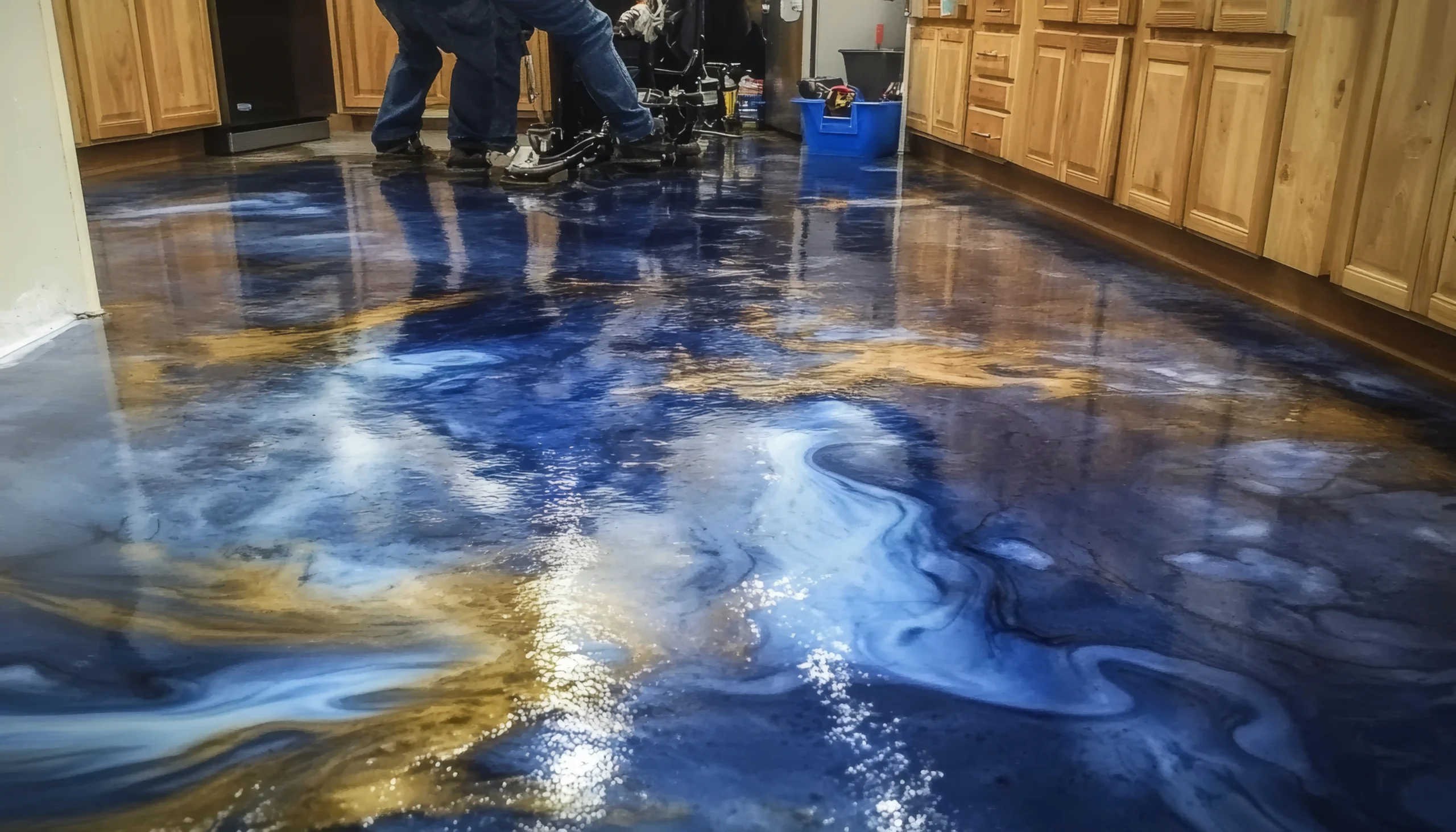
Metallic epoxy works best in spaces where appearance matters and the floor is not exposed to constant rough abuse. It is a decorative system first, so the strongest use cases are areas where the floor supports the look and feel of the space.
That does not mean it is only for show. It can still be practical when the right topcoat and finish are used. The key is matching the system to the room.
Finished Basements
Metallic epoxy can be a strong option for finished basements because it turns concrete into a cleaner and more decorative surface. It can make a basement feel more like a living area instead of a storage space.
It is useful for entertainment rooms, game rooms, home bars, home gyms with lighter use, and open basement spaces. The seamless surface is also easier to clean than carpet or grout.
The main caution is moisture. Basement concrete should be checked before installation. If moisture issues are ignored, the coating may not perform well.
Showrooms and Retail Spaces
Showrooms and retail spaces are some of the best places for metallic epoxy. The floor can help create a strong first impression without adding seams, grout lines, or a busy floor pattern.
A glossy metallic surface can make the space feel modern and polished. It can also support the look of displayed products, vehicles, furniture, fixtures, or branded interiors.
For commercial spaces, the topcoat should be chosen for the expected foot traffic and cleaning routine.
Salons, Offices, and Studios
Metallic epoxy can work well in salons, offices, studios, and creative spaces because it adds style without needing carpet, tile, or wood flooring over concrete.
It can match modern interiors, industrial designs, luxury branding, or bold color schemes. It is also easier to clean than many porous flooring materials.
In these spaces, furniture protection matters. Chair legs, rolling chairs, salon equipment, and heavy desks should have proper pads or wheels to reduce surface marks.
Stylish Garages
Metallic epoxy can be a good garage choice when the goal is a clean, premium, showroom-style look. It works especially well for homeowners who keep the garage organized or use it to display vehicles.
The caution is daily wear. If the garage is used for tools, storage, bikes, equipment, snow, road salt, and frequent parking, flake epoxy may be more forgiving.
Is Metallic Epoxy Flooring Worth It?
Metallic epoxy is worth it if the custom appearance, seamless finish, and design value matter to you. It makes sense when the floor is part of the room’s look and not just a surface that needs protection.
It may not be worth it if you only need a basic durable coating or if the floor will take rough daily abuse. In that case, a flake, quartz, or heavy-duty coating may give better long-term value.
Metallic epoxy is usually worth considering for:
- Finished basements
- Showrooms
- Retail spaces
- Salons
- Offices
- Studios
- Stylish garages
- Entertainment areas
It may not be worth the added cost for:
- Rough workshops
- Heavy storage spaces
- Outdoor concrete
- Low-budget projects
- Garages where scuff hiding is the top priority
Metallic Epoxy Flooring for New Jersey Homes and Businesses
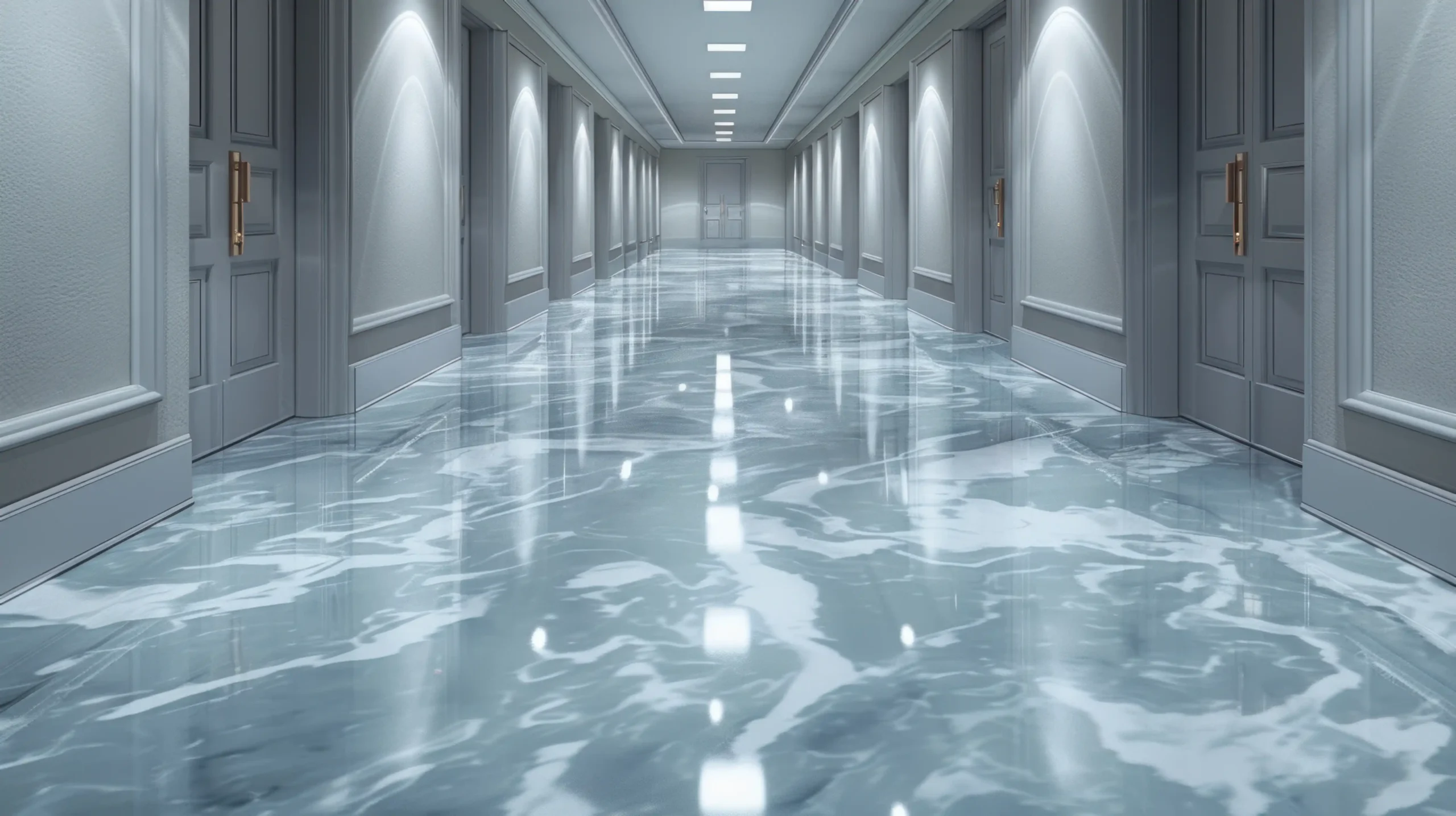
For New Jersey homes and businesses, metallic epoxy can be a strong choice when the space needs a clean, decorative, finished look. It works well in basements, salons, offices, retail stores, showrooms, and stylish garages.
Local conditions should still be considered. New Jersey garages often deal with road salt, snow, slush, wet tires, and seasonal moisture. That does not automatically rule out metallic epoxy, but it does mean the topcoat, traction level, and cleaning routine should be chosen carefully.
Epoxy Shine helps homeowners and businesses in New Jersey choose flooring systems based on concrete condition, daily use, design goals, and long-term performance.
Conclusion
Choose metallic epoxy if you want a custom decorative floor that makes the space feel more finished and visually impressive. It is a good choice when the floor is part of the design, and you are willing to care for a smoother, more polished surface.
Consider another coating if you need maximum grip, the lowest upfront cost, heavy-duty industrial performance, or a floor that hides every scratch, dust mark, and tire mark.
If you are in New Jersey, Epoxy Shine can inspect your concrete and provide the best option for metallic epoxy, flake epoxy, or another coating system that is the right fit for your space.
FAQs
What is the biggest disadvantage of metallic epoxy flooring?
The biggest disadvantage is that metallic epoxy is more design-focused than practical-use focused. It usually costs more than basic coatings, and smooth glossy finishes may show scratches, dust, and tire marks more clearly than flake epoxy.
Is metallic epoxy flooring slippery?
Metallic epoxy can feel slippery when it has a smooth glossy finish and gets wet. Slip-resistant additives or textured topcoats can improve traction, but the amount of texture should be chosen based on the space and safety needs.
Is metallic epoxy good for garage floors?
Metallic epoxy is good for stylish or showroom-style garages. For busy garages with tools, storage, road salt, and daily vehicle use, flake epoxy is often more practical because it hides scuffs and provides more texture.
Can metallic epoxy be used in basements?
Yes, metallic epoxy can be used in basements when the concrete is properly prepared. Moisture testing is important because basement slabs can have vapor issues that affect coating adhesion.