
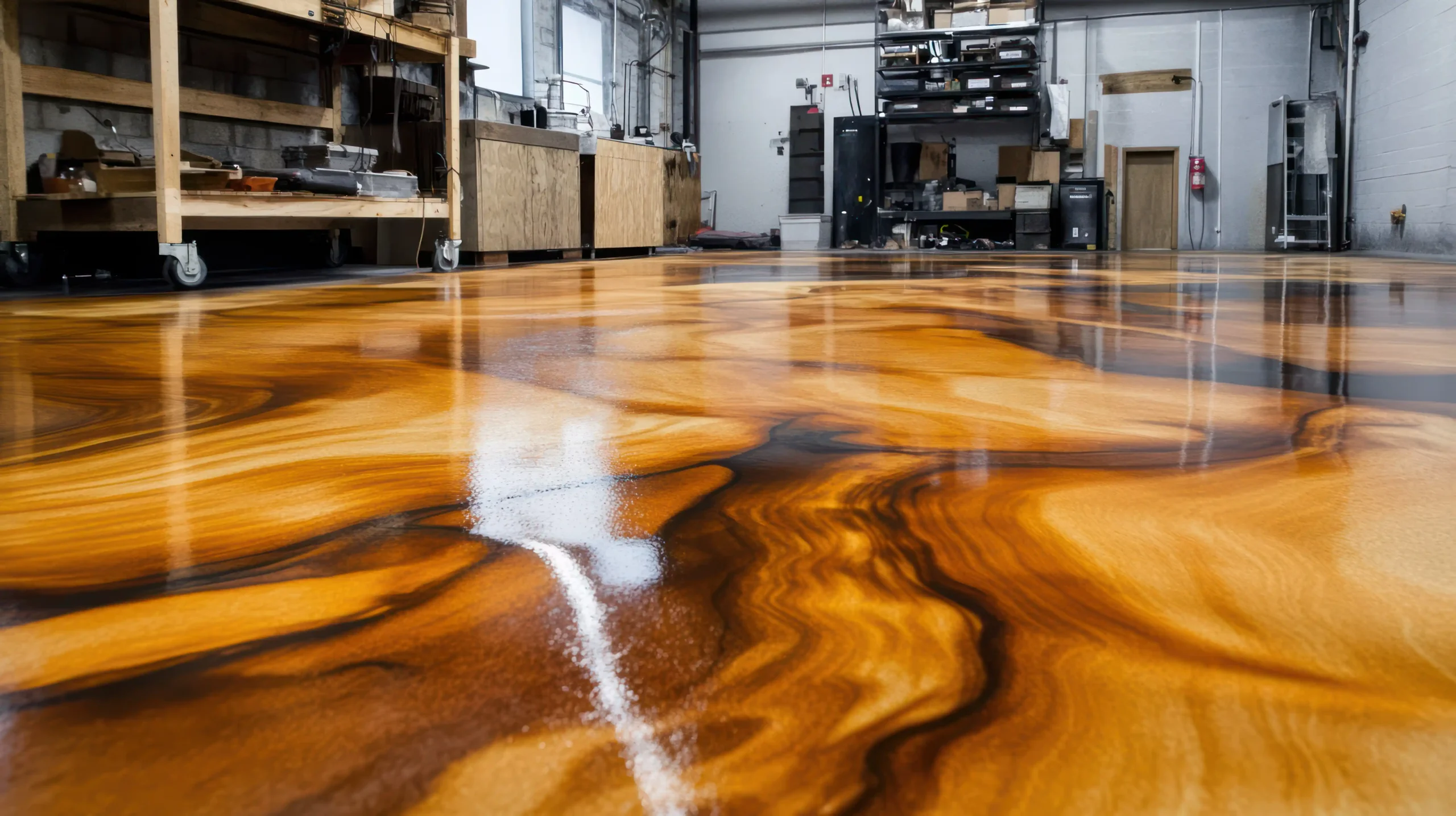
Choosing between metallic epoxy and flake epoxy flooring can feel confusing at first. Both systems are installed over concrete, both can improve durability, and both can make a garage, basement, or commercial space look cleaner and more finished.
The difference is how each floor performs in real life. Metallic epoxy is usually chosen for a custom, high-end appearance. Flake epoxy is usually chosen for practical garage performance, added texture, and better scuff hiding. Neither option is automatically better for every space.
This guide compares metallic epoxy vs flake epoxy flooring by appearance, durability, traction, maintenance, cost, garage use, basement use, and commercial value so you can choose the right floor for your project.
Key Takeaways
- Metallic epoxy is usually better for decorative spaces where custom design and visual impact matter most.
- Flake epoxy is usually better for garages, workshops, utility rooms, and high-traffic floors that need more texture.
- Metallic epoxy can look more luxurious, but glossy surfaces may show scratches, dust, and tire marks more easily.
- Flake epoxy hides scuffs, dirt, small concrete imperfections, and daily garage wear better than most metallic finishes.
- Both systems need proper concrete grinding, crack repair, primer, and a durable clear topcoat to perform well.
- The best choice depends on how the space will be used, not only which floor looks better in photos.
What Is Metallic Epoxy Flooring?
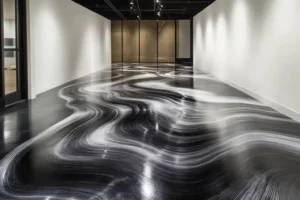
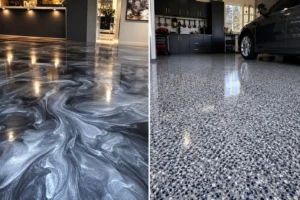
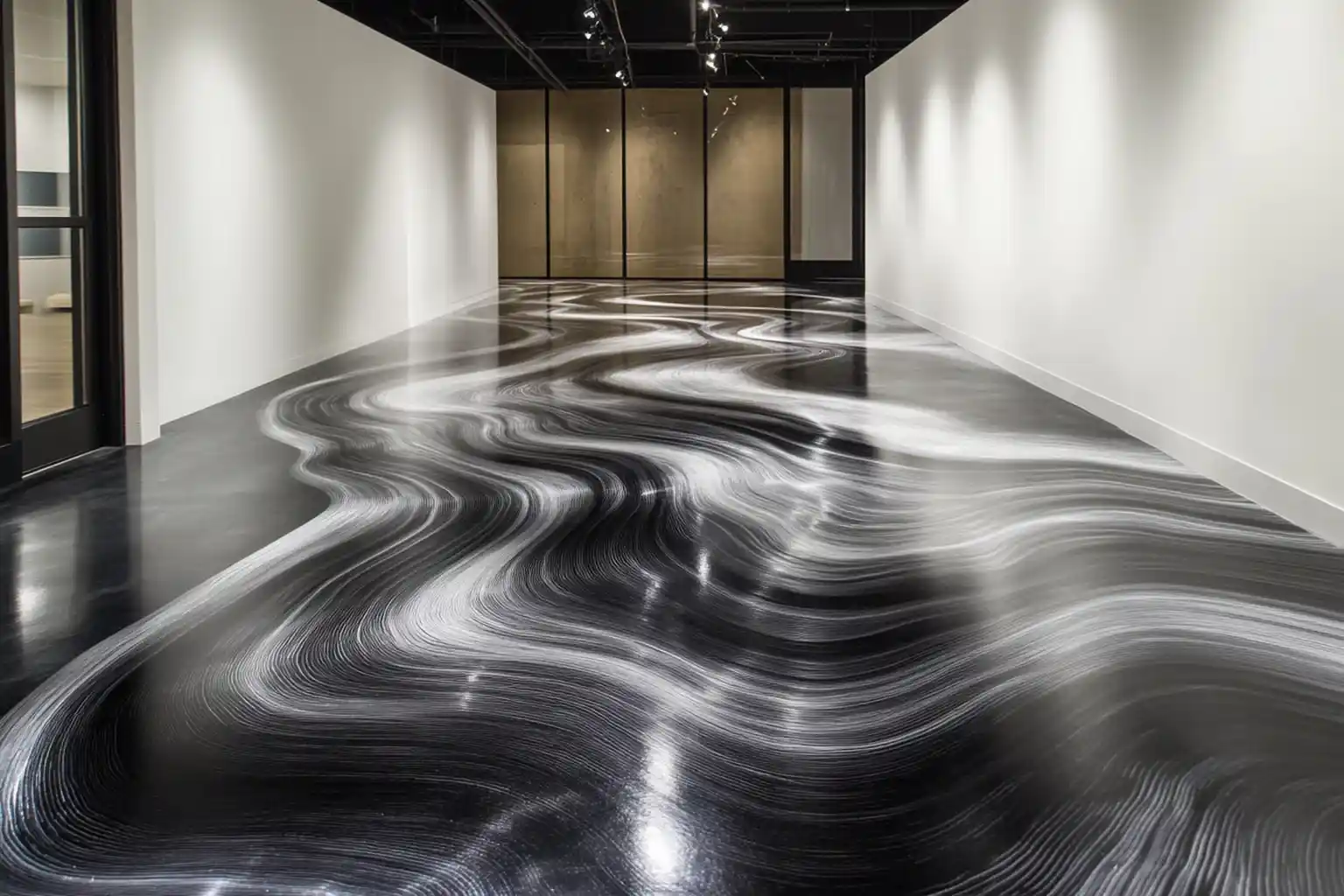
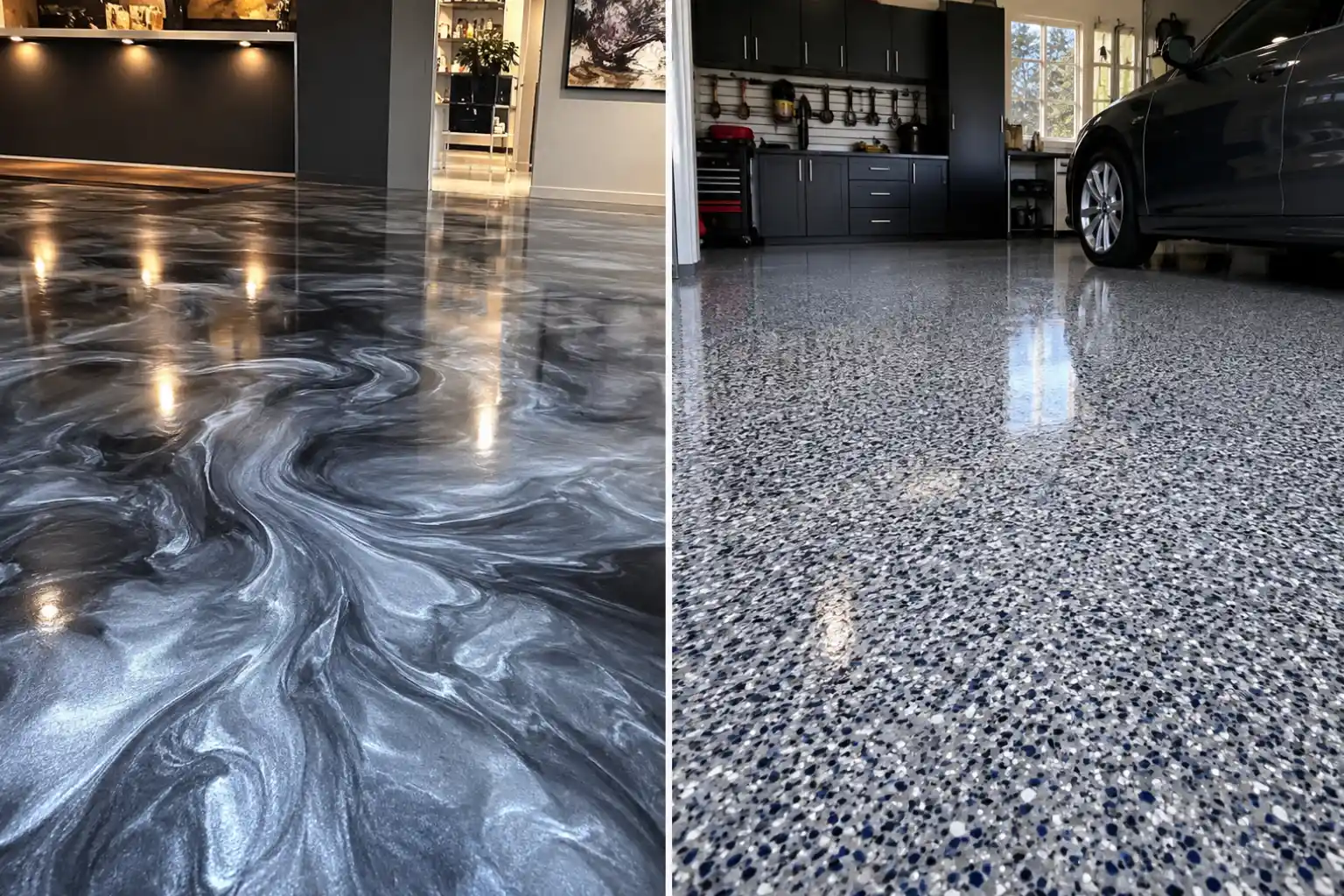
Metallic epoxy flooring is a decorative concrete coating system made with epoxy resin, hardener, and metallic or pearlescent pigments. These pigments move through the wet coating during installation, creating flowing patterns, marble-like effects, smoky movement, and three-dimensional depth.
Most metallic epoxy floors have a smooth and glossy finish, although satin finishes and slip-resistant additives can also be used. Metallic epoxy is popular in basements, showrooms, salons, offices, retail spaces, and garages where the owner wants a custom floor design instead of a basic concrete coating.
What Is Flake Epoxy Flooring?
Flake epoxy flooring is an epoxy coating system that uses decorative flakes broadcast into the coating before it cures. These flakes epoxy create a speckled, textured surface that can hide dust, scuffs, small marks, and minor concrete imperfections.
Flake epoxy is especially popular for garages because it looks clean without being too delicate. It also offers better traction than many smooth epoxy finishes when the right topcoat is applied. This makes it a strong choice for daily-use garages, workshops, storage areas, basements, commercial spaces, and utility rooms.
Metallic Epoxy vs Flake Epoxy: Main Difference
The main difference between metallic epoxy and flake epoxy is purpose. Metallic epoxy is more design-focused. Flake epoxy is more function-focused. Both can be durable, but they are chosen for different reasons.
Metallic epoxy creates a custom, glossy, high-end look. Flake epoxy creates a more textured, practical, and forgiving surface. If the goal is a luxury visual finish, metallic epoxy usually wins. If the goal is garage performance and easier long-term appearance, flake epoxy is usually the better choice.
| Feature | Metallic Epoxy | Flake Epoxy |
| Best For | Decorative garages, basements, showrooms, salons, retail spaces | Garages, workshops, utility rooms, commercial floors |
| Appearance | Glossy, flowing, marble-like, custom | Speckled, textured, clean, practical |
| Texture | Usually smooth unless grip is added | Naturally more textured |
| Scratch Hiding | May show scratches more | Hides scuffs better |
| Dirt Hiding | Can show dust on dark glossy colors | Hides dust and debris better |
| Slip Resistance | Needs additive in wet-prone areas | Usually better with textured finish |
| Cost | Often higher due to custom design work | Often more practical value |
| Maintenance | Easy, but glossy finish needs care | Easy, but texture needs regular cleaning |
| Best Look | Luxury and custom | Durable and practical |
Appearance: Which One Looks Better?
Appearance depends on personal taste and the purpose of the space. Metallic epoxy usually looks more dramatic and custom, while flake epoxy looks cleaner, more practical, and more garage-friendly.
A metallic epoxy floor can become the main design feature of a room. A flake epoxy floor usually blends into the space and makes it look finished without drawing as much attention. That difference matters when choosing flooring for a garage, basement, showroom, or business.
Metallic Epoxy for a High-End Decorative Look
Metallic epoxy is the better choice if you want a floor that feels custom and visually unique. It can create marble-like designs, deep color movement, glossy reflections, and flowing patterns that do not repeat across the surface.
This makes metallic epoxy a strong option for showrooms, salons, offices, retail stores, finished basements, and statement garages. It works best when the floor is part of the design, not just something that needs to handle traffic.
Flake Epoxy for a Clean Practical Look
Flake epoxy has a speckled finish that looks clean, organized, and professional. It does not have the same luxury depth as metallic epoxy, but it is more forgiving in everyday spaces.
The flakes help hide dust, small scratches, tire marks, and minor surface imperfections. This is one reason many homeowners choose flake epoxy for garages. It gives the concrete a finished look without making every small mark stand out.
Durability: Which One Lasts Longer?
Both metallic epoxy and flake epoxy can last a long time when installed correctly. The coating type matters, but durability depends even more on surface preparation, concrete condition, primer quality, topcoat strength, traffic level, and maintenance.
A poorly prepared flake floor can fail early. A properly prepared metallic floor can perform well for years. The system is only as strong as the bond between the coating and the concrete, which is why grinding, cleaning, repair, and moisture control are so important.
Why Surface Preparation Matters for Both Systems
Before either system is installed, the concrete should be inspected and prepared. This may include grinding the surface, repairing cracks, removing weak coatings, cleaning dust, and checking for moisture issues.
If the concrete is not prepared correctly, the coating may peel, bubble, or wear unevenly. This is true for metallic epoxy and flake epoxy. A beautiful finish cannot make up for poor prep work under the coating.
Which Floor Handles Daily Wear Better?
Flake epoxy usually handles daily visible wear better because of its color variation and texture hide marks. Metallic epoxy can still be durable, but its smooth, glossy surface may show scratches, drag marks, dust, and tire marks more clearly.
For a decorative basement or showroom, metallic epoxy can be a great fit. For a busy garage with tools, bikes, storage racks, and daily vehicles, flake epoxy is often more practical.
Scratch and Scuff Resistance: Which Hides Wear Better?
Flake epoxy usually hides scratches and scuffs better than metallic epoxy. This does not always mean flake epoxy is stronger. It means the surface pattern is better at making small marks less noticeable.
Metallic epoxy often has a smooth, glossy finish. If the topcoat is scratched or scuffed, the mark may be easier to see because the surface reflects light. Dark metallic colors can also show dust, footprints, and small marks more than lighter or textured finishes.
Flake epoxy is more forgiving because the flakes break up the visual surface. In garages with cars, lawn equipment, tools, and storage bins, this matters. A floor that hides wear well often looks cleaner for longer between cleanings.
Slip Resistance: Which Floor Has Better Grip?
Flake epoxy usually provides better grip because the flakes and topcoat can create a more textured surface. Metallic epoxy is usually smoother unless a slip-resistant additive is added to the clear topcoat.
This is important for garages, basements, commercial spaces, and any area that may get wet. A glossy metallic floor can look beautiful, but it may not be the safest choice for a wet garage unless traction is added.
Use this simple guide:
- Best for dry decorative areas: metallic epoxy
- Best for busy garages: flake epoxy
- Best for wet-prone floors: either system with a slip-resistant topcoat
- Best for commercial safety: the system with the right texture level
The goal is not only to choose the better-looking floor. The floor also needs to feel safe under normal use.
Maintenance: Which Is Easier to Clean?
Both metallic epoxy and flake epoxy are easier to clean than bare concrete because they create a sealed surface. Dust, spills, and dirt stay on top of the coating instead of soaking into porous concrete.
Metallic epoxy is smooth, so it is easy to mop. The downside is that glossy surfaces may show footprints, dust, and small scratches more clearly. Flake epoxy hides dirt better, but its texture can hold some debris if the floor is not swept or rinsed regularly.
For New Jersey garages, maintenance is especially important in winter. Road salt, wet tires, snow, and slush can sit on the floor if they are not cleaned. Both metallic and flake epoxy floors should be cleaned regularly to protect the finish.
Cost: Is Metallic Epoxy or Flake Epoxy More Expensive?
Metallic epoxy is often more expensive than flake epoxy because it requires more design control, color blending, timing, and finish work. The installer must manage pigment movement carefully to create a balanced custom look, which is one of the main factors that influences metallic epoxy flooring cost.
Flake epoxy is often more cost-effective for garages because the broadcast flake system is practical, durable, and forgiving. It can cover minor visual imperfections better and usually gives homeowners strong value for daily-use spaces, helping keep flake epoxy flooring cost more affordable.
The final cost for both systems depends on:
- Square footage
- Concrete condition
- Crack repair needs
- Moisture issues
- Surface grinding requirements
- Coating thickness
- Topcoat type
- Slip-resistant finish
- Number of colors
- Residential or commercial use
A low quote may not always be the best value. If important steps like grinding, repair, primer, or topcoat are skipped, the floor may fail sooner and cost more later.
Best Choice for Garage Floors
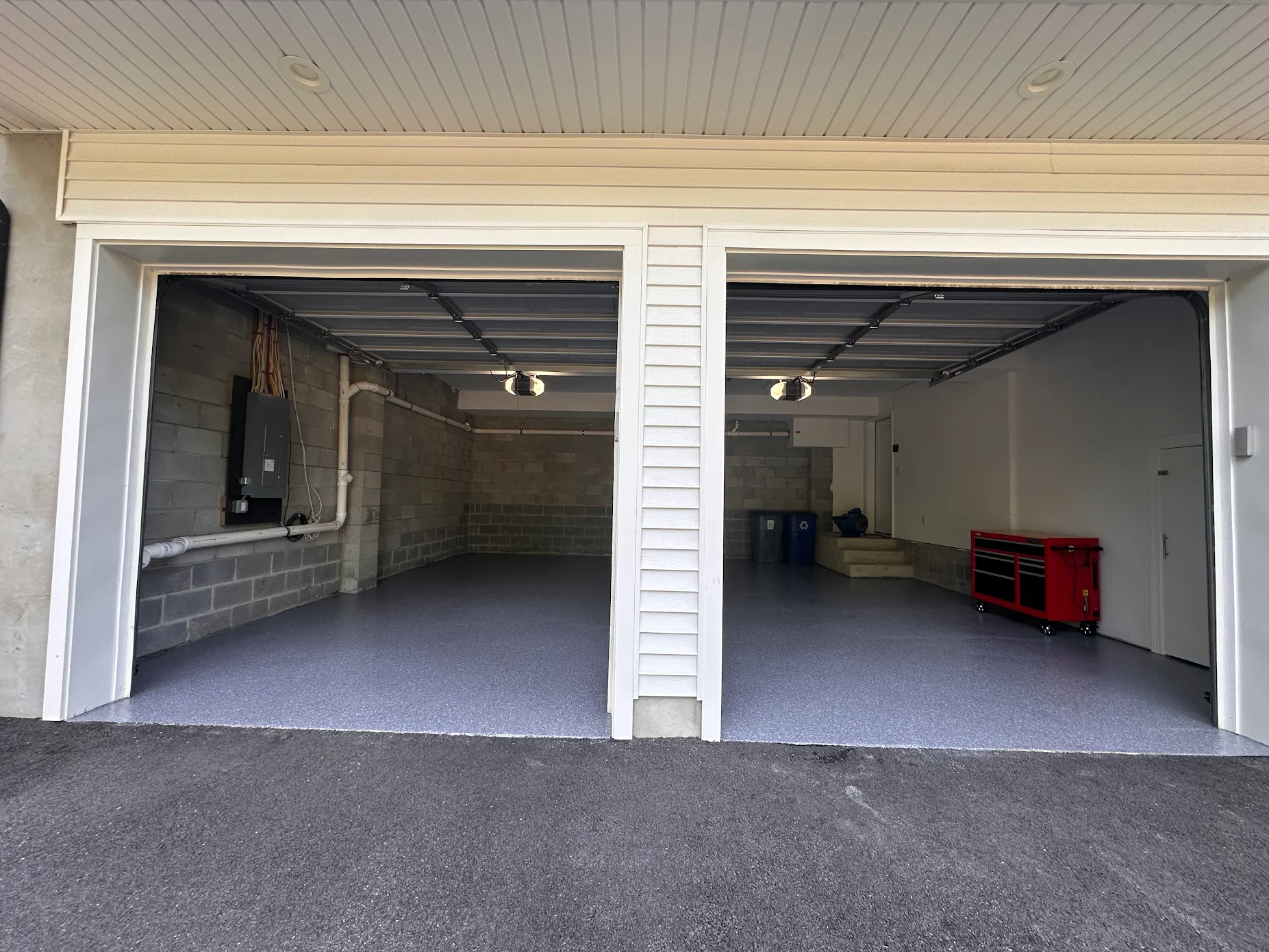
For most working garage flooring, flake epoxy is usually the better choice. It offers more texture, hides dust better, and handles the look of daily vehicle use more easily. This makes it practical for homeowners who park cars, store tools, and use the garage often.
Metallic epoxy can still work in a garage, especially if the goal is a showroom-style space. It is a strong choice for luxury garages, display areas, or homeowners who care more about design than hiding every small mark.
Choose Flake Epoxy for a Busy Garage If
Flake epoxy is usually the better fit if your garage is used every day. It works well for parked vehicles, storage shelves, tools, bikes, lawn equipment, and seasonal items.
Choose flake epoxy if you want:
- More grip
- Better scuff hiding
- A practical garage floor coating
- A surface that hides dust and tire marks
- Lower visual maintenance
- A clean but not overly glossy look
- Strong everyday performance
Choose Metallic Epoxy for a Garage If
Metallic epoxy can be a great garage choice when the garage is part of the home’s visual appeal. It works best when the floor is meant to look polished, custom, and high-end.
Choose metallic epoxy if you want:
- A showroom-style garage
- A custom design
- A glossy finish
- A luxury vehicle display area
- A floor that stands out
- A decorative alternative to basic epoxy
- A high-end look for a cleaner garage space
Best Choice for Basements, Showrooms, and Commercial Spaces
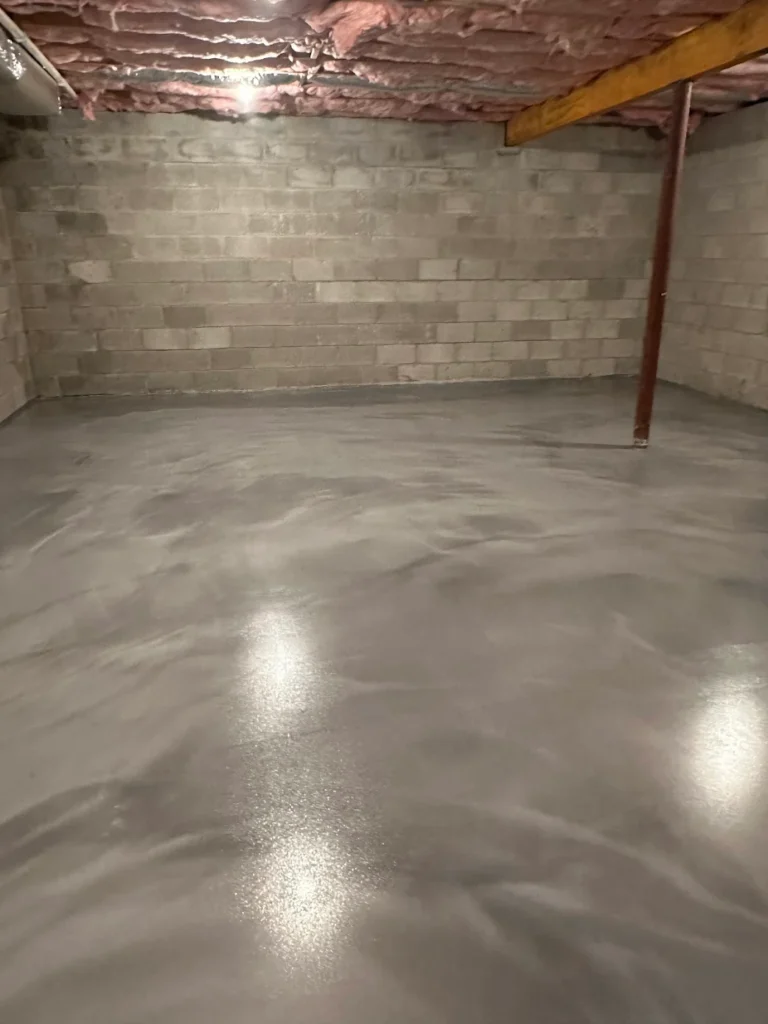
The best epoxy system changes based on the room. A garage has different needs than basement flooring, showroom, salon, or workshop. Before choosing metallic or flake epoxy, think about how the floor will be used every day.
Metallic epoxy is usually better when appearance matters most. Flake epoxy is usually better when texture, scuff hiding, and practical performance matter more. Both systems can work well if they are matched to the right space.
Basements
Metallic epoxy works well in basements when the goal is a finished, modern, and decorative floor. It can make plain concrete feel cleaner and more complete without adding carpet, wood, or tile.
Flake epoxy may be better for basements used as storage areas, home gyms, laundry rooms, or utility spaces. It offers more texture and hides wear better. Moisture testing should be considered before installing either system over basement concrete.
Showrooms and Retail Spaces
Metallic epoxy is often the better choice for showrooms and retail spaces because it creates a more polished visual effect. It can help a space feel more custom, bright, and professional.
Flake epoxy can also work in commercial spaces, especially where function matters more than design. For example, it may be better for storage rooms, service areas, back rooms, or high-traffic work zones.
Salons, Offices, and Studios
Metallic epoxy is a strong option for salons, offices, and studios because the floor can support the overall design of the space. It creates a clean and stylish surface that feels more finished than plain concrete.
Flake epoxy may be better for staff areas, utility spaces, or businesses that need more slip resistance and scuff hiding. The right choice depends on the balance between customer-facing appearance and daily wear.
Workshops and Utility Rooms
Flake epoxy is usually better for workshops and utility rooms. These spaces often deal with tools, equipment, storage items, dust, and heavier use. A textured flake system hides marks better and usually feels more practical.
Metallic epoxy can look great in a workshop, but the smooth decorative surface may not be the best match if the area sees rough use. Function should guide the choice in these spaces.
Pros and Cons of Metallic Epoxy vs Flake Epoxy
Comparing pros and cons helps make the decision easier. Metallic epoxy is stronger for design impact. Flake epoxy is stronger for practical daily use. The best system depends on your space, budget, and expectations.
| Flooring Type | Pros | Cons |
| Metallic Epoxy | Custom luxury look, seamless finish, strong visual depth, easy mopping, great for decorative spaces | May show scratches more, usually costs more, needs added grip in wet areas, less forgiving in busy garages |
| Flake Epoxy | More practical for garages, better texture, hides dust and scuffs, many color blends, strong daily-use value | Less dramatic appearance, texture may hold dirt if neglected, not as custom-looking as metallic epoxy |
Both systems can look good and perform well. The mistake is choosing based only on photos. A floor that looks perfect online may not be the best choice for your real garage, basement, or business.
How to Choose the Right Flooring System
Choose metallic epoxy if your main goal is custom design. It is the better option when the floor needs to stand out and support the look of the space.
Metallic epoxy is a good fit if your priority is:
- Custom appearance
- Luxury design
- Finished basement style
- Showroom-style garage
- Retail or salon visual impact
- Smooth, seamless design
- A floor that feels unique
Choose flake epoxy if your main goal is practical performance. It is the better option when the floor needs to handle daily traffic and still look clean with less effort.
Flake epoxy is a good fit if your priority is:
- Garage durability
- Better grip
- Scuff hiding
- Tire mark hiding
- Easier everyday appearance
- Practical long-term value
- A floor that works hard without looking worn too quickly
A professional inspection can help you choose correctly. Concrete condition, moisture, cracks, traffic level, and room use all affect which epoxy flooring system will work best.
Metallic Epoxy vs Flake Epoxy for New Jersey Homes
For New Jersey homes, flake epoxy is often the more practical choice for busy garages. Garages in this area deal with road salt, wet tires, snow, slush, rain, and seasonal moisture. A textured flake system can hide dirt and improve grip better than a smooth glossy finish.
Metallic epoxy can still be a great choice for New Jersey homeowners who want a stylish garage, finished basement, showroom, salon, office, or retail floor. It works best when the concrete is properly prepared, and the topcoat is selected for the space.
Epoxy Shine helps homeowners and businesses choose the right epoxy system in New Jersey based on how the floor will be used, how the concrete looks now, and what kind of finish the customer wants.
Final Verdict
Flake epoxy is better for most garages, workshops, utility rooms, and high-traffic areas because it offers more texture, hides wear better, and handles daily use more easily. Metallic epoxy is better for decorative spaces where custom appearance, gloss, depth, and visual impact matter most.
If you are in the New Jersey area, Epoxy Shine can help you compare metallic epoxy and flake epoxy flooring for your garage, basement, showroom, or commercial space. A professional inspection can make the decision clearer and help you choose a floor that looks good and performs well.
FAQs
Is metallic epoxy more expensive than flake epoxy?
Metallic epoxy is often more expensive because it requires more design work, color blending, and installer control. Flake epoxy is usually more cost-effective for garages because it is practical, durable, and more forgiving in daily-use spaces.
Is flake epoxy better for garage floors?
For most garages, yes. Flake epoxy is usually better because it adds texture, hides dust and scuffs, and handles daily vehicle use well. Metallic epoxy can work in garages too, but it is usually better for showroom-style spaces.
Does metallic epoxy scratch more than flake epoxy?
Metallic epoxy does not always scratch more, but scratches may be easier to see on smooth, glossy surfaces. Flake epoxy hides small scuffs and marks better because the textured color pattern breaks up the surface visually.
Can metallic epoxy be made slip-resistant?
Yes. Metallic epoxy can be made more slip-resistant by adding texture or a slip-resistant additive to the clear topcoat. This is especially useful for garages, basements, and commercial spaces where the floor may get wet.
Which epoxy floor is better for a basement?
Metallic epoxy is better for a basement when appearance and a modern finished look are the main goals. Flake epoxy is better if the basement is used for storage, laundry, fitness, or utility purposes where more grip and scuff hiding are helpful.