
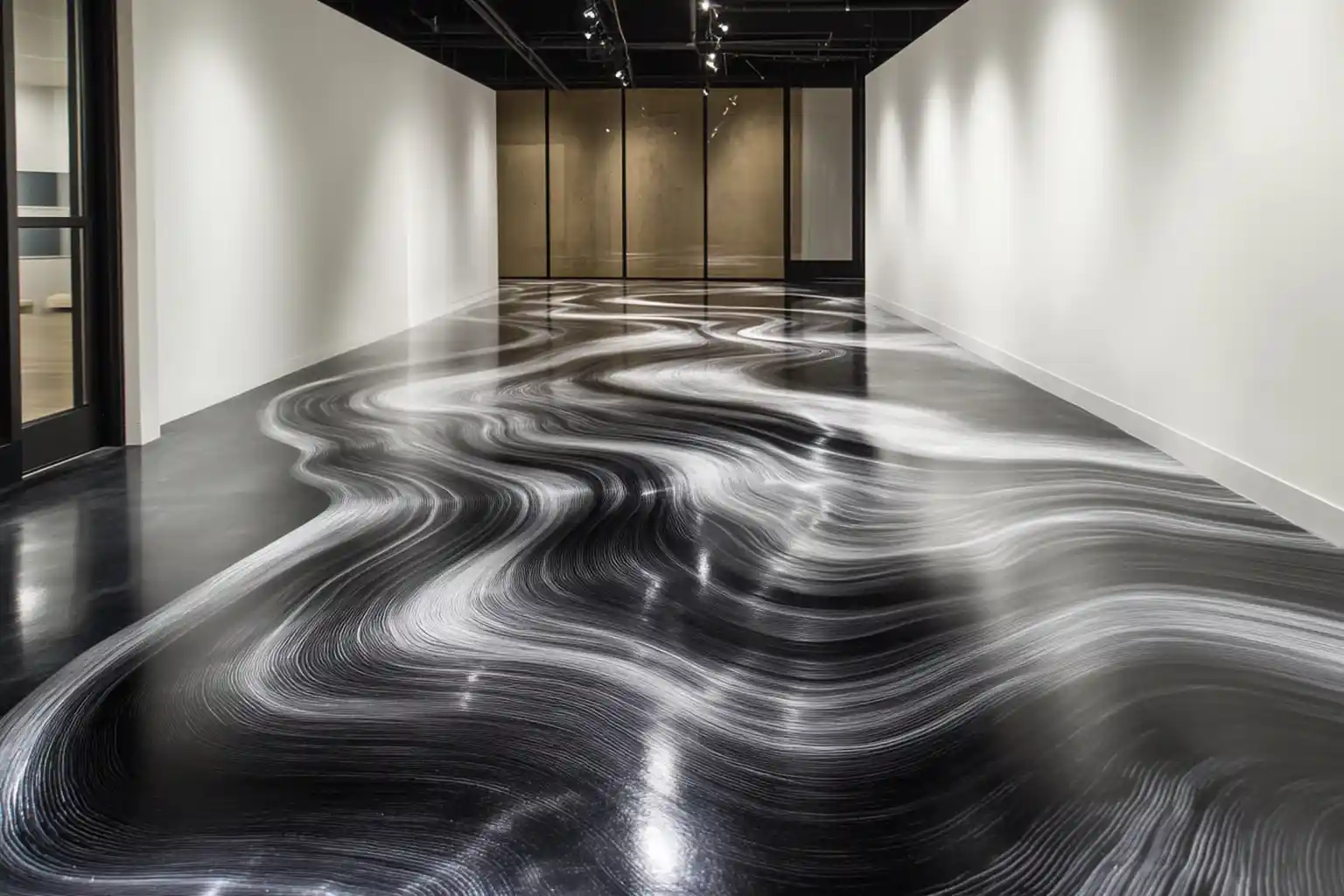
Yes, an appropriately specified epoxy flooring system can handle forklift and pallet jack traffic, provided the concrete, preparation, coating build, and curing conditions are suitable for the operation. Choosing a floor based only on its appearance or an “industrial-grade” label leaves important questions unanswered.
For warehouse owners and facility managers in Woodland Park and nearby New Jersey communities, the first step is understanding where and how equipment uses the floor. A lightly traveled storage aisle has different requirements from a dispatch route where loaded forklifts turn throughout the day. Small pallet jack wheels crossing damaged joints create another set of demands.
Epoxy Shine’s warehouse flooring services provide a starting point for discussing these conditions. Before choosing a coating, identify your equipment, traffic routes, existing damage, and available installation windows. Those details help establish what the proposed system needs to do.
What Makes Forklift and Pallet Jack Traffic Demanding?
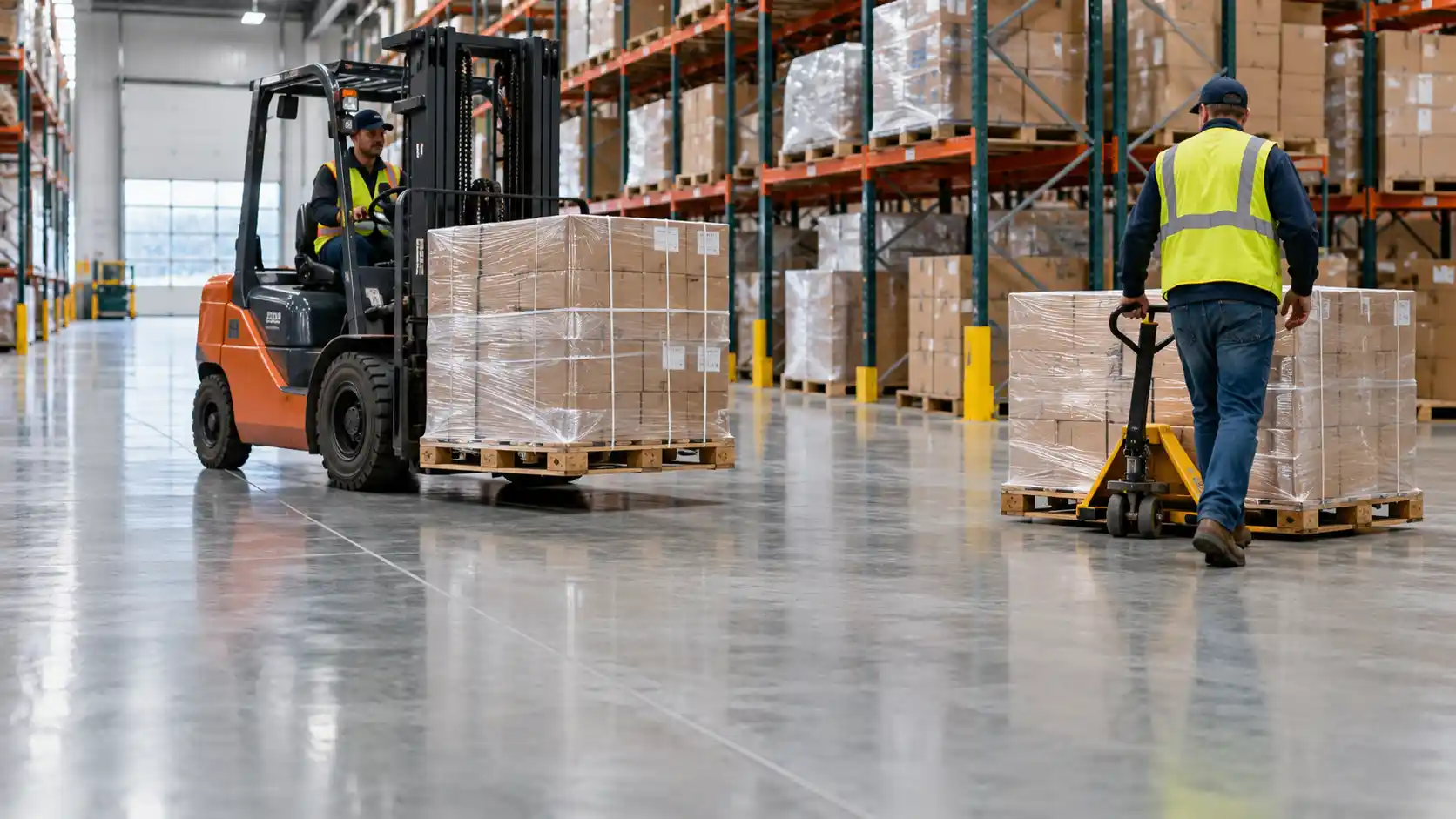
Warehouse equipment creates repeated contact, abrasion, and impact at the surface. The severity depends on wheel characteristics, equipment loads, movement patterns, and the condition of the concrete. Two facilities using similar forklifts can experience different floor wear because their routes and operating practices differ.
Straight travel through a clean aisle is only part of the picture. Turning, braking, crossing joints, and carrying debris through the same areas can concentrate wear. A flooring assessment should therefore consider the busiest sections separately rather than assign one general traffic description to the entire building.
Why Small Pallet Jack Wheels Deserve Attention
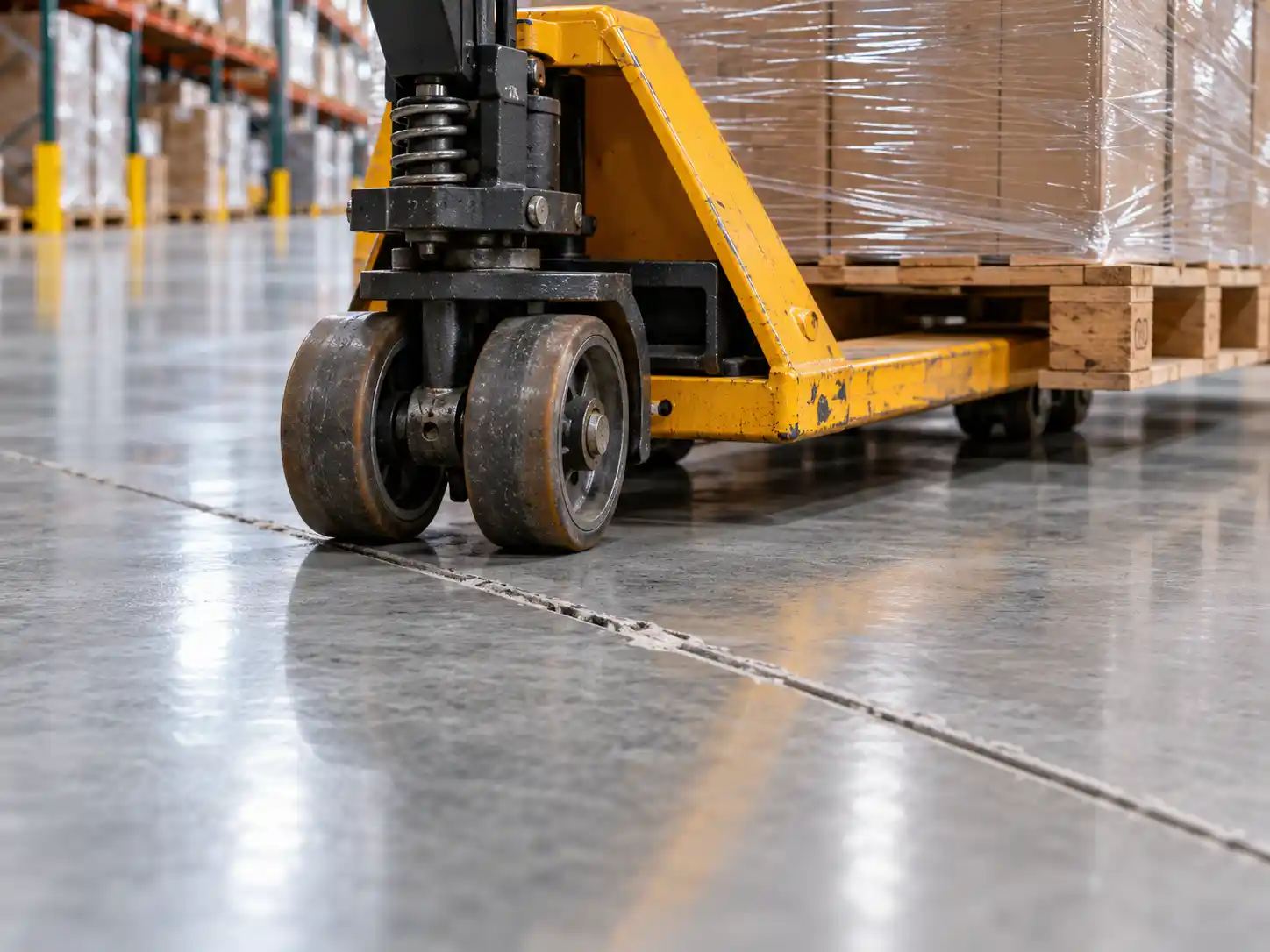
Pallet jacks may appear less demanding than forklifts, but their small load wheels deserve close attention. A small contact area can concentrate pressure, while repeated crossings at broken joint edges or uneven repairs can contribute to further deterioration.
When investigating pallet jack floor damage, look at both the equipment and the route. A chipped joint, worn wheel, dragged pallet, and deteriorating coating are different problems. Applying another coat without identifying what is happening may leave the underlying cause unresolved.
For example, a warehouse might have an otherwise serviceable floor with recurring damage across one packing-to-dispatch route. That section needs a closer assessment of wheel traffic, joints, and existing repairs, not simply the same finish applied again.
Where Forklifts Create the Most Wear
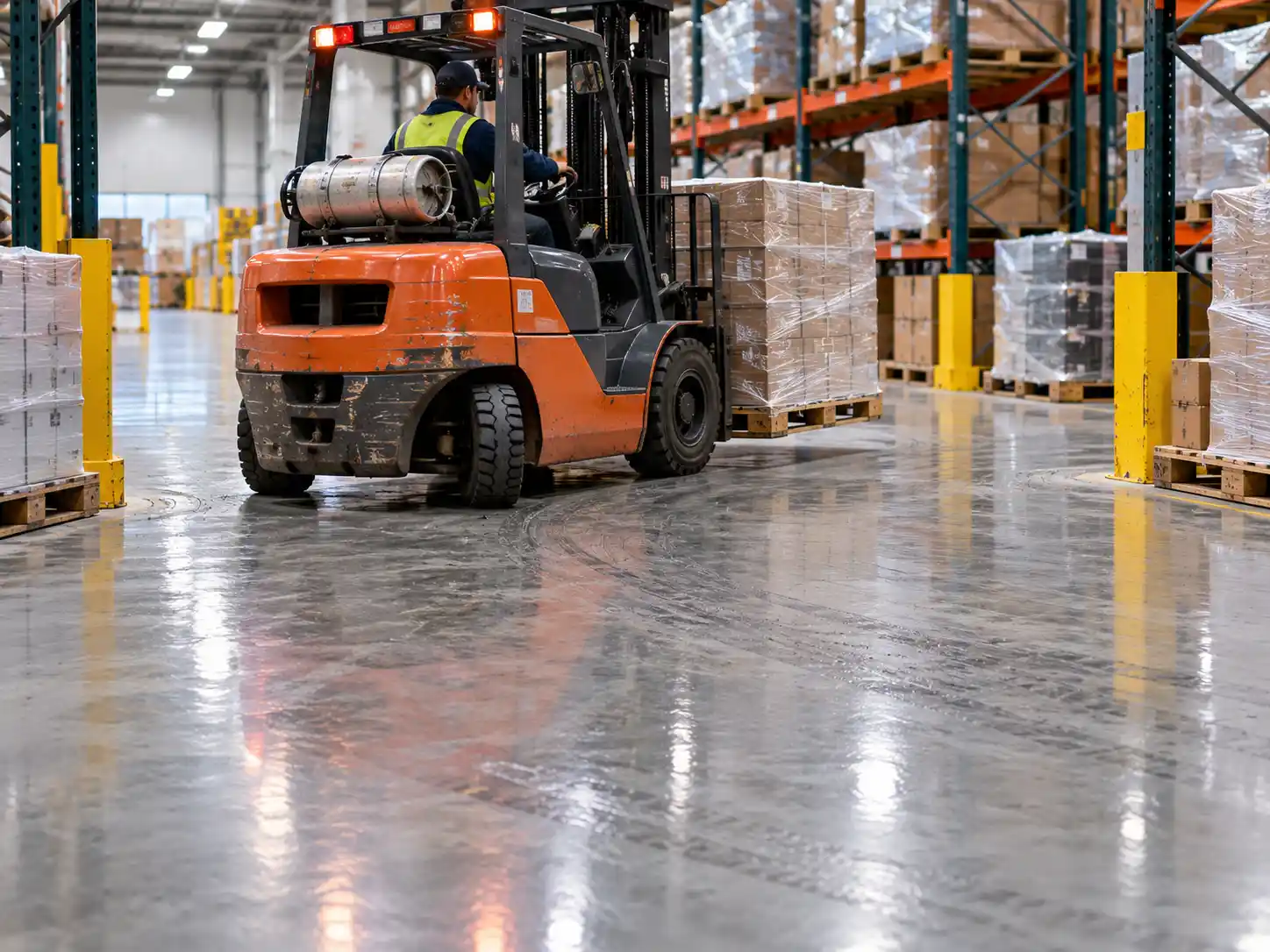
Forklift traffic often concentrates around aisle ends, turning points, staging zones, and loading routes. Repeated steering and braking can place greater demands on those sections than occasional movement through storage areas.
Mark these locations on a floor plan before requesting a quote. Include the equipment types, typical loads, wheel details where available, and frequency of movement. This gives the contractor useful information for selecting a system and identifying areas that need additional preparation or repair.
What Should a Forklift Floor Coating Include?
A suitable forklift floor coating is a complete system installed over appropriately prepared concrete. The primer, coating layers, aggregates where specified, and topcoat must work together. A strong finish cannot compensate for weak concrete, unsuitable preparation, or an incompatible existing coating.
The assessment should establish whether old material needs removal, whether contamination affects the substrate, and which damaged areas require repair. Moisture conditions also need consideration before selecting the coating specification.
When reviewing heavy-duty warehouse flooring, ask how the proposal addresses these requirements:
| Requirement | What to clarify |
| Concrete condition | Which weak, damaged, or contaminated areas need attention? |
| Preparation | How will the surface be prepared for the specified system? |
| Coating build | Which layers are included, and what is their intended function? |
| Wear resistance | How does the proposed system suit the expected rolling traffic? |
| Surface texture | Does the finish balance traction, equipment movement, and cleaning? |
| Exposure | Is the system suitable for the actual fluids and cleaning products used? |
| Return to service | When can each area accept the intended vehicle traffic? |
This level of detail makes proposals easier to compare. Descriptions such as “extra strong” or “heavy duty” are less useful without a defined system and installation scope.
Texture also needs careful selection. A more textured finish is not automatically the best choice everywhere. It must suit the expected contamination, cleaning equipment, pedestrian use, and rolling traffic.
How Thick Should Warehouse Epoxy Flooring Be?
There is no single warehouse epoxy thickness that suits every forklift or pallet jack application. Thickness is one part of the specification, alongside the material, substrate condition, preparation, wear exposure, and installation quality.
Thin-film coatings, higher-build systems, and aggregate-filled epoxy mortars are different approaches. Their suitability should be evaluated against the facility’s conditions rather than treated as interchangeable products. A thicker system may be considered for certain demands, but “thicker” does not automatically mean “better” for every floor.
Ask whether the quoted thickness describes one layer or the complete system. Where thickness is expressed in mils, remember that one mil equals one-thousandth of an inch. Clear units and a layer-by-layer description help avoid misunderstandings between proposals.
Most importantly, coating thickness does not establish structural capacity. The concrete slab supports the equipment and stored loads. An epoxy finish does not confirm that the building can accommodate a heavier forklift, additional racking, or a change in use. Those questions require a separate assessment where relevant.
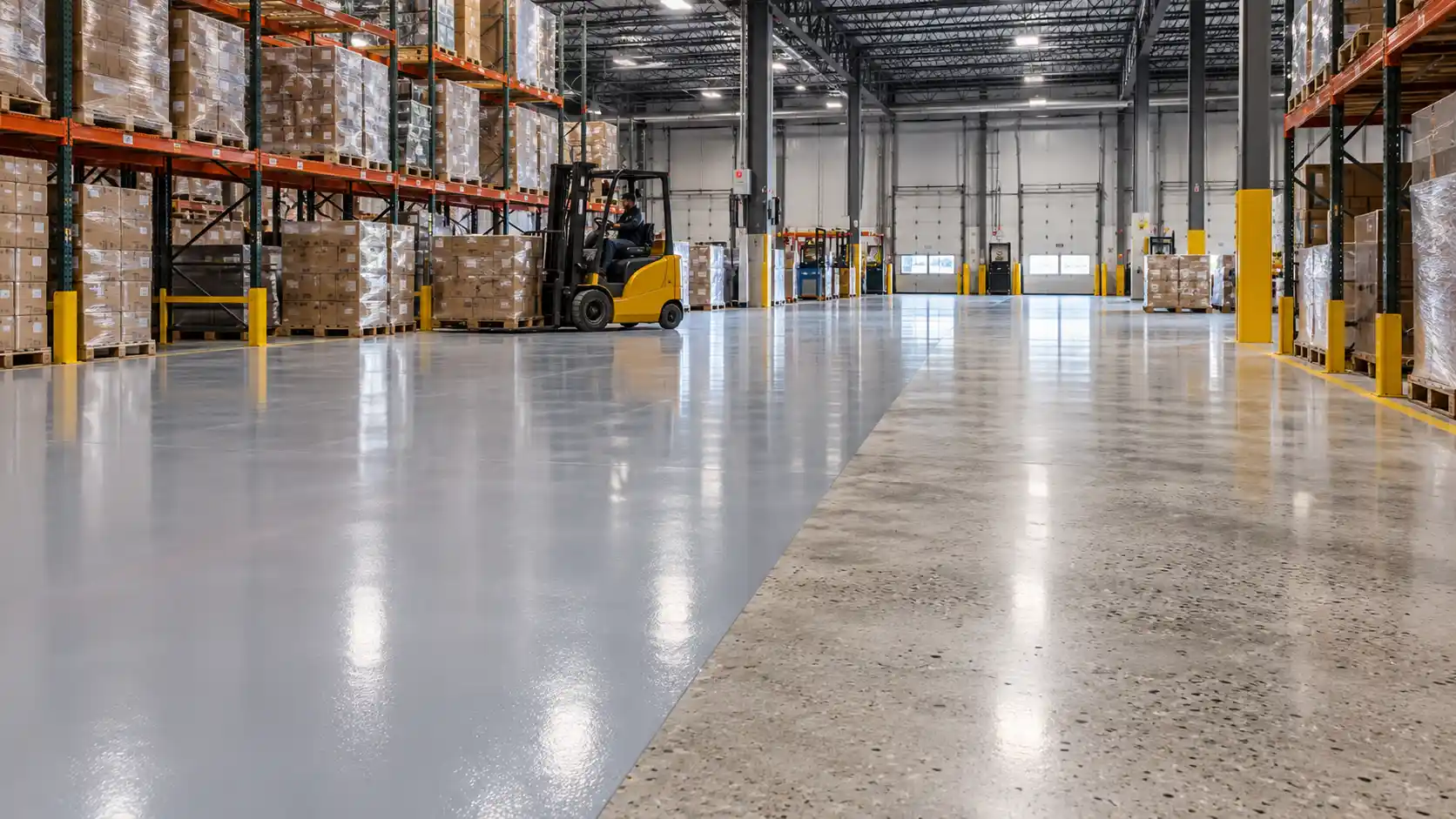
If you are still deciding between a coating and an exposed concrete finish, our epoxy vs. polished concrete warehouse comparison explains the broader selection factors.
Can Epoxy Fix Existing Pallet Jack Floor Damage?
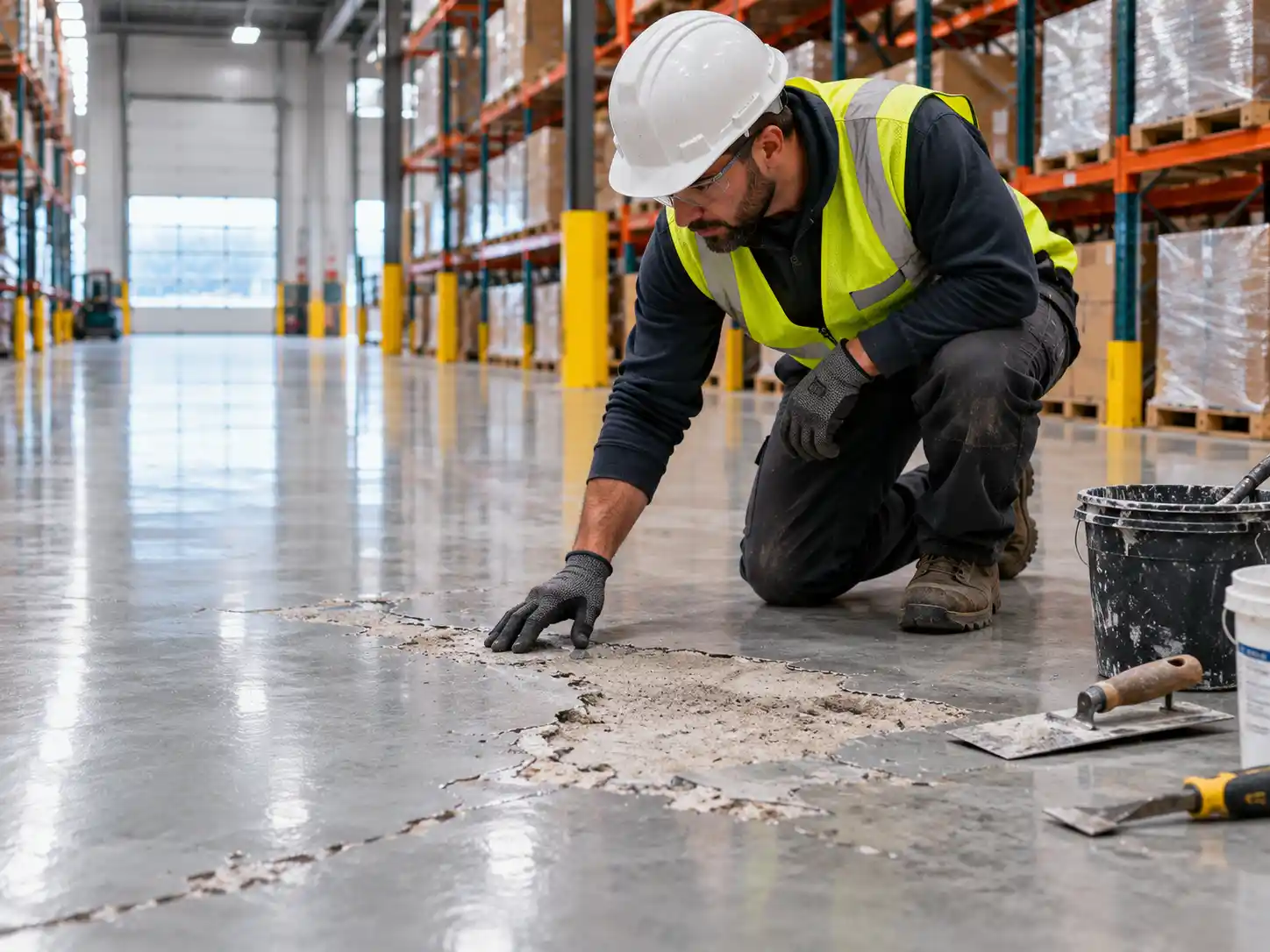
Epoxy can form part of a warehouse restoration project, but a finish coat alone does not resolve every type of damage. The existing floor needs assessment before deciding whether repairs, coating removal, resurfacing, or another approach is appropriate.
Common conditions include worn coatings, exposed concrete, spalling, broken joint edges, and uneven previous repairs. These may look similar from a distance but require different work. Movement-related or structural concerns also need to be distinguished from surface deterioration.
Joints deserve particular attention because they are intentional features of the concrete floor. Their treatment should account for their function and anticipated movement. Simply covering every joint with a rigid coating is not a reliable substitute for appropriate detailing.
For a warehouse buyer, the practical question is: What damage will be addressed before the new system is installed? Make sure the proposal identifies repair areas, removal requirements, and exclusions. This helps you understand whether the work tackles the existing condition or only changes its appearance.
When Can Forklifts Return After Installation?
The floor being dry enough to walk on does not mean it is ready for loaded forklift traffic. Pedestrian access, vehicle use, and chemical exposure can have different return-to-service requirements.
Timing depends on the complete system, repair materials, application conditions, and manufacturer guidance. Air temperature and slab temperature also matter. A generic promise that every warehouse floor can reopen the next morning does not provide enough information to plan around.
Before scheduling, clarify:
- When preparation and repair work will begin.
- Which aisles or loading routes will be unavailable.
- Whether separate work phases are practical.
- When loaded equipment can return to each section.
- What conditions must be maintained during application and curing.
Phased work may help some warehouses maintain access, but feasibility depends on the layout and finishing requirements. Shared routes, receiving areas, and equipment movement can limit how the project is divided.
For a New Jersey warehouse planning work during colder weather, discuss environmental conditions inside the building as well as the calendar date. The schedule should follow the selected system’s requirements and the conditions at the site.
Keep High-Traffic Areas Performing
Once the floor returns to service, maintenance should focus on the conditions that create wear. Remove grit and debris before repeated wheel movement carries it across the surface. Use cleaning products and equipment compatible with the installed system, and follow the facility’s procedures for spills.
Equipment condition matters too. Inspect wheels and address operating practices that drag materials or repeatedly strike damaged edges. A floor coating should not be expected to compensate for ongoing mechanical damage.
Pay particular attention to turning areas, joint crossings, and dispatch routes. New chipping, peeling, exposed substrate, or deteriorating repairs should prompt an assessment. Early review helps establish whether the problem involves the finish, the concrete, the equipment, or a combination of conditions.
Plan Your Warehouse Floor With Epoxy Shine
Choosing epoxy flooring for forklift traffic starts with the right questions about your concrete and daily operations. A useful proposal should explain the system, necessary repairs, surface preparation, and when equipment can return, not rely on a general durability claim.
Epoxy Shine works with warehouse flooring needs in Woodland Park and nearby New Jersey communities. To discuss your project, share your approximate floor area, equipment types, traffic routes, current damage, and available work windows.
Request a warehouse flooring assessment and quote. Provide details on how your facility operates so the flooring discussion can focus on the areas that need attention.
Frequently Asked Questions
Can pallet jacks damage epoxy flooring?
Yes. Small load wheels, debris, damaged wheels, uneven repairs, and repeated movement across deteriorating joint edges can contribute to wear or damage. The coating system, substrate, equipment condition, and traffic pattern should all be reviewed before choosing a repair.
Does thicker epoxy increase a concrete floor’s load capacity?
Increasing coating thickness does not establish greater structural capacity for the slab. Thickness may be part of a surface-performance specification, but equipment loads and slab capacity are separate considerations.
Can worn forklift aisles be recoated separately?
Sometimes, provided the existing floor is suitable and the work can be detailed and scheduled appropriately. Adhesion, contamination, repairs, compatibility, and transitions need assessment before deciding whether selective recoating is practical.