
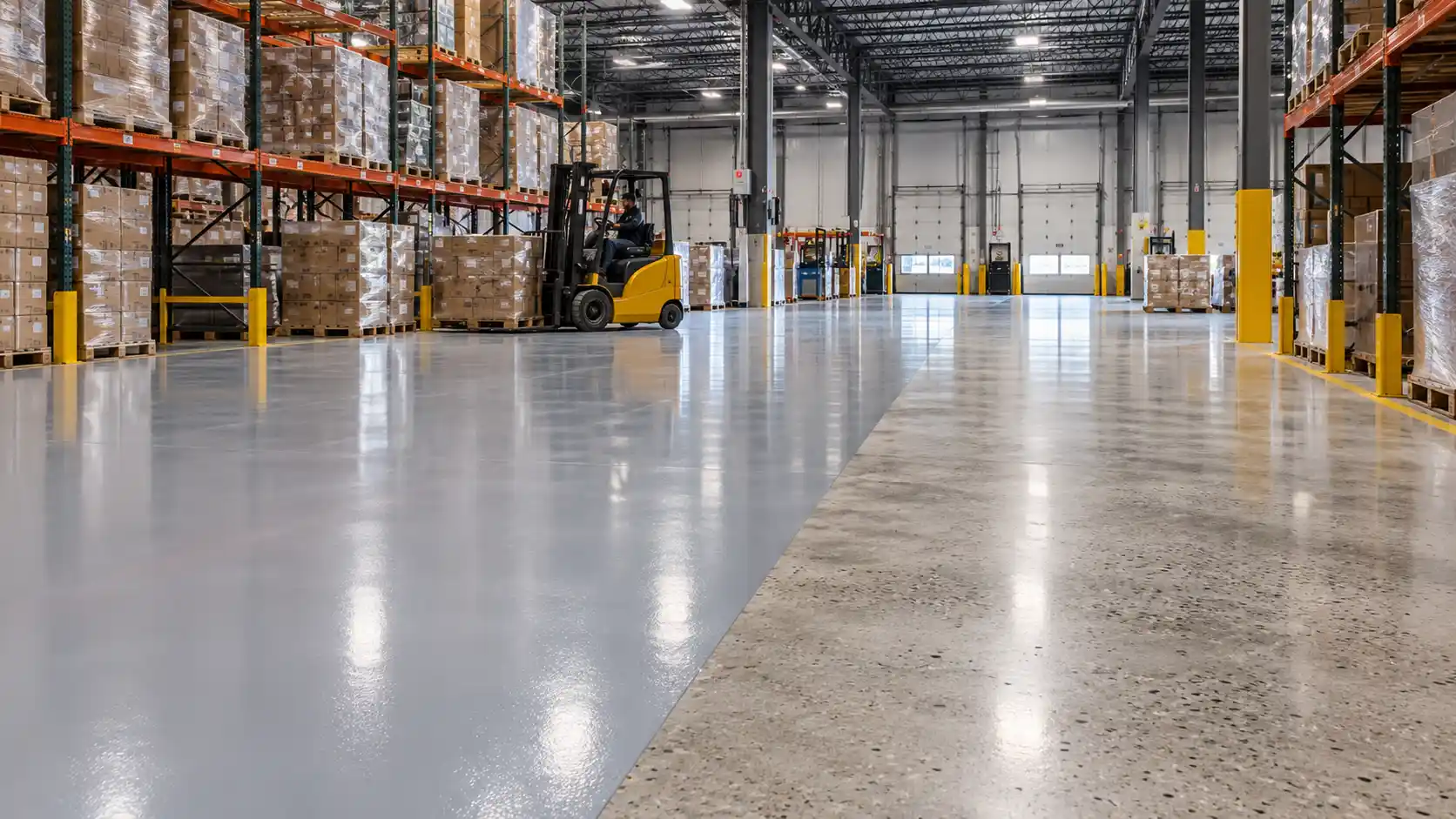
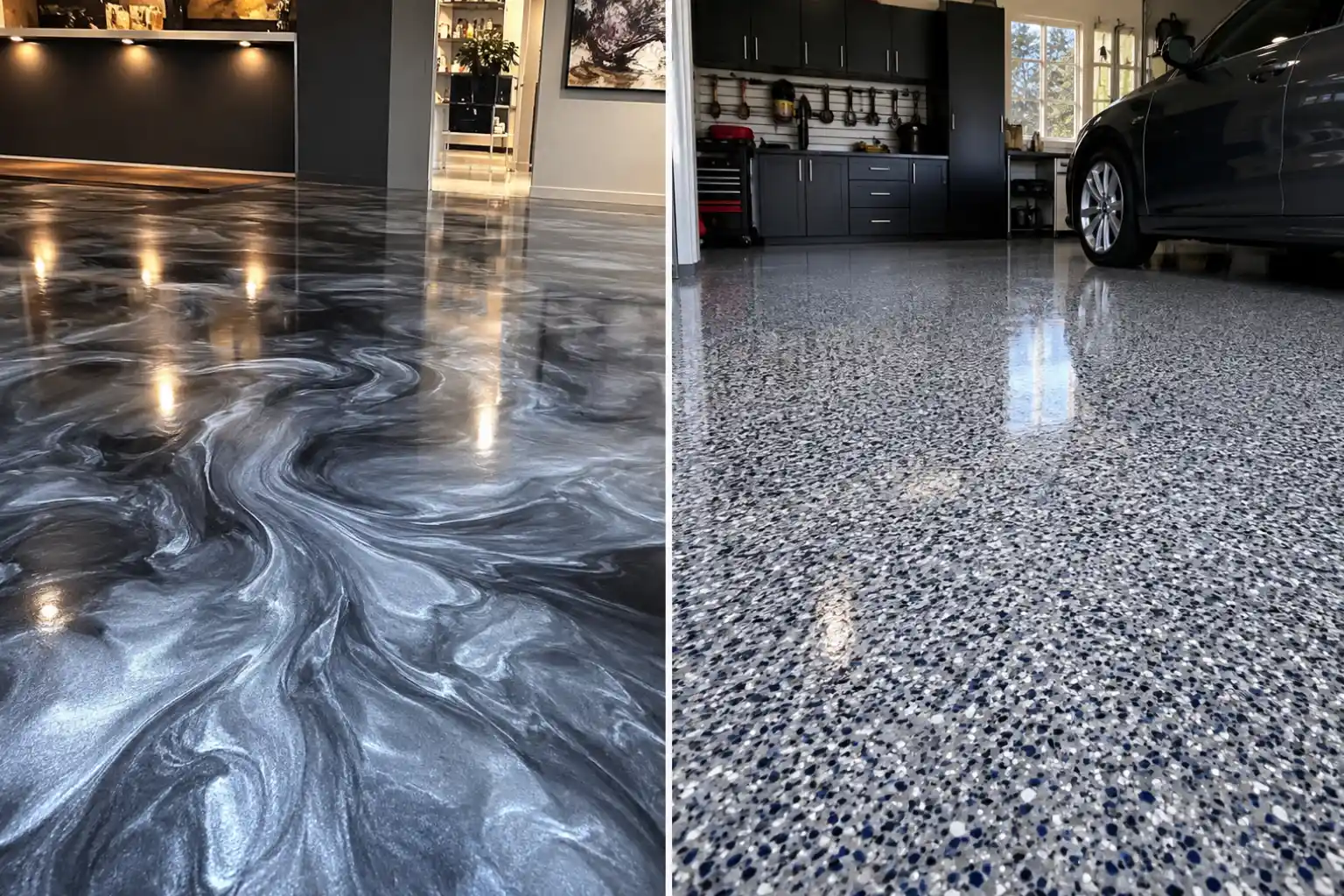
For warehouse owners and facility managers in New Jersey, choosing a floor finish means balancing daily traffic, cleaning requirements, installation time, maintenance, and budget. Epoxy Shine provides warehouse flooring services, including epoxy flooring systems and polished concrete, for commercial and industrial facilities throughout the area.
Epoxy flooring may suit warehouses that need a protective coating, consistent color, or specified surface texture. Polished concrete flooring may suit facilities with sound concrete where an exposed concrete finish fits the operation. The right choice depends on the existing slab, traffic patterns, spill exposure, maintenance expectations, and how the space is used.
Before selecting a finish, consider where forklifts turn, how pallet jacks move through aisles, which substances reach the floor, and when flooring work can take place. These operational details often matter more than choosing the surface that looks best in a photograph.
Epoxy vs. Polished Concrete: A Warehouse Flooring Comparison
Both epoxy flooring and polished concrete can be considered for warehouse environments, but they differ in installation, appearance, surface protection, and maintenance. The comparison below highlights important factors to evaluate before choosing a flooring system for your facility.
| Factor | Epoxy flooring | Polished concrete |
| How it is created | A resin coating system is applied over prepared concrete | The existing concrete is mechanically ground, honed, and polished |
| Appearance | Offers consistent colors and specified textures | Shows the concrete’s character, including aggregate and surface variation |
| Forklift traffic | Requires a system selected for expected abrasion and operating conditions | Requires suitable concrete and a finish matched to the traffic |
| Spills | Resistance depends on the complete coating system and substance | Protective treatments can improve stain resistance; polishing alone does not establish chemical resistance |
| Existing repairs | A pigmented coating can help create a consistent appearance | Patches and differences between concrete placements may remain visible |
| Maintenance | Needs compatible cleaning, inspections, and renewal when necessary | Needs compatible cleaning and maintenance of the finish or protective treatment |
| Installation planning | Preparation, application, and curing affect access | Grinding, repairs, polishing, and treatments affect access |
| Cost | Depends on preparation, repairs, coating specification, and scheduling | Depends on slab condition, grinding requirements, and finish specification |
What Is the Difference Between Epoxy Flooring and Polished Concrete?
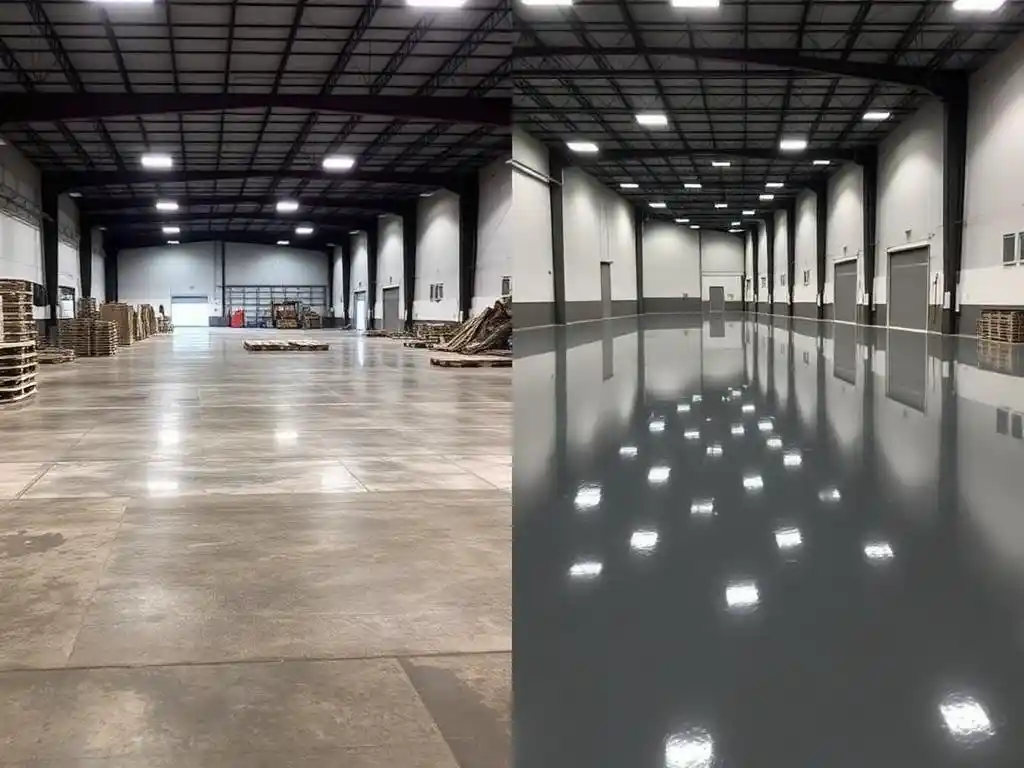
Both flooring options begin with the condition of the existing concrete, but they treat that concrete differently. Understanding how each system is created makes it easier to compare appearance, maintenance, traffic performance, and future repair requirements.
Epoxy Flooring Adds a Coating System Over the Concrete
An epoxy floor is created by preparing the concrete and applying a specified resin system. Installation may include surface repairs, a primer, coating layers, aggregate, and a protective topcoat.
The term epoxy flooring covers different systems. A thin coating intended for lighter use is not equivalent to a thicker system selected for frequent vehicle movement or more demanding exposure. Preparation, application thickness, texture, and topcoat all influence the finished surface.
When reviewing a proposal for your warehouse, ask what will be installed and why it suits the space. A finish name or color sample alone does not explain the system’s intended performance.
Polished Concrete Refines the Existing Slab
Mechanically polished concrete is produced by grinding, honing, and polishing through a sequence of abrasive steps. The process refines the existing surface rather than covering it with a pigmented epoxy layer. Densifiers and protective treatments may also be included.
The result depends partly on the concrete already in the building. Different placements, old patches, aggregate, and discoloration can affect its appearance. This deserves attention in an existing warehouse where repairs or changes in use have left visible differences across the floor.
Polishing also differs from grind-and-seal flooring. Grinding concrete and applying a sealer creates a different finish with its own maintenance requirements. Each quote should clearly identify the proposed process.
How Do Epoxy and Polished Concrete Handle Warehouse Traffic?
Warehouse floors rarely wear evenly. Main aisles, loading areas, turning points, staging zones, and dispatch areas may experience substantially more activity than storage sections. A professional warehouse flooring assessment should consider these high-wear areas separately instead of treating the entire building as one traffic zone.
For forklift and pallet jack traffic, consider wheel materials, movement frequency, turning and braking, carried debris, and joint condition. Repeated movement across damaged edges can worsen existing surface problems, regardless of the chosen finish.
An epoxy system should be selected for the expected abrasion and exposure. Polished concrete requires a suitable slab and a finish matched to the operation. With either approach, cracks, weak concrete, and damaged joint edges need assessment before finishing begins.
The concrete slab carries structural loads. Coating or polishing does not establish that the floor can support heavier equipment, additional racking, or a change in building use. Structural capacity and surface performance are separate considerations.
Before requesting a recommendation, mark the busiest routes on a simple floor plan. Include equipment types and turning areas. This gives the contractor more useful information than describing the whole warehouse as heavy traffic.
Which Finish Is Better for Spills and Cleaning?
Start with what actually reaches the floor. Water, lubricants, hydraulic fluids, cleaning solutions, and other substances create different demands. Concentration, temperature, frequency, and contact time also affect the specification.
Epoxy can provide a protective coating, but it does not offer universal chemical resistance. The proposed system must be checked against the substances used in your facility. A coating suitable for occasional oil exposure may not suit prolonged contact with an aggressive chemical.
Polished concrete may include treatments that improve stain resistance and support routine cleaning. However, polishing does not make the slab impervious to spills. Review the protective treatment, cleanup procedures, and actual exposure before choosing it.
For example, dry packaged-goods storage and an equipment maintenance area may justify different specifications. One finish does not have to serve every zone simply because those zones share a building.
Floor texture is another part of this decision because traction and cleanability often affect one another. The goal is to select a surface your team can clean consistently without overlooking the conditions that influence footing.
Balance Traction With Cleaning Requirements
Texture should be chosen alongside the cleaning routine. A textured epoxy finish may be considered where added traction is needed, but the selected texture also affects cleaning equipment and methods. A surface your team struggles to clean can allow residue to accumulate.
A glossy finish should not be judged for traction by appearance alone. Consider expected contamination, footwear, vehicle movement, and maintenance. Neither epoxy nor polished concrete should be treated as slip-proof.
How Will Each Finish Look in Your Warehouse?
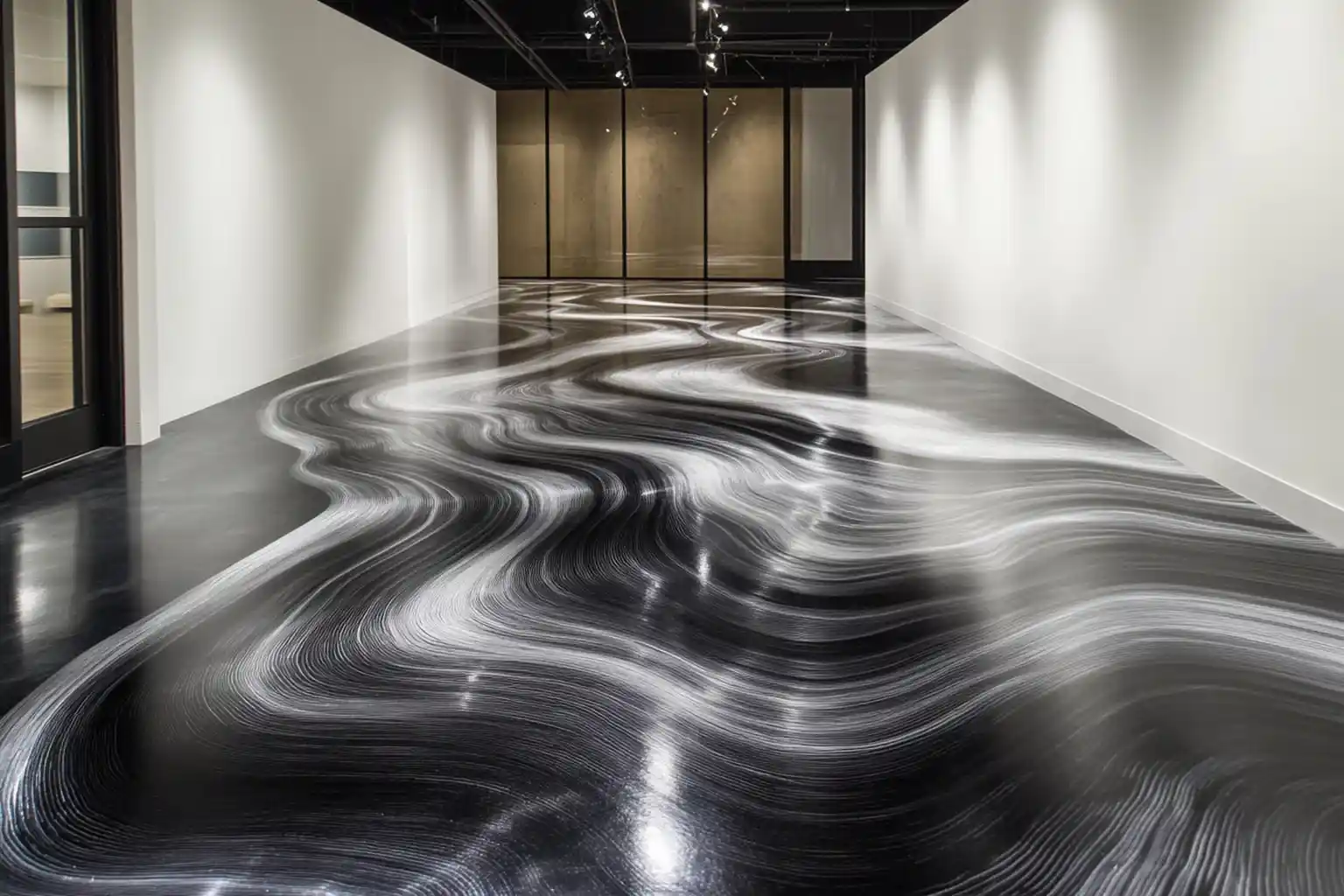
Epoxy offers control over color and visual consistency. A pigmented system can help unify suitable repaired concrete and support a planned layout with contrasting areas or markings.
Polished concrete retains more of the slab’s character. Some owners prefer that appearance in open storage or distribution areas. Others may find visible patches, color differences, or uneven aggregate exposure less suitable for their expectations.
If you are upgrading an older facility, discuss which existing features will remain visible after polishing. If you prefer epoxy, remember that a coating cannot make unsuitable concrete acceptable simply by covering it.
Request a representative sample area where practical. Include typical repairs or slab variation rather than choosing only the cleanest section. A realistic sample helps establish expectations before finishing a larger area.
Epoxy vs. Polished Concrete Cost: What Determines Your Quote?
Warehouse flooring costs depend heavily on the condition of the existing slab and the amount of preparation required. Square-foot pricing can be useful for early planning, but it should not replace an on-site assessment.
For preliminary budgeting, industrial epoxy flooring may be estimated at 4–10 per square foot, while polished concrete may range from approximately 3–12 per square foot, depending on the scope and finish requirements.
| Flooring option | Estimated cost per sq. ft. | Estimated cost for 5,000 sq. ft. |
| Industrial epoxy | 4–10 | 20,000–50,000 |
| Polished concrete | 3–12 | 15,000–60,000 |
Your final quote depends on concrete condition, preparation, repairs, finish specifications, project size, and access. Existing coating removal, extensive repairs, moisture-related work, specialty finishes, and restricted installation schedules can increase the project cost.
Compare what each quote includes, not just the price per square foot. Contact Epoxy Shine for a warehouse flooring assessment and a quote based on your New Jersey facility’s actual requirements.
Which Warehouse Floor Is Easier to Maintain?
Both finishes need care. The easier option depends on texture, contamination, cleaning equipment, and the maintenance resources available in your warehouse.
Epoxy needs debris removal, compatible cleaning products, and inspection of areas exposed to concentrated wear. Grit beneath moving wheels can abrade the surface. Peeling, exposed concrete, or recurring damage should be assessed before deciding whether a local repair or wider recoating is appropriate.
Polished concrete also needs routine cleaning. Protective treatments may require periodic attention, and worn areas may need professional maintenance. Low maintenance does not mean no maintenance.
Ask for written care instructions before approving either finish. These should identify suitable cleaners, scrubber brushes or pads, cleaning frequency, and signs requiring attention. Confirm that your team and equipment can maintain the proposed surface consistently.
What About Installation Time and Warehouse Downtime?
The schedule includes more than applying epoxy or polishing concrete. Clearing stock, moving equipment, preparing the slab, completing repairs, and restoring access all affect how long an area is unavailable.
For epoxy, application completion and return to service are different milestones. Pedestrian access, forklift traffic, and chemical exposure may have separate requirements depending on the flooring system and site conditions.
Polishing also needs planning around equipment, repairs, edge work, and protective treatments. Do not assume the warehouse can remain fully operational throughout the process.
For a New Jersey warehouse or another facility within Epoxy Shine New Jersey service area, identify the aisles, loading routes, dock areas, and work zones that must remain accessible. Phased installation may be possible, but it depends on the layout, separation of work areas, access, and flooring specification.
Winter work requires attention to air and slab conditions even inside the building. Discuss environmental controls and return-to-traffic criteria before committing to a schedule.
How to Choose the Best Flooring for Your Warehouse
The best warehouse flooring is not simply the system with the longest list of benefits. It is the option that fits the existing concrete, forklift and equipment traffic, spill exposure, cleaning program, available downtime, and long-term maintenance plan.
Before making a decision, consider whether your facility needs the additional surface protection and appearance options of an epoxy coating or whether the existing slab can support the desired polished concrete finish.
When Epoxy Flooring May Be Suitable
Consider epoxy when the project calls for a consistent color, specified texture, or a coating selected for particular spill exposures. It may also suit facilities seeking a more uniform appearance over properly prepared and repaired concrete.
Concrete preparation, cure requirements, available work windows, and future maintenance still need to support that choice.
A professionally specified epoxy flooring system should be selected based on the conditions in your facility rather than appearance alone.
When Polished Concrete May Be Suitable
Consider polished concrete when the slab is suitable and an exposed concrete appearance fits the facility. The specified finish, protective treatments, and cleaning routine should match the operation.
Discuss existing patches, surface variation, and spill exposure before committing. A representative sample can help establish the expected result.
You may also find that different areas need different solutions. A dry storage zone, loading area, main forklift aisle, and maintenance area can have different priorities. Assessing each zone helps avoid paying for features where they are unnecessary or overlooking protection where it matters.
Choose Your Warehouse Floor With a Clear Plan
Before investing in a new finish, establish what your concrete needs and how the flooring project will fit around your operation. Comparing epoxy and polished concrete based on slab condition, warehouse traffic, spill exposure, cleaning, downtime, and maintenance makes it easier to select a suitable system.
Contact Epoxy Shine to discuss your warehouse flooring project. Share your floor area, current concrete condition, equipment traffic, spill exposure, and available installation windows so the recommendation can focus on your building and operating requirements.
Request a warehouse flooring assessment and quote or call (862) 263-9637. Whether you are considering epoxy or polished concrete, start with an evaluation of the slab and the way your facility actually operates.
Frequently Asked Questions
Is epoxy or polished concrete better for a warehouse?
Neither is better for every warehouse. Epoxy may suit requirements for a protective coating, consistent color, specified texture, or resistance to particular substances. Polished concrete may suit a sound slab where an exposed concrete finish fits the operation. Assess traffic, spills, slab condition, and maintenance needs before choosing.
Which costs more: epoxy or polished concrete?
Either can cost more depending on the scope. Epoxy pricing varies with preparation, repairs, system specification, and access. Polished concrete pricing varies with slab condition, grinding requirements, finish level, and treatments. Compare itemized proposals for the same floor.
Which is easier to maintain: epoxy or polished concrete?
Both require cleaning and inspection. Maintenance depends on texture, contamination, equipment, and the specified finish. Epoxy may need repair or recoating as it wears, while polished concrete may need protective-treatment maintenance or professional renewal. Follow the written care instructions for the installed floor.