



Food Processing Flooring in Woodland Park, NJ

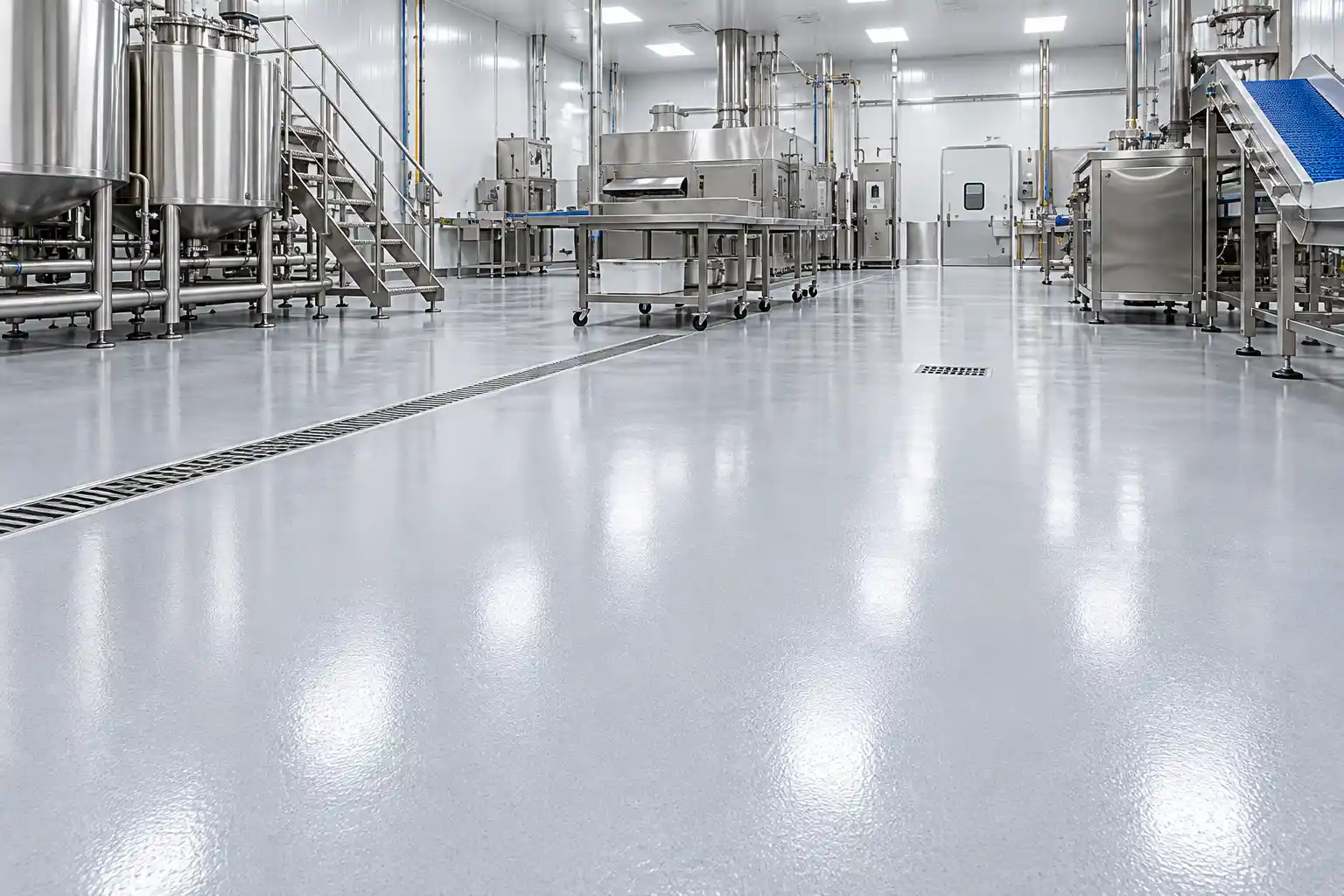
Epoxy Shine installs resin flooring for food production areas where bare concrete can fail under washdowns, dropped loads, wheeled carts, grease, sanitation products, and continuous operations. We build floor systems around the condition of the slab, how the room functions, and the performance demands placed on it every day.

Flooring Built Around the Way Food Plants Operate

Flooring Built Around the Way Food Plants Operate

A processing floor is part of the production environment, not simply a finished surface. Different zones place different demands on the concrete below: preparation rooms may stay wet, packaging lines need smooth movement for carts and equipment, storage areas take concentrated loads, and sanitation routines can expose the floor to aggressive cleaning products. Epoxy Shine evaluates these conditions before specifying a coating. From our Woodland Park base, we install resin flooring for food and beverage facilities using epoxy, quartz, MMA, polyaspartic, and other industrial systems. Existing coatings, cracks, weak concrete, joints, drainage areas, floor transitions, operating hours, and required return-to-service time are considered before installation begins.
Flooring Built Around the Way Food Plants Operate

Practical Advantages for Food Production Areas

A well-specified floor can solve several operational problems at once. The right system helps isolate the concrete from routine contamination, gives staff a more manageable surface to maintain, and can be finished differently according to the function of each production zone.

Flooring Systems Used in Food Processing Facilities

Chemical Resistant Flooring

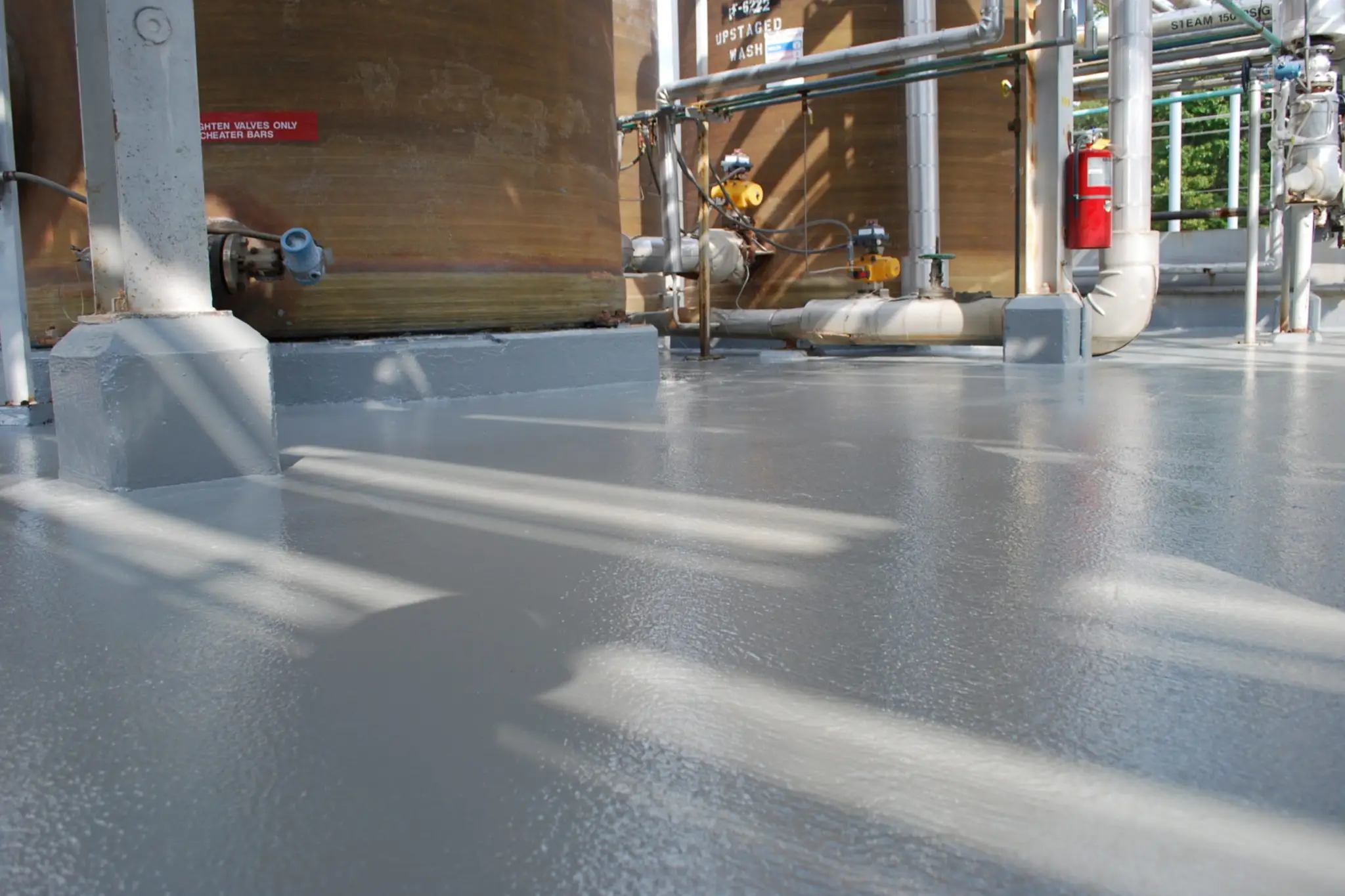
Chemical-resistant epoxy is commonly considered for areas where the slab is exposed to cleaning solutions, oils, food by-products, process liquids, or repeated spills. Its main role is to create a protective barrier over properly prepared concrete. This makes it useful in production rooms, ingredient-handling areas, utility spaces, and other sections where an uncoated slab would be difficult to maintain. The coating can also be built with different surface profiles depending on how the room is cleaned and used. Before installation, Epoxy Shine reviews the existing concrete and exposure conditions so the selected system matches the actual operating environment.

Quartz Epoxy Designs

Quartz Epoxy Flooring

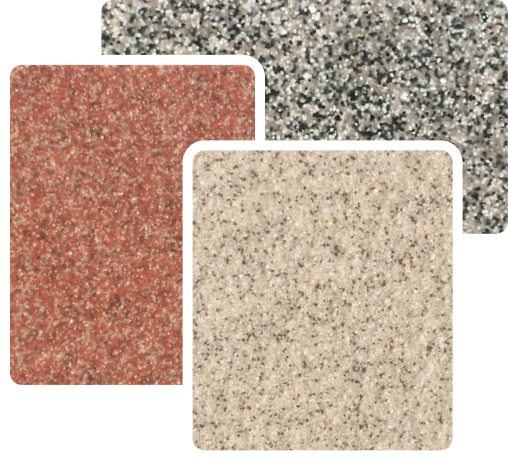
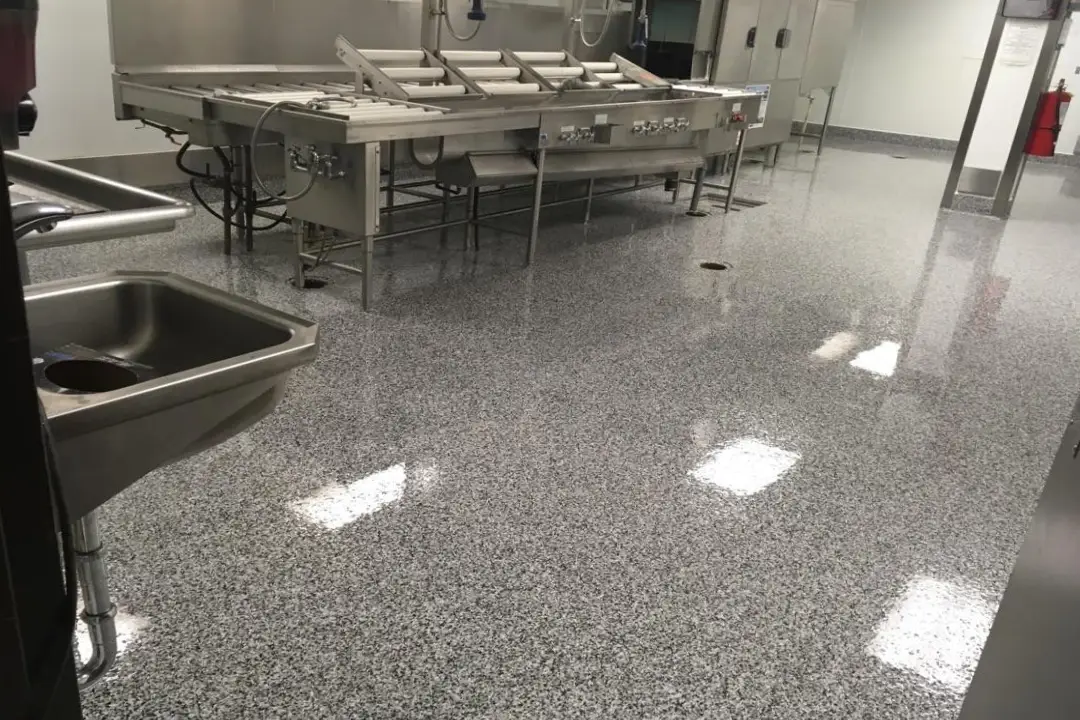
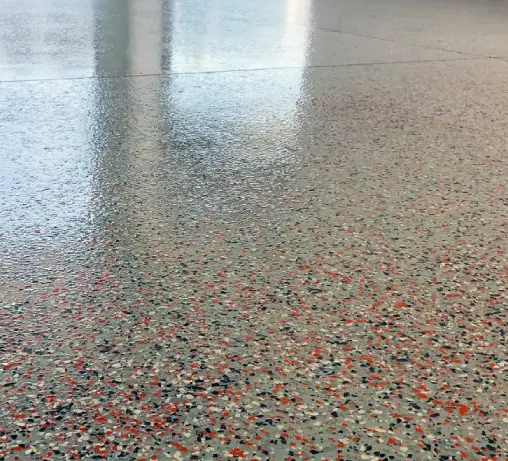
Quartz epoxy is useful where additional surface texture and wear resistance are needed. Colored quartz aggregate is incorporated into the resin system to create a harder, more textured finish than a standard smooth coating. This makes it relevant for preparation areas, wash zones, corridors, service rooms, and sections where employees move between dry and damp surfaces. The finished profile can be adjusted according to the required balance between footing and cleanability. Quartz systems also provide a more finished appearance than exposed concrete, which can be useful in visible production areas or facilities where different floor zones need to remain clearly identifiable.

Methyl Methacrylate (MMA) Flooring Solutions

MMA Flooring

MMA is primarily valuable where the installation window is narrow. Food plants often schedule flooring work around overnight shutdowns, maintenance periods, or short production breaks, and a slow-curing material may not suit that schedule. MMA cures much faster than many traditional resin systems, making it suitable for selected projects where return-to-service time is a major factor. It can also be used in demanding environments that experience temperature changes, wear, and regular cleaning. Epoxy Shine considers MMA when the job requires both performance and speed, rather than choosing it simply because it is a premium coating option.
Polyaspartic Flooring

Polyaspartic Flooring

Polyaspartic coatings are well suited to support areas where rapid curing and strong wear performance are priorities. They may be used in packaging sections, service corridors, storage rooms, loading-related areas, and other spaces where a long installation shutdown would create operational problems. The material produces a dense finished surface and can perform well under frequent traffic and routine facility use. It is also useful where a faster installation sequence is preferred. Epoxy Shine evaluates the concrete, expected use, and project schedule before recommending polyaspartic, because its advantages are most valuable when they solve a specific site constraint.

Solid Color Epoxy Visualizer

Solid-Color Epoxy Flooring

Solid-color epoxy works best in controlled areas where the facility needs a uniform, easy-to-manage finish rather than a highly textured surface. It can be used in dry processing rooms, packaging areas, storage spaces, corridors, and support rooms. Beyond appearance, color can help distinguish walkways, work zones, equipment areas, or restricted sections within a facility. This makes the coating useful for visual organization as well as concrete protection. Epoxy Shine selects the finish according to room use, existing slab condition, and maintenance practices so the floor remains appropriate for the area instead of being specified only for appearance.

Why Choose
Epoxy Shine?

Epoxy Shine is based in Woodland Park and works with multiple industrial coating systems instead of pushing one product for every facility. Our work includes concrete repair, mechanical surface preparation, system selection, and multi-layer installation, including our true 4-layer coating approach where the project calls for it.

Premium Materials

We use only high-quality, industry-approved epoxy products for lasting results.

Quick Installation

Skilled team with years of experience in epoxy flooring applications.

Cost-Effective

With a quick turnaround time, we make sure the flooring stays within your budget.

Expert Support

Dedicated support service during and after installation, with knowledge of your needs.
Why Choose Us Epoxy Services

How We Build a Food Processing Floor

The installation plan is developed from the slab upward. We identify what must be repaired, how the concrete should be prepared, which coating fits each work zone, and how installation can be sequenced around access and production requirements before materials are applied.

Consultation & Site Assessment

Expert Assessment

We inspect the existing floor for cracks, worn coatings, weak areas, traffic patterns, wet zones, and operational constraints. The assessment determines what needs correction before the new system is specified.

Surface Preparation

Surface Preparation

Existing contamination, loose material, or failed coatings are removed and the concrete is mechanically profiled for adhesion. Necessary repairs are completed before primers or build coats are installed.

System Design & Material Selection:

System Design & Material Selection

The coating build is selected according to the room, substrate, required texture, maintenance routine, and available installation window. Different sections of the same facility may receive different systems when their operating conditions are not the same.

Professional Installation:

Professional Installation

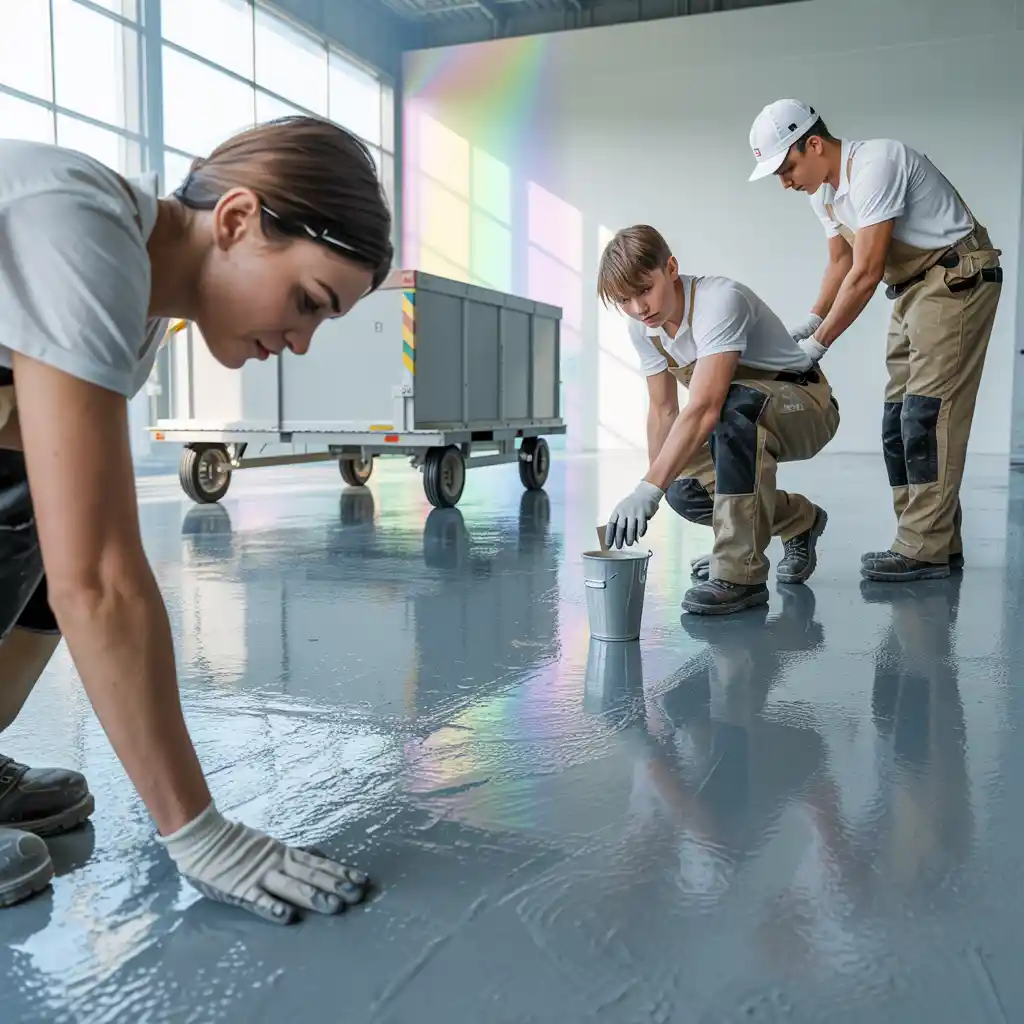
Each coat is applied in the required sequence with attention to coverage, edges, transitions, and surface consistency. The installation is organized to keep work contained and coordinated with facility access.

Curing & Project Handover:

Curing & Project Handover

The finished floor remains out of service for the curing period required by the selected material. Before reopening the area, the completed surface is reviewed and the return-to-use timing is confirmed.

Book Now

Make An Appointment

We’re delighted to hear from you. Any questions, suggestions, or feedback you have are valuable to us. We’re here to provide you with better service and respond to your inquiries as quickly as possible.

Follow Us

Customer's Testimonials

Frequently Asked Questions

Here are some things you might be wondering. Have another question? Just get in touch.

The right system depends on how the space is used. Wet processing rooms, packaging areas, storage zones, and utility spaces can require different finishes. Epoxy Shine evaluates the slab, traffic, cleaning methods, chemical exposure, and operating schedule before recommending epoxy, quartz, MMA, polyaspartic, or another suitable system.

Washdown areas typically need a seamless surface with suitable traction and resistance to repeated cleaning. Quartz epoxy or other textured resin systems may be appropriate depending on water exposure, sanitation products, drainage conditions, and the level of slip resistance required.
In many cases, yes, but the existing surface must be inspected first. Failed coatings, contamination, cracks, spalling, or weak concrete may require removal or repair before recoating. Proper preparation is essential for reliable adhesion and long-term performance.

Fast-curing systems such as MMA or polyaspartic flooring may be considered when the installation window is short. The final choice also depends on slab condition, room use, required finish, and exposure conditions rather than cure speed alone.

Pricing depends on square footage, concrete condition, repairs, coating removal, surface preparation, selected system, texture, number of layers, and site access. Epoxy Shine provides project-specific estimates after evaluating the facility and the work required.