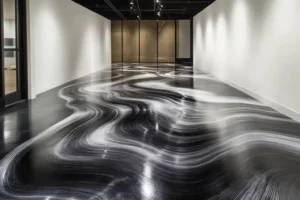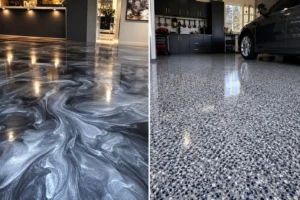

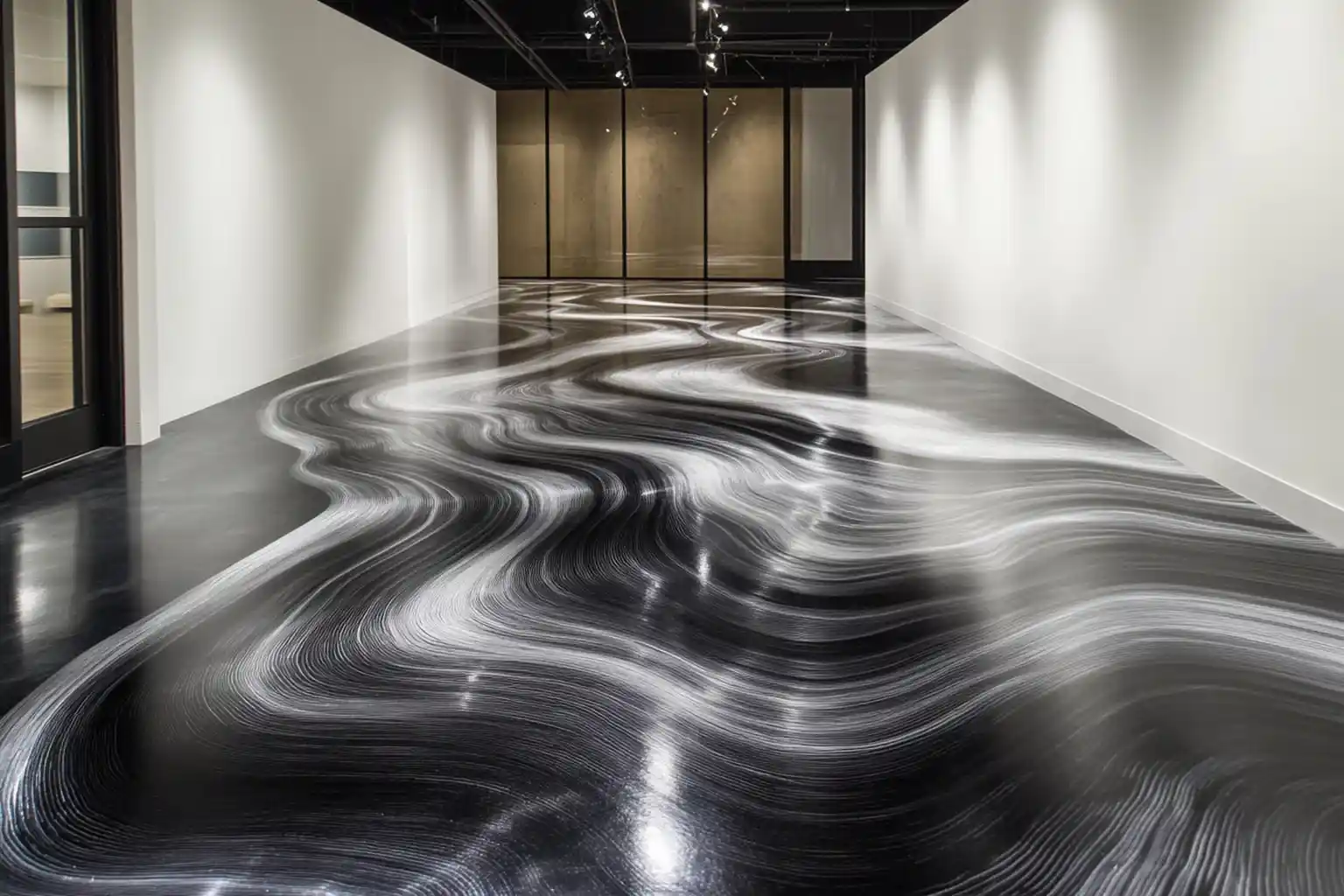
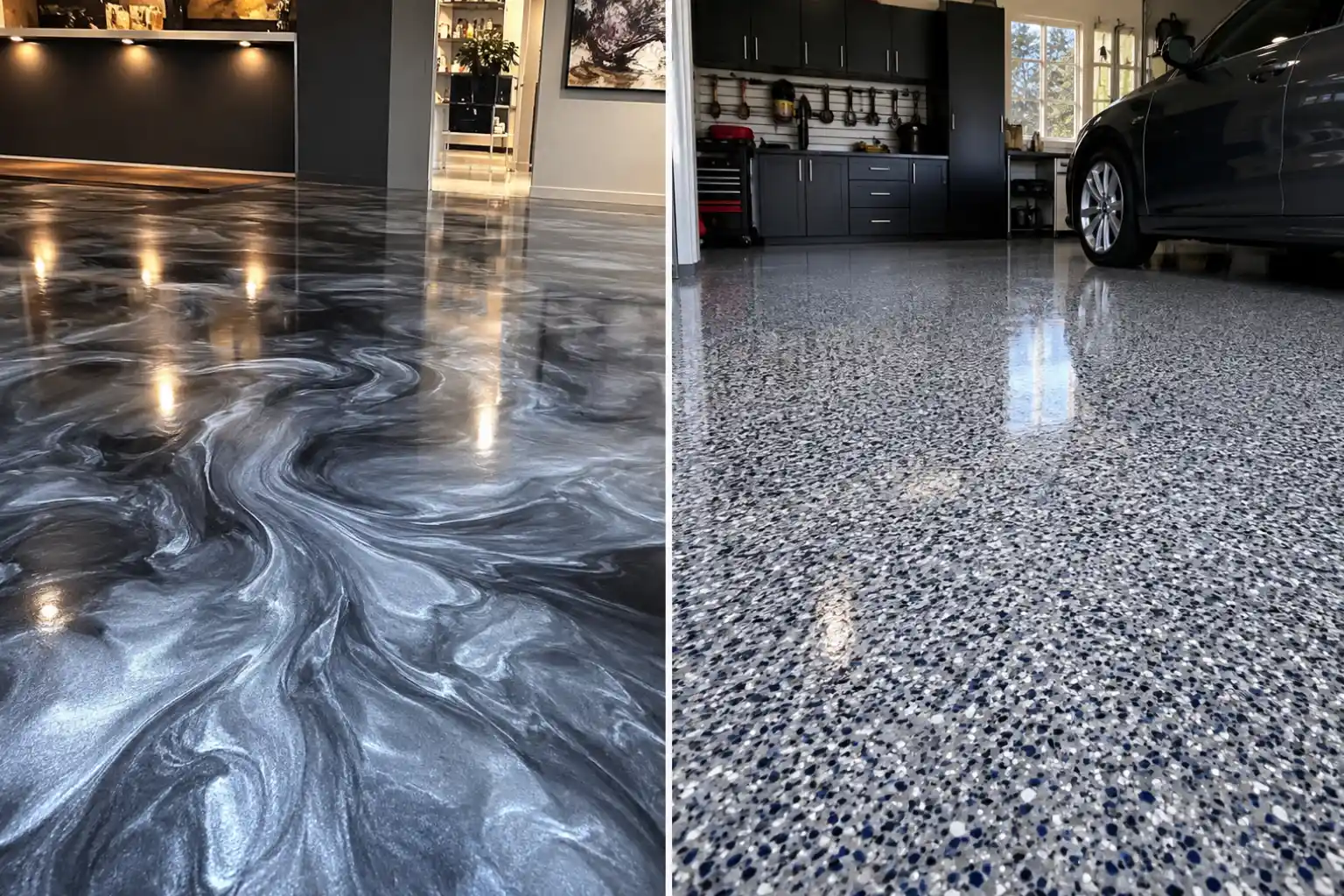
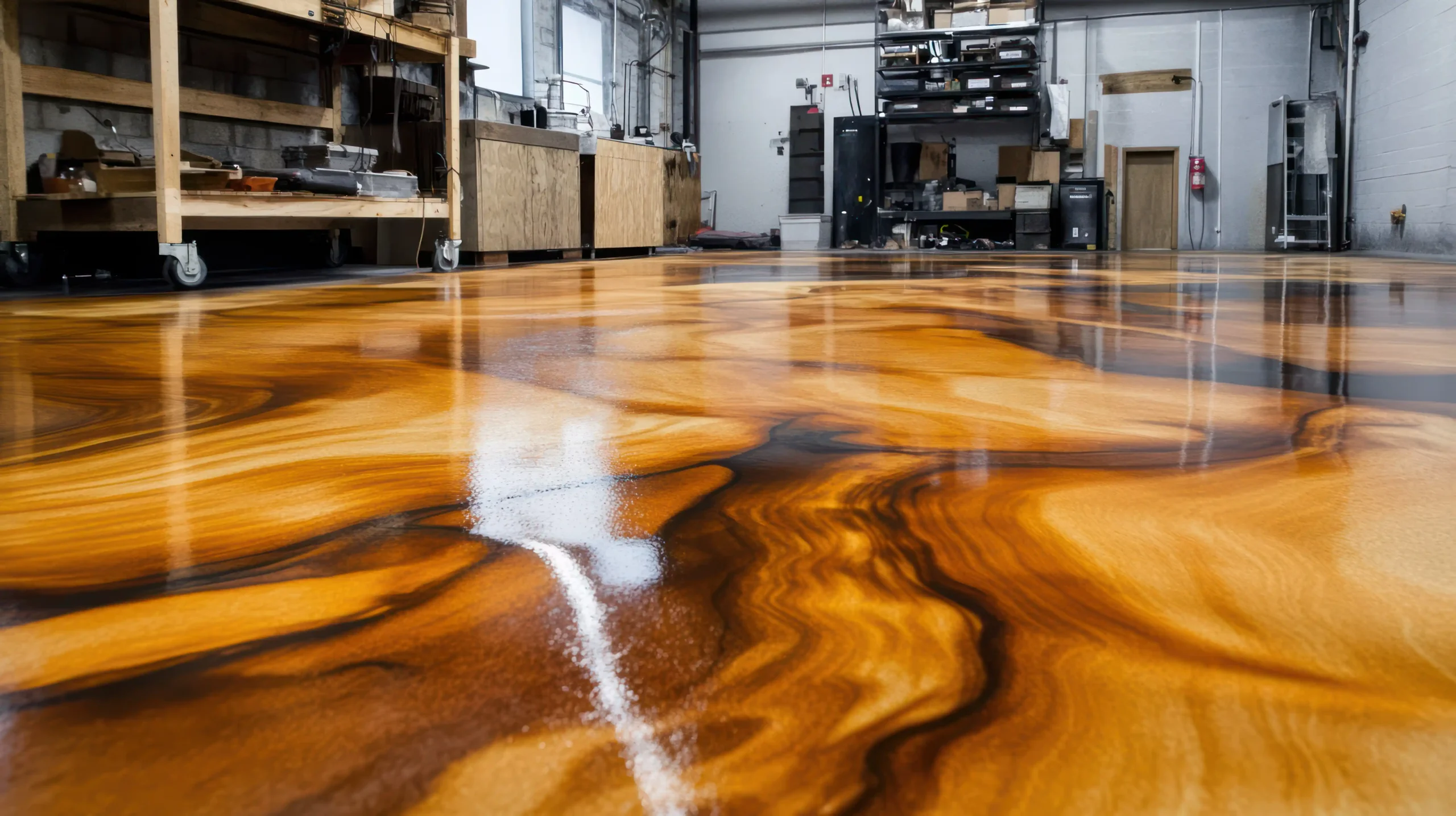
Metallic epoxy flooring is one of the most eye-catching ways to upgrade a plain concrete floor. It creates a smooth, seamless surface with depth, movement, and color variation that can look like marble, flowing water, smoke, lava, stone, or a custom abstract design.
Unlike regular floor paint, metallic epoxy is not just a thin color layer. It is a decorative epoxy floor coating system applied over prepared concrete. When installed correctly, it can improve both the appearance and performance of garages, basements, showrooms, salons, offices, retail spaces, and other finished concrete areas.
Key Takeaways
- Metallic epoxy flooring is a decorative concrete coating that uses metallic pigments to create a smooth, seamless, custom floor design.
- It is best for garages, basements, showrooms, salons, offices, retail spaces, and other areas where appearance and easy cleaning matter.
- The final look is unique because the pigments move during installation, creating marble-like, smoky, flowing, or three-dimensional effects.
- Metallic epoxy can be durable, but its performance depends on concrete preparation, primer, topcoat quality, moisture control, and maintenance.
- It usually costs more than basic epoxy because it requires more skill, design work, and protective finishing.
- It is a strong choice for a high-end floor, but flake epoxy may be more practical for heavy-use garages that need more texture and scuff hiding.
What Is Metallic Epoxy Flooring?
Metallic epoxy flooring is a decorative concrete coating made by mixing epoxy resin, epoxy hardener, and metallic or pearlescent pigments. These pigments move through the wet epoxy during installation, creating soft patterns, flowing effects, color depth, and a custom finish.
The final look depends on the colors, application method, floor size, lighting, and installer technique. That is why no two metallic epoxy floors look the same. Some floors look bold and dramatic, while others look clean, modern, and subtle.
Simple Definition for Beginners
Metallic epoxy flooring is a seamless epoxy floor coating that uses special metallic pigments to create a glossy, three-dimensional design over concrete. It is often used when someone wants a floor that looks more decorative than plain epoxy, concrete paint, tile, or basic floor coating.
The coating is poured and spread across prepared concrete. As the metallic pigments move, they create natural-looking swirls, waves, highlights, and shadows. Once the system cures and receives a protective topcoat, the floor becomes easier to clean and more resistant to stains and daily wear.
Why Metallic Epoxy Looks Different From Regular Epoxy
Regular epoxy flooring often has a solid color, flake pattern, or simple textured finish. Metallic epoxy looks different because the pigments create movement inside the coating. This gives the floor more visual depth and a more custom appearance.
A metallic epoxy floor can look like polished stone, marble, clouds, smoke, ocean waves, or a luxury showroom floor. The effect is not printed on the surface. It comes from the way the pigments shift inside the epoxy while it is being installed.
Metallic epoxy flooring is a decorative epoxy coating system that uses metallic pigments to create a seamless, glossy, custom floor over concrete.
How Does Metallic Epoxy Flooring Work?
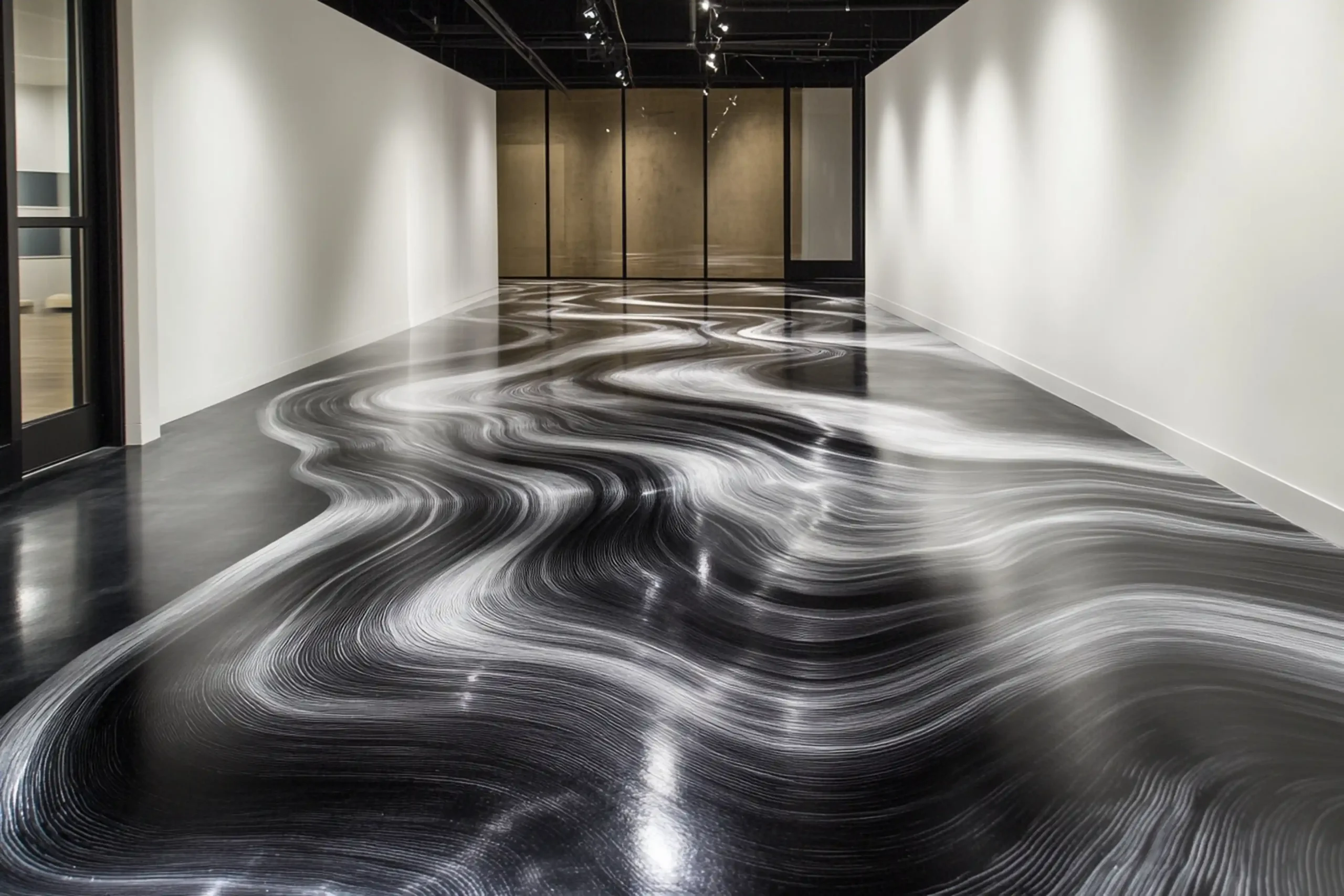
Metallic epoxy flooring works by combining resin, hardener, color, and pigment movement into one coating system. The concrete must be prepared first so the epoxy can bond properly. After that, the installer applies the coating layers in the correct order.
The metallic coat is the design layer, but it is not the only layer that matters. A strong floor also depends on surface preparation, primer, coating thickness, cure time, and the protective topcoat used at the end.
1. The Main Layers in a Metallic Epoxy Floor
A professional metallic epoxy floor usually includes several steps and layers:
- Concrete inspection
- Surface grinding or preparation
- Crack and surface repair
- Primer or base coat
- Metallic epoxy design coat
- Clear protective topcoat
- Optional slip-resistant additive
Each layer has a purpose. The primer helps with bonding. The metallic coat creates the design. The clear topcoat protects the surface from stains, scratches, tire marks, cleaning products, and daily foot traffic.
2. Why Every Metallic Epoxy Floor Looks Unique
Every metallic epoxy floor looks unique because the design is created by movement, not a fixed pattern. The pigments shift as the epoxy is spread, rolled, brushed, or moved with special tools. Lighting can also change how the colors appear.
A black and silver metallic floor may look bold and modern in a garage. A white, gray, and pearl floor may look clean and soft in a basement or showroom. A blue and charcoal mix may create a strong, water-like effect in a retail or entertainment space.
Where Can Metallic Epoxy Flooring Be Used?
Metallic epoxy flooring can be used in many indoor concrete spaces where appearance, easy cleaning, and a seamless finish matter. It is popular in homes, garages, basements, showrooms, salons, offices, lobbies, studios, and retail spaces.
The best use depends on traffic level, moisture conditions, cleaning needs, and how much texture the floor requires. A professional installer should inspect the concrete before recommending metallic epoxy, especially in garages or basements.
Metallic Epoxy for Garages
Metallic epoxy can work well in garages when it is installed with proper concrete grinding, crack repair, and a durable topcoat. It gives the garage a clean, finished, showroom-style appearance that many homeowners like.
However, garages deal with hot tires, road salt, wet shoes, tools, storage items, and vehicle traffic. For heavy-use garages, flake epoxy may hide dirt and scuffs better.
Metallic Epoxy for Basements
Metallic epoxy can be a strong option for basements because it creates a smooth and seamless floor over concrete. It can make an unfinished or dull basement feel more modern, clean, and complete.
Before installing metallic epoxy in a basement, the concrete should be checked for moisture. Moisture problems can affect how well coatings bond to the slab. If the basement has water seepage or vapor issues, those problems should be addressed before coating the floor.
Metallic Epoxy for Commercial Spaces
Metallic epoxy is common in commercial spaces where visual impact matters. It can be used in showrooms, salons, offices, restaurants, retail stores, studios, lobbies, and display areas.
Business owners often choose it because it creates a polished look without grout lines or seams. It can also reflect light, making a space feel brighter and cleaner. The right topcoat is important in commercial areas because traffic and cleaning needs are usually higher.
Areas Where Metallic Epoxy May Not Be the Best Fit
Metallic epoxy is not perfect for every space. It may not be the best choice for exterior areas with heavy UV exposure unless the system is designed for that condition. It may also not be ideal for very wet areas unless traction is added.
It is also not the best fit for rough industrial spaces where the floor takes heavy impacts, sharp equipment abuse, or constant forklift traffic. In those cases, quartz epoxy, heavy-duty industrial coatings, or other systems may be more practical.
What Are the Main Benefits of Metallic Epoxy Flooring?
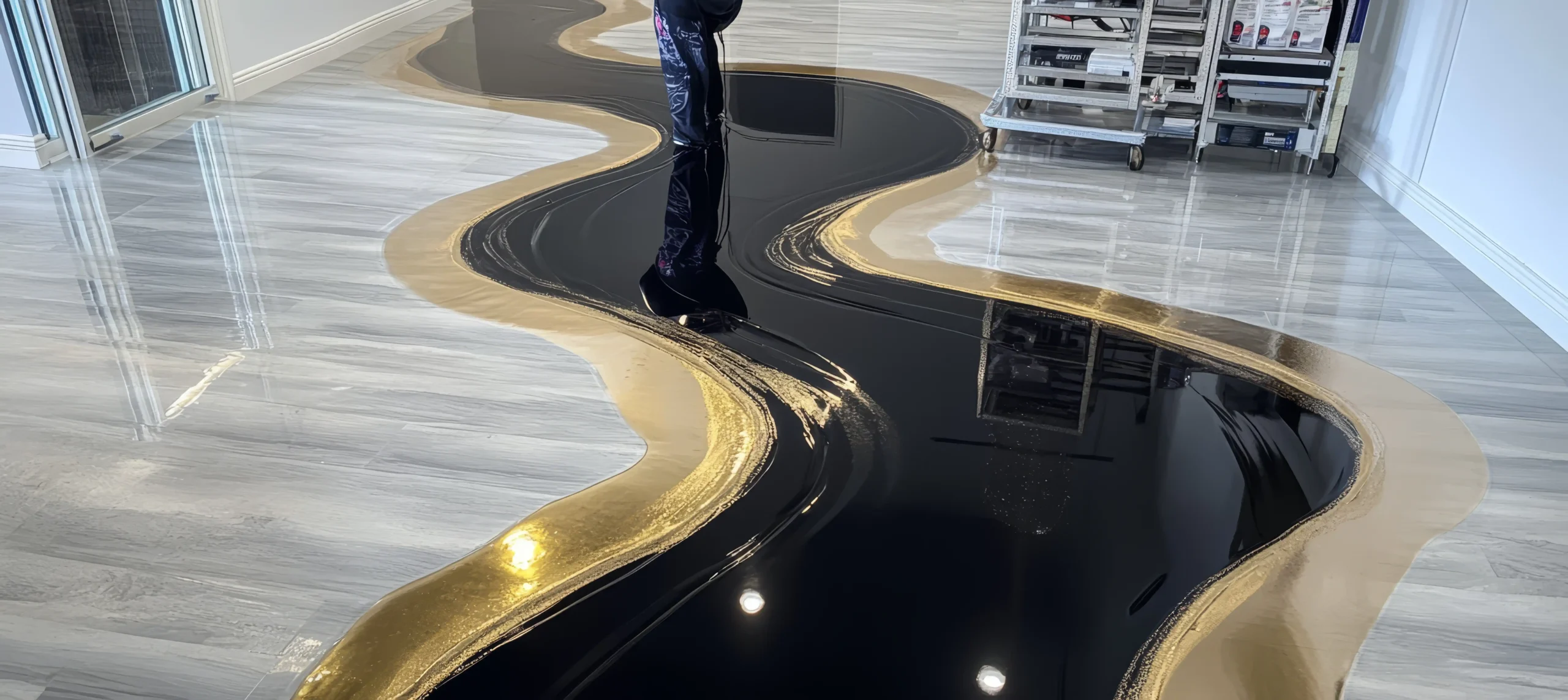
Metallic epoxy flooring is mainly chosen for its custom appearance, but the benefits go beyond looks. When installed correctly, it can also make concrete easier to clean and better suited to finished residential or commercial spaces.
The final performance depends on the full system. Good prep, a quality topcoat, and proper maintenance all help the floor last longer and perform better under daily use.
Main benefits include:
- Custom high-end appearance
- Seamless surface with no grout lines
- Easier cleaning than bare concrete
- Better resistance to stains and spills
- Strong design options for homes and businesses
- Bright, reflective finish
- Can improve dull or worn concrete
- Works well in garages, basements, showrooms, and retail spaces
- Many color and finish options
- Can be paired with slip-resistant additives
A metallic epoxy floor can make a plain concrete area feel more finished. It is especially useful when the goal is to create a floor that looks decorative instead of purely functional.
What Are the Possible Drawbacks of Metallic Epoxy Flooring?
Metallic epoxy flooring has many benefits, but it is not the right choice for every project. The biggest mistake is choosing it only for looks without thinking about traffic, traction, concrete condition, and long-term use.
A smooth, glossy floor may show scratches more than a textured flake floor. It can also feel slippery when wet if the installer does not add the right texture or topcoat finish.
Possible drawbacks include:
- Usually costs more than basic epoxy coatings
- Glossy finishes may show scratches or dust more easily
- Can be slippery when wet without added grip
- Requires professional surface preparation
- DIY results can look uneven or messy
- Concrete moisture issues must be handled first
- Not always best for outdoor UV exposure
- Heavy-use garages may need a more practical texture
The best way to avoid problems is to choose the right system for the space. A decorative basement floor and a daily-use garage floor may need different topcoats, texture levels, and finish choices.
Metallic Epoxy vs Regular Epoxy vs Flake Epoxy
Metallic epoxy, regular epoxy, and flake epoxy are all concrete coating options, but they are not used for the same purpose. The right choice depends on whether you care most about appearance, traction, durability, maintenance, or budget.
| Flooring Type | Best For | Appearance | Texture | Maintenance | Main Limitation |
| Metallic Epoxy | Decorative garages, basements, showrooms, retail spaces | Custom, glossy, flowing, marble-like | Usually smooth unless texture is added | Easy with mild cleaning | May show scratches more than flake systems |
| Flake Epoxy | Garages, workshops, utility rooms, commercial floors | Speckled, textured, practical | More grip and texture | Easy and forgiving | Less luxury visual depth |
| Solid Color Epoxy | Simple residential or commercial floors | Clean and uniform | Smooth or lightly textured | Easy | Less decorative appearance |
If your main concern is design, metallic epoxy is usually the better visual choice. If your main concern is hiding tire marks, dust, and daily garage wear, flake epoxy may be more practical.
Is Metallic Epoxy Flooring Durable?
Metallic epoxy flooring can be durable when it is installed as a full coating system, not just a decorative layer. The surface should be protected with a strong clear topcoat that matches the way the space will be used.
Durability depends less on the metallic look itself and more on the preparation, bond strength, coating quality, topcoat, and maintenance. A beautiful floor can still fail early if the concrete was not prepared properly.
What Affects Durability
Several factors affect how well a metallic epoxy floor performs:
- Concrete condition
- Surface grinding quality
- Moisture levels in the slab
- Crack and joint repair
- Primer quality
- Epoxy thickness
- Topcoat type
- Traffic level
- Cleaning routine
- Exposure to road salt, chemicals, or sharp objects
The topcoat is especially important. It helps protect the metallic design layer from wear, stains, and surface damage. Without a good topcoat, the floor may lose its shine or show damage sooner.
Can Metallic Epoxy Handle Cars and Heavy Use?
Metallic epoxy can handle normal garage use when installed with the right system. That means the concrete is prepared correctly, the coating bonds well, and the topcoat is designed for vehicle traffic.
For garages with heavy tools, frequent dragging, rough storage, or high abuse, a flake or quartz epoxy system may be a better choice. Metallic epoxy can still work, but the finish should be chosen carefully so it matches the real use of the garage.
How Long Does Metallic Epoxy Flooring Last?
A professionally installed metallic epoxy floor can last for many years when the concrete is prepared correctly, the coating system is applied properly, and the floor is maintained with care. The exact lifespan depends on use, traffic, topcoat quality, and the condition of the slab.
Residential spaces with light to moderate use often wear more slowly than busy commercial spaces or garages. A basement floor may stay in good condition for a long time, while a garage exposed to salt, tires, tools, and moisture may need more care.
Factors that can shorten floor life include:
- Poor concrete preparation
- Moisture vapor problems
- Weak or missing topcoat
- Harsh cleaning chemicals
- Dragging sharp or heavy items
- Heavy impact damage
- UV exposure
- Standing water or road salt left too long
How Much Does Metallic Epoxy Flooring Cost?
The cost of metallic epoxy flooring is typically higher than standard epoxy because it requires more detailed design work, specialized installation skills, and a premium finish. In most New Jersey projects, homeowners can expect to pay between $7 and $12 per square foot for metallic epoxy flooring cost of a standard residential installation. Simpler designs with minimal surface preparation may start around $6 per square foot, while custom multi-color designs with premium topcoats can range from $13 to $15 per square foot.
For example:
- A 400 sq ft garage typically costs around $2,800 to $4,800
- A 700 sq ft basement may range from $5,000 to $8,500
- A 1,000 sq ft commercial space can range from $8,000 to $12,000+
The final price depends heavily on the condition of the concrete and the type of system being installed.
It is better to avoid choosing based only on the lowest quote. A cheaper installation may skip important steps like grinding, crack repair, moisture checks, primer, or a strong topcoat. Those skipped steps can lead to peeling, bubbling, dull spots, or early wear.
Common cost factors include:
- Total square footage
- Concrete condition
- Crack repair needs
- Moisture concerns
- Surface grinding requirements
- Number of colors
- Design complexity
- Topcoat type
- Slip-resistant finish
- Residential or commercial use
- Garage, basement, showroom, or retail setting
For New Jersey homes, the condition of the existing concrete can make a big difference. Older garage and basement slabs may need repair before coating. This preparation adds cost, but it also protects the final result.
How Is Metallic Epoxy Flooring Installed?
Metallic epoxy flooring should be installed in a controlled step-by-step process. The design layer may get the most attention, but the hidden preparation work is what helps the coating bond and last.
A professional installer will usually inspect the slab first, repair problem areas, grind the surface, clean the concrete, apply the coating system, and allow the correct cure time before the floor is used.
Common installation steps include:
- Inspect the concrete
- Test for moisture when needed
- Repair cracks or surface damage
- Grind the concrete surface
- Clean and vacuum the slab
- Apply primer or base coat
- Mix and apply metallic epoxy
- Create the design movement
- Allow proper cure time
- Apply a clear protective topcoat
This process is one reason professional installation is often better than DIY metallic epoxy. The final design depends on timing, product handling, pigment movement, and surface control.
How Do You Clean and Maintain Metallic Epoxy Floors?
Metallic epoxy floors are fairly easy to maintain when cleaned regularly. The smooth surface does not have grout lines, so dust, spills, and dirt are easier to remove than they are on many tile or unfinished concrete floors.
The goal is to keep grit and harsh chemicals from damaging the finish. Small dirt particles can act like sandpaper under shoes, tires, or furniture. Regular light cleaning helps protect the shine and topcoat.
Basic maintenance tips include:
- Sweep or dust mop regularly
- Mop with a mild cleaner
- Wipe spills quickly
- Avoid harsh acids and abrasive cleaners
- Do not use stiff metal brushes
- Use soft pads under furniture
- Avoid dragging sharp or heavy objects
- Place mats near entry points
- Clean road salt during winter
In New Jersey garages, road salt, wet tires, snow, and slush can build up during winter. Cleaning these materials instead of letting them sit can help protect the floor finish.
Is Metallic Epoxy Flooring Slippery?
Metallic epoxy flooring can feel slippery when it has a smooth, glossy finish and becomes wet. This does not mean it is always unsafe, but the finish should match the space.
A garage, basement, or commercial space may need a slip-resistant additive in the topcoat. This can add light texture while still keeping the floor attractive. The level of grip should depend on moisture, foot traffic, and safety needs.
Common finish choices include:
- Smooth glossy finish for showrooms or decorative areas
- Satin or low-sheen finish for a softer look
- Light texture for basements or walkways
- More traction for garages or wet-prone areas
The best choice depends on how the space will be used. A showroom may need a high-gloss finish, while a garage floor may need more grip.
Is Metallic Epoxy Flooring Good for New Jersey Homes?
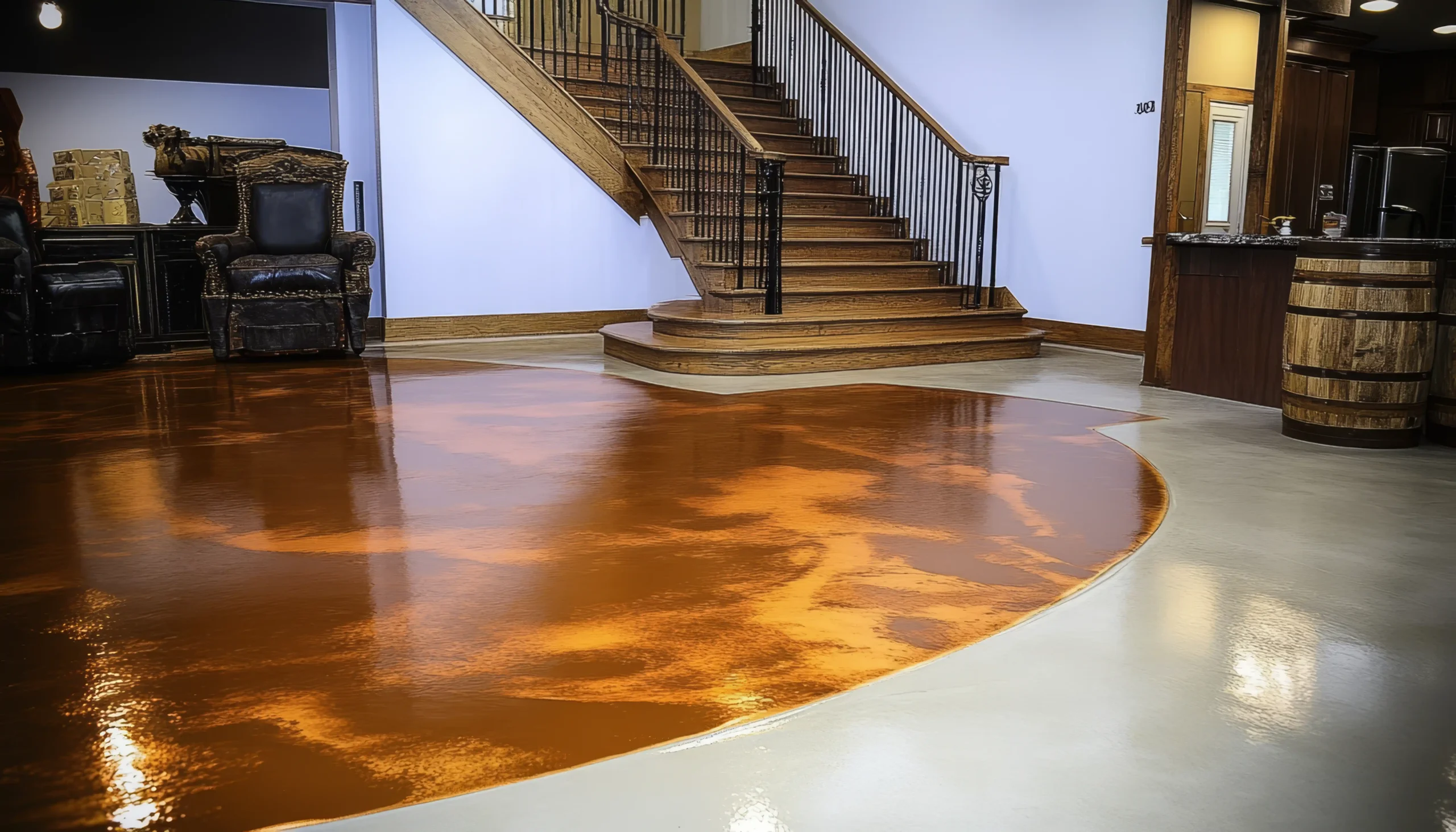
Metallic epoxy flooring can be a good option for New Jersey homes, especially in garages, basements, and finished concrete areas. It gives homeowners a way to improve plain concrete without adding tile, carpet, or wood flooring over the slab.
Local conditions matter. New Jersey garages often deal with road salt, wet tires, snow, rain, and seasonal moisture. Basements may also need moisture testing before coating. These issues do not always prevent epoxy installation, but they must be checked first.
Epoxy Shine helps homeowners and businesses choose epoxy flooring systems that match the surface, design goal, and daily use of the space.
Who Should Choose Metallic Epoxy Flooring?
Metallic epoxy flooring is best for people who want a floor that looks custom, clean, and more finished than plain concrete. It is a strong choice when design matters as much as function.
It is also useful for spaces where easy cleaning and a seamless surface are important. However, the right coating system should always be based on the room, traffic level, and safety needs.
Metallic Epoxy Is a Good Fit If You Want
- A custom high-end floor
- A seamless concrete coating
- A garage that looks more finished
- A modern basement floor
- A decorative showroom or retail floor
- Easy cleaning
- A polished look without tile grout
- A unique design that does not repeat
Metallic Epoxy May Not Be Best If You Need
- The lowest upfront cost
- Maximum texture
- A very rough industrial floor
- A simple DIY coating
- Outdoor UV-heavy flooring
- A surface that hides every scratch and mark
- Heavy workshop abuse resistance
If you are mainly choosing a garage floor for daily vehicle use and low maintenance, compare metallic epoxy with flake epoxy before deciding. If you are choosing based on appearance and custom design, metallic epoxy may be the stronger fit.
Final Thoughts
Metallic epoxy flooring is a strong choice if you want a seamless concrete coating with a custom, high-end appearance. It can work well in garages, basements, showrooms, salons, offices, and retail spaces when the concrete is prepared correctly and the right topcoat is used.
It is not the cheapest or simplest coating option, and it is not perfect for every floor. Smooth glossy finishes may need added traction, and heavy-use garages may need careful system selection. Still, for many homes and businesses, metallic epoxy offers a rare mix of design, durability, and easy cleaning.
If you are in the New Jersey area, Epoxy Shine can help you choose the right metallic epoxy flooring system for your garage, basement, commercial space, or decorative concrete floor.
FAQ
1. Is metallic epoxy flooring real metal?
No. Metallic epoxy flooring does not contain solid metal sheets or metal flooring panels. The name comes from the metallic or pearlescent pigments mixed into the epoxy. These pigments create shimmer, depth, and movement inside the coating.
2. Can metallic epoxy be installed over old concrete?
Yes, metallic epoxy can often be installed over old concrete if the slab is structurally sound. Cracks, stains, weak coatings, moisture problems, and surface damage should be repaired or addressed before installation.
3. Does metallic epoxy flooring scratch easily?
Metallic epoxy can resist normal wear when protected with a quality topcoat, but smooth glossy finishes may show scratches more than textured flake systems. Using mats, soft pads, and proper cleaning helps protect the surface.
4. Can I install metallic epoxy flooring myself?
DIY kits exist, but metallic epoxy is harder to install than basic coatings. The design depends on timing, mixing, surface prep, pigment movement, and topcoat application. Professional installation usually gives a cleaner and more durable result.
5. What is the best room or space for metallic epoxy flooring?
Metallic epoxy works best in spaces where appearance and easy cleaning matter. Common areas include garages, basements, showrooms, salons, retail stores, offices, studios, and decorative concrete floors.