
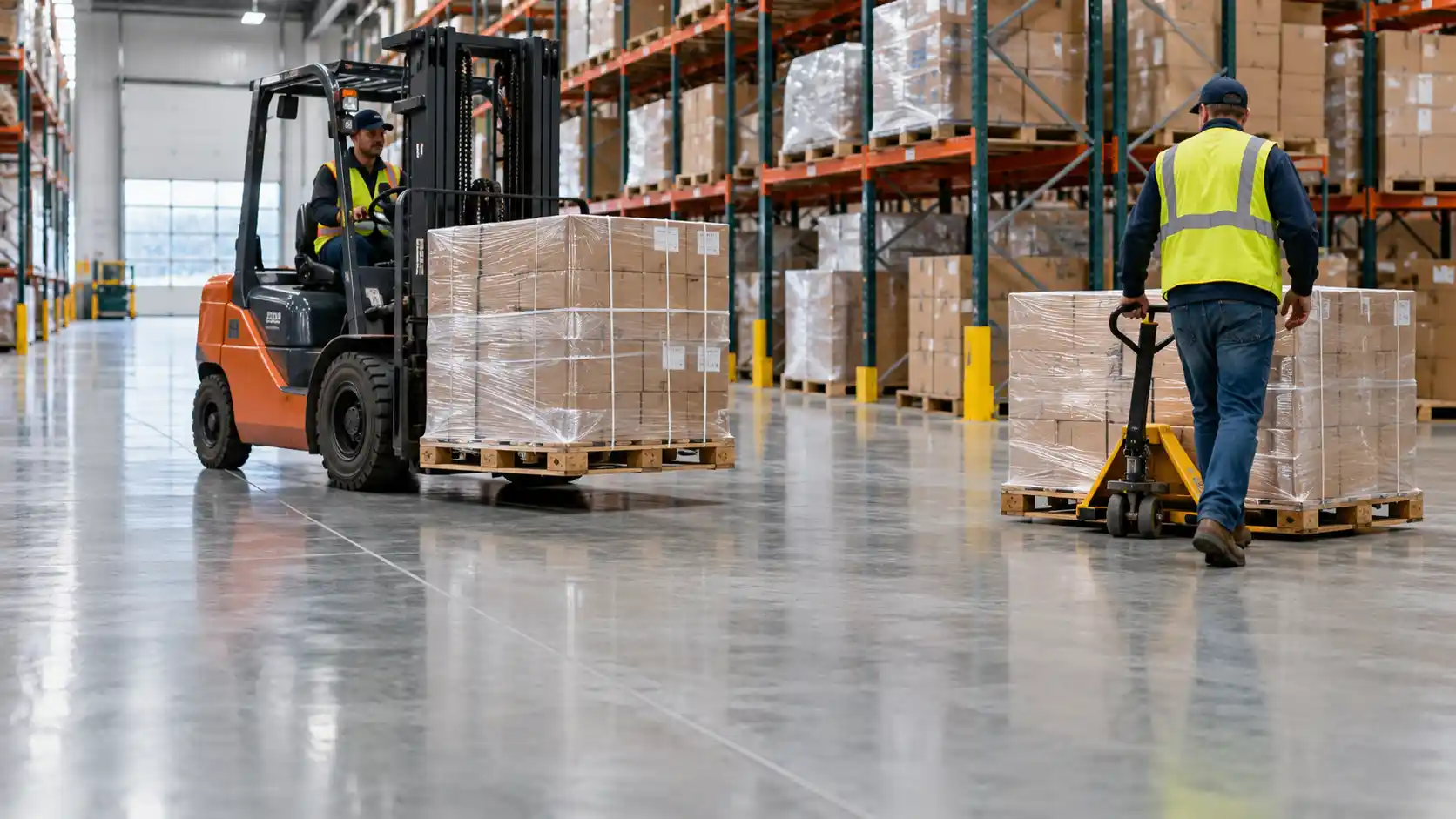
Warehouse floor coating costs in New Jersey depend on more than square footage. The condition of the concrete, type of coating, repair requirements, and installation schedule can all affect the final price.
For warehouse owners and facility managers in New Jersey communities, comparing warehouse flooring quotes can be challenging when contractors recommend different flooring systems or include different preparation work.
A lower price per square foot does not always mean a lower overall project cost. Understanding what each proposal includes helps you compare options and choose a floor that suits your warehouse operations.
How Much Does Warehouse Epoxy Flooring Cost in New Jersey?
Commercial and industrial epoxy flooring commonly costs approximately $3–$12 per square foot installed, although specialized systems and extensive concrete repairs can increase the price.
| Flooring system | Estimated cost per sq. ft. | Common application |
| Basic commercial epoxy | $3–$5 | Light-duty storage areas |
| High-build epoxy | $5–$8 | Warehouse aisles and general equipment traffic |
| Epoxy with protective topcoat | $5–$10 | Areas requiring selected wear or chemical resistance |
| Heavy-duty epoxy mortar | $8–$12+ | High-impact and demanding industrial areas |
The ranges can overlap because pricing depends on the complete flooring specification, not simply the coating material.
For example, a 10,000-square-foot warehouse priced at $5–$8 per square foot would have an estimated coating budget of $50,000–$80,000, assuming that rate includes the agreed installation scope. Additional repairs, coating removal, or other excluded work would increase the total.
These estimates are useful for initial planning, but an accurate quote requires an assessment of the existing floor.
What Affects Warehouse Floor Coating Costs?
Several factors explain why two warehouses of the same size may receive different coating estimates.
Concrete Condition and Preparation
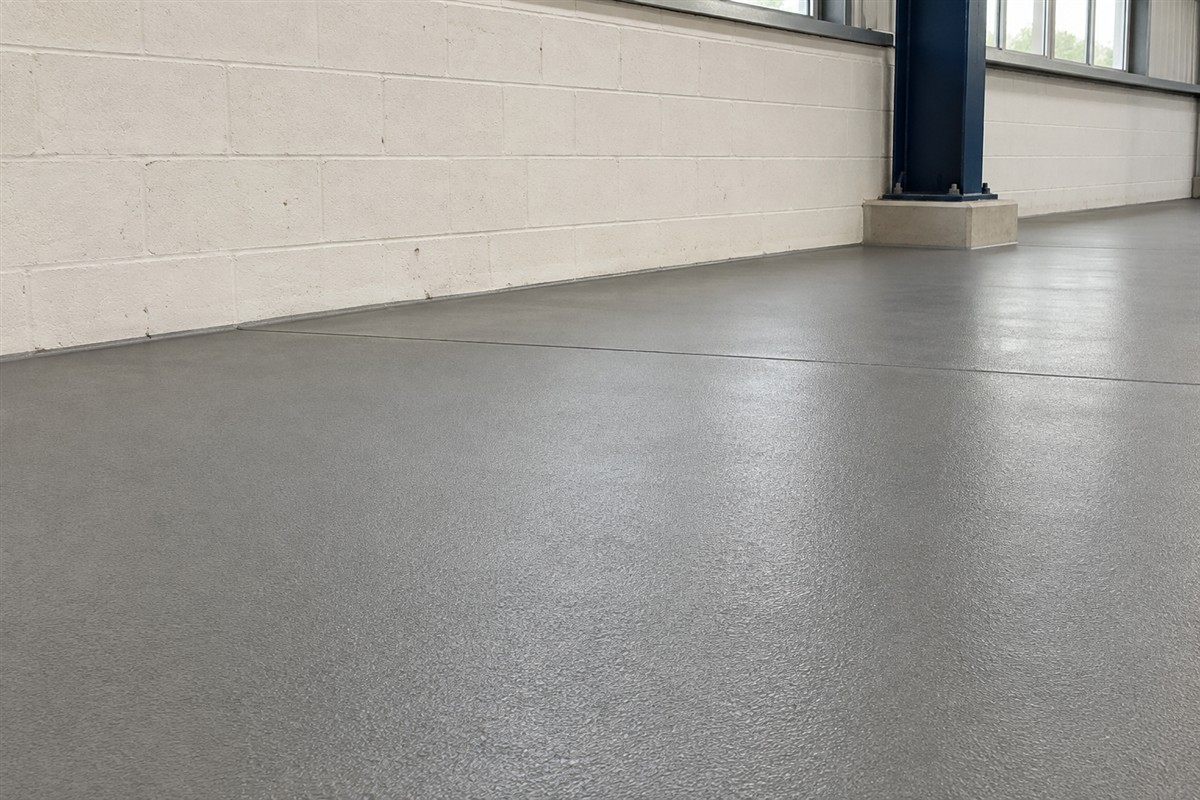
Concrete preparation is a major part of warehouse flooring installation. Existing coatings, contamination, surface deterioration, and uneven areas may require grinding, shot blasting, or coating removal before a new system can be installed.
The preparation method depends on the slab’s condition and the selected flooring system. Contractors should specify what work is included rather than simply listing “surface preparation” in the quote.
Cracks, Joints, and Concrete Repairs
Damaged concrete can significantly affect warehouse floor repair costs. Cracks, spalled areas, deteriorated joints, and damaged forklift routes may need attention before coating.
Minor patching may be included in a proposal, while more extensive concrete repairs are often priced separately. Ask contractors to identify repair quantities and methods so unexpected work does not increase the project budget without prior approval.
Coating System and Thickness
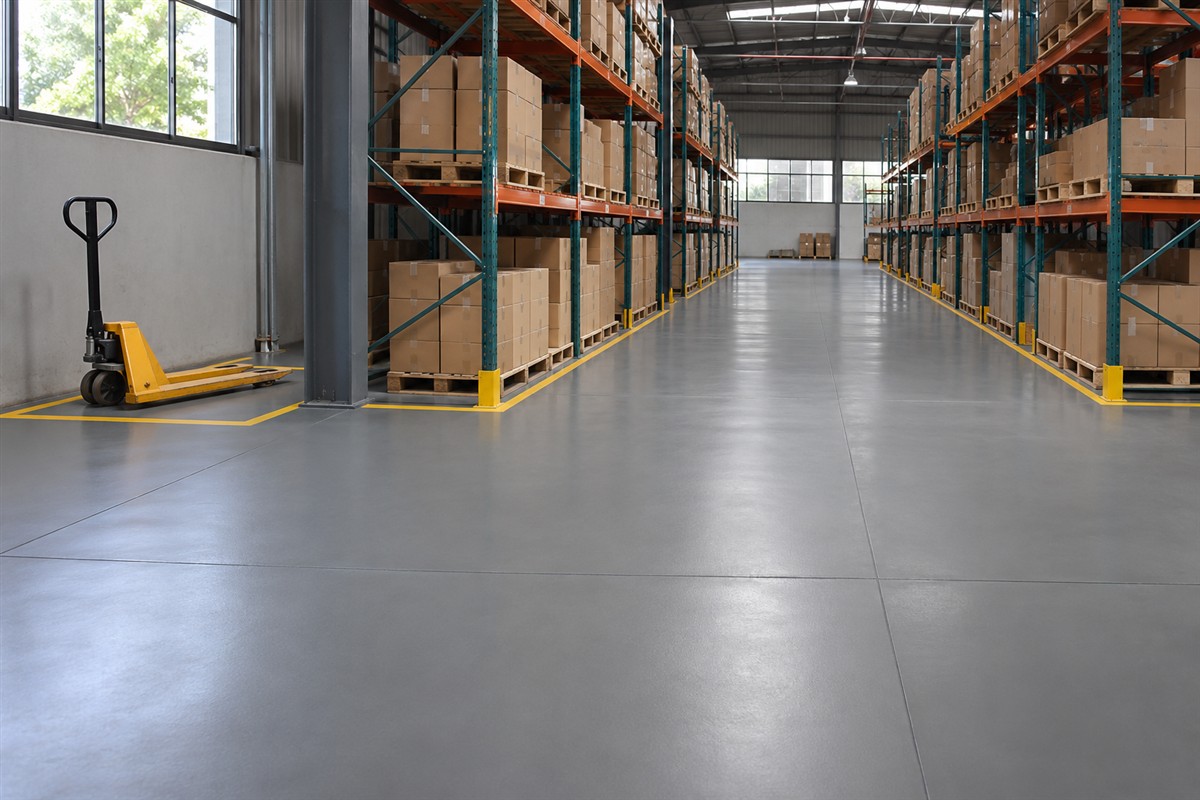
A warehouse used primarily for storage may need a different flooring system from a distribution facility with frequent forklift turning and heavy pallet movement.
High-build epoxy, protective topcoats, and epoxy mortar systems have different material requirements and installation processes. The appropriate specification should reflect traffic, abrasion, impact, cleaning, and chemical exposure.
Warehouse Access and Installation Schedule
An empty warehouse is generally easier to work in than an active facility with inventory, forklifts, and restricted access.
Phased installation, overnight work, and multiple mobilizations can increase labor costs. Contractors should also identify when the floor can safely return to pedestrian and equipment traffic under the selected system’s curing requirements.
How to Compare Warehouse Floor Coating Quotes
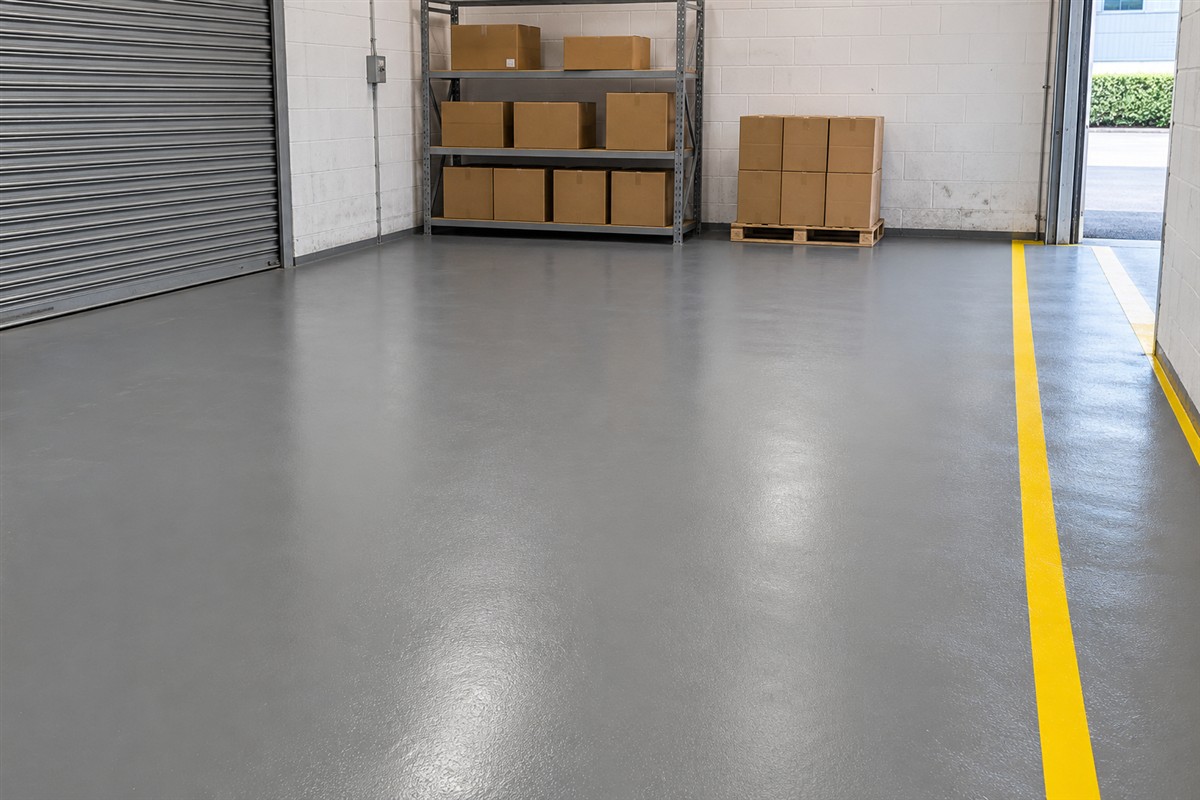
The best way to compare warehouse flooring quotes is to review the complete scope of work rather than focusing only on the price per square foot.
Before making a decision, check the following:
| Quote component | What to confirm |
| Floor area | Total square footage and excluded sections |
| Surface preparation | Grinding, shot blasting, and coating removal |
| Concrete repairs | Crack, joint, and spalling repairs included |
| Flooring system | Coating materials, layers, and specified thickness |
| Moisture conditions | Testing and any required treatment |
| Additional features | Line markings, texture, and protective finishes |
| Installation schedule | Work phases, curing, and return to service |
| Warranty | Written coverage, limitations, and exclusions |
A proposal should make it clear which items are included in the quoted price and which will be charged separately.
Why the Lowest Quote May Not Offer the Best Value
Consider two contractors quoting the same 15,000-square-foot warehouse.
One provides a lower price but excludes joint repairs and existing coating removal. The other includes those items and recommends a system designed around the facility’s forklift traffic.
Although the second proposal costs more initially, the additional work may be necessary for the specified installation.
That does not mean the higher quote is automatically better. The goal is to determine whether both contractors are proposing work that meets the same requirements.
Before accepting a quote, ask contractors to explain any major price differences in writing. This makes it easier to identify differences in materials, preparation, repairs, and scheduling.
Should You Choose Epoxy or Polished Concrete for Your Warehouse?
Comparing warehouse flooring costs may also involve deciding between epoxy coatings and polished concrete.
Epoxy flooring can be suitable when the facility needs a protective resinous finish, consistent color, or a specified surface texture. Polished concrete may be a practical alternative where the existing slab is suitable and an exposed concrete surface meets the operation’s requirements.
Each option has different preparation, maintenance, and performance considerations. Neither should be selected based on installation price alone.
Epoxy Shine offers both warehouse flooring and polished concrete services. Our guide to Epoxy vs. Polished Concrete for Warehouse Floors explains how to evaluate these options based on traffic, maintenance, and concrete condition.
How to Get an Accurate Warehouse Flooring Quote in New Jersey
Before requesting a quote, gather the basic details contractors need to evaluate your facility:
- Approximate warehouse floor area
- Existing coating type and concrete condition
- Cracks, damaged joints, or worn areas
- Forklift and pallet jack traffic
- Cleaning procedures and chemical exposure
- Available installation and downtime windows
Providing these details helps contractors recommend appropriate systems and prepare more comparable proposals.
For facilities with significant equipment traffic, reviewing the requirements discussed in our guide to epoxy flooring for forklift and pallet jack traffic can also help clarify what the floor needs to withstand.
Discuss Your Warehouse Flooring Project With Epoxy Shine
Warehouse floor coating costs in New Jersey vary according to the existing concrete, required repairs, coating specification, and installation conditions. Comparing written proposals with the same scope is the most reliable way to understand the differences.
Epoxy Shine provides warehouse flooring solutions for businesses in New Jersey communities. We consider the existing floor and operational requirements when discussing suitable flooring options.
Get a Warehouse Floor Coating Quote That Reflects Your Facility
Warehouse floor coating costs in New Jersey depend on concrete condition, repairs, coating systems, and installation requirements. Comparing detailed quotes helps you understand the scope and choose a suitable flooring solution.
Epoxy Shine provides commercial and industrial flooring services in New Jersey communities. Contact Epoxy Shine for a warehouse flooring assessment and a quote tailored to your facility’s needs.
Frequently Asked Questions
What is the average warehouse epoxy flooring cost per square foot?
Commercial and industrial epoxy flooring may cost approximately $3–$12 per square foot installed. The actual price depends on the system, concrete preparation, repairs, and project requirements.
Are concrete repairs included in warehouse flooring quotes?
Not always. Some contractors include minor repairs, while joint reconstruction, extensive crack repairs, and damaged concrete restoration may be priced separately. Review the repair scope before approving a quote.
Does a larger warehouse cost less per square foot to coat?
Larger, accessible areas may have a lower unit cost because equipment and labor can be used more efficiently. However, concrete damage, traffic requirements, and installation restrictions can affect the final rate.
Is epoxy flooring suitable for warehouses with forklifts?
Yes, when the concrete substrate and flooring system are appropriate for the equipment loads and traffic patterns. Areas with frequent turning, heavy loads, or damaged joints may require additional preparation or a more substantial coating system.
How long does warehouse epoxy flooring installation take?
Installation time depends on square footage, preparation, repairs, coating materials, and curing conditions. Contractors should provide a project schedule that identifies when the floor can return to normal warehouse operations.